
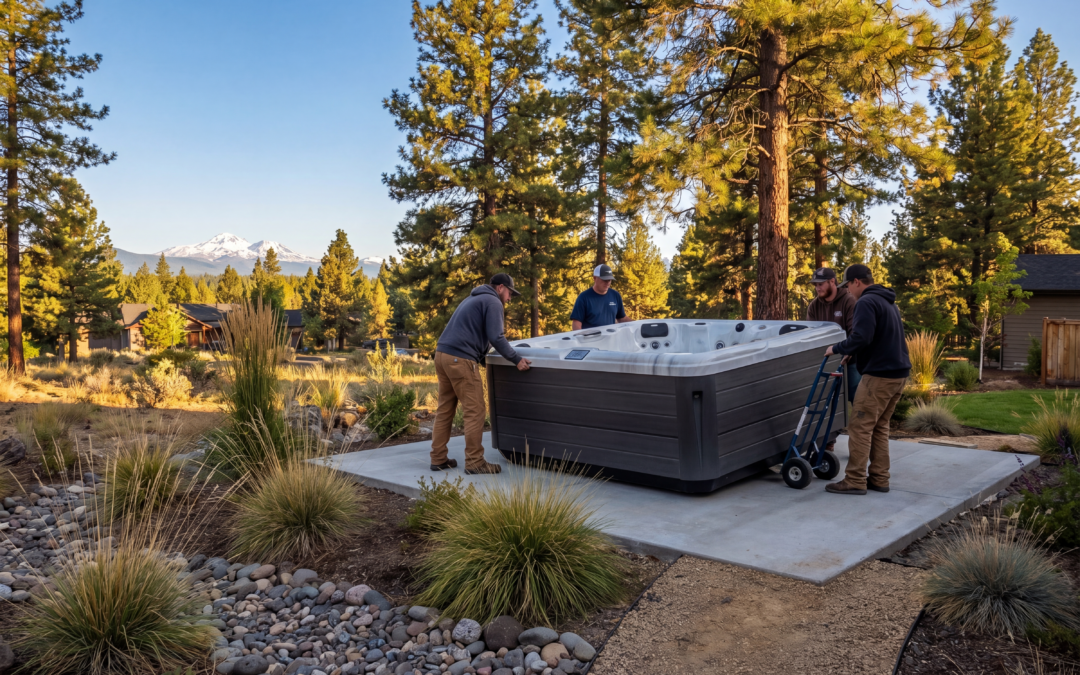
There’s nothing quite like sinking into a warm hot tub after a long day of skiing Mt. Bachelor or hiking the Deschutes River Trail. For homeowners across Central Oregon, a hot tub isn’t just a luxury; it’s a year-round wellness retreat right in your own backyard.
But if you’re new to the world of hot tub installation, the process can feel a little overwhelming. Where does the tub go? What kind of electrical work is involved? Can you do it yourself, or should you hire a professional?
The good news is that installing a hot tub at home is more straightforward than most people think, especially when you have a clear plan and the right team behind you. This guide walks you through every step of the hot tub installation process, from choosing a location and preparing your site to connecting power and filling up your spa for the very first time.
What You Need to Know Before Hot Tub Installation
A successful hot tub installation starts well before the spa arrives at your home. Taking time to plan ahead helps you avoid costly mistakes, unnecessary delays, and safety issues down the road.
Here are a few key things to consider early in the process:
- Space and access. Measure the area where you want to place your hot tub. You’ll need enough room for the tub itself plus a few feet of clearance on all sides for maintenance access and safe entry and exit.
- Budget. Hot tub installation costs go beyond the price of the spa. Plan for site preparation, electrical work, delivery, and any accessories or upgrades you want from the start.
- Safety. Electrical connections must meet local building codes, and the area around your hot tub should be slip-resistant, well-lit, and secure—especially if you have children or pets.
- Professional vs. DIY. While some parts of the setup (like site clearing) are DIY-friendly, the electrical work and final positioning almost always require professional help. A licensed electrician and experienced installation team ensure everything is done safely and up to code.
If all of this feels like a lot to figure out on your own, you don’t have to. Aqua Clear Hot Tubs offers a free, no-obligation site assessment where our team visits your property, evaluates your space, and lets you know exactly what’s needed—and what it would cost—to get your home installation-ready. It’s a great way to take the guesswork out of the planning stage before you commit to a purchase.
Choosing the Right Location for Your Hot Tub
Where you place your hot tub affects everything from daily convenience to long-term maintenance. Take a few minutes to think about how you’ll actually use your spa before committing to a spot.
Indoor vs. Outdoor Installation
Most homeowners in Bend, Redmond, and Sisters choose an outdoor hot tub installation, and it’s easy to see why. An outdoor setup lets you enjoy mountain views, fresh air, and the classic Central Oregon stargazing experience while you soak.
That said, indoor installations have their own advantages. You won’t have to deal with snow removal around the tub in winter, and you can use your spa regardless of weather conditions.
Here’s a quick comparison:
| Factor | Outdoor | Indoor |
| Views & ambiance | Excellent – stars, scenery | Limited – depends on room |
| Weather exposure | Yes – rain, snow, sun | None – fully sheltered |
| Ventilation needs | Natural airflow | Requires ventilation system |
| Space requirements | Yard or deck | Dedicated indoor room |
If you go with an indoor setup, proper ventilation is essential. Hot tub steam can damage walls, ceilings, and flooring over time without adequate airflow. For most Central Oregon homeowners, an outdoor patio or deck installation is the most popular and practical choice.
Not sure which spot on your property makes the most sense? Our no-obligation site assessment covers location options, access for delivery, and any site prep that might be needed—so you’ll know exactly what to expect before making a decision.
Ground Preparation and Foundation
Your hot tub needs a strong, level surface that can handle significant weight. A filled hot tub with people inside can weigh anywhere from 3,000 to 6,000 pounds or more, depending on the model and size.
The most common foundation options include:
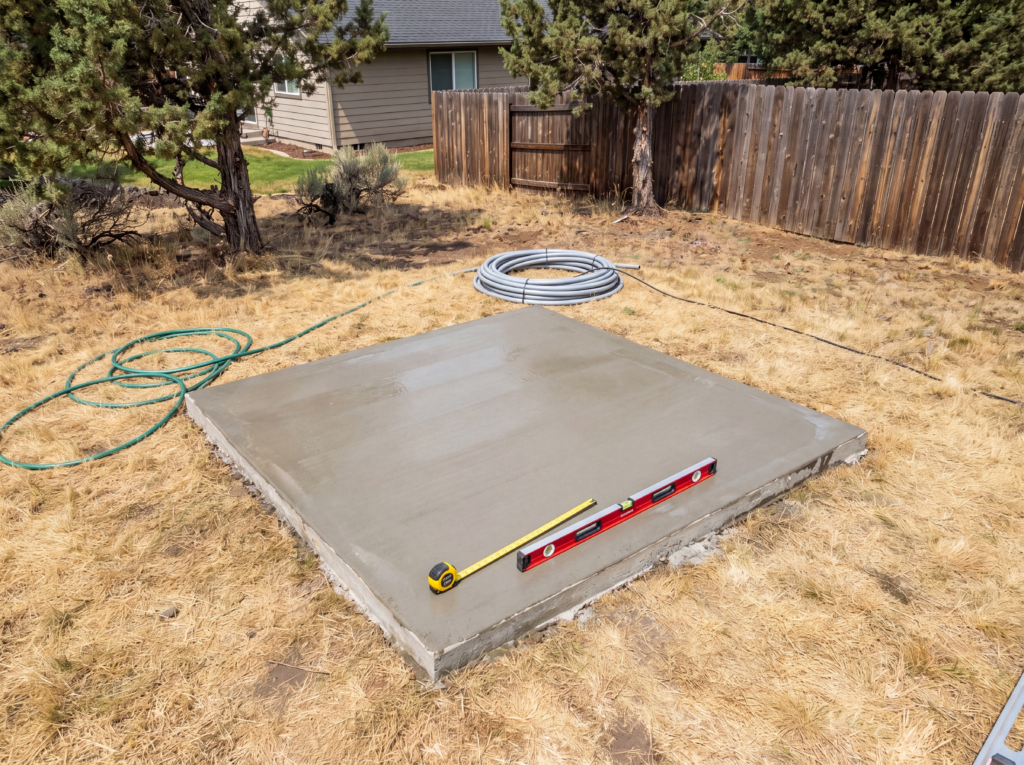
- Reinforced concrete pad. This is the gold standard for hot tub foundations. A 4-inch thick concrete slab provides a stable, level, and long-lasting base.
- Existing deck or patio. If you already have a deck, check with a structural engineer or your installer to make sure it can support the weight. Many standard decks need reinforcement. For a quick check, you’ll need the supporting boards underneath to be 12″ on center.
- Compacted gravel base. A well-compacted gravel pad is a budget-friendly alternative. Make sure the area is level and has at least 4 inches of crushed gravel.
No matter which option you choose, make sure the site has proper drainage so water doesn’t pool around the base of your hot tub. Standing water can lead to foundation erosion, mold, and damage to the spa’s exterior panels. For a deeper look at foundation options and weight considerations,
Bob Vila’s guide to putting a hot tub on a deck covers weight calculations, structural requirements, and foundation options in detail.

Hot Tub Electrical Requirements (Must Know)
Understanding hot tub electrical requirements is one of the most important parts of the installation process. Getting this wrong isn’t just inconvenient, it can be dangerous.
Most full-size hot tubs require a dedicated 240V (220V) electrical circuit with a 50-amp breaker. Smaller plug-and-play models can run on a standard 120V household outlet, but they heat more slowly and have fewer features.
Here’s what you need to know:
- Hire a licensed electrician. This is not a DIY project. A licensed electrician will run the proper wiring, install a dedicated breaker, and make sure everything meets Oregon electrical codes.
- GFCI protection is required. A Ground Fault Circuit Interrupter (GFCI) breaker is mandatory for hot tub installations. It protects against electrical shock by shutting off power if it detects a ground fault.
- Check local building codes. Deschutes County and the City of Bend may require permits for electrical work associated with hot tub installation. Your electrician should be familiar with local requirements.
- Plan for wire distance. The farther your hot tub is from your electrical panel, the thicker the wire gauge needs to be. Discuss placement with your electrician before finalizing the tub’s location.
According to the National Electrical Code (NEC), all hot tub electrical connections must include proper grounding and bonding. Skipping these steps puts your family and your investment at risk. For a more detailed breakdown of what’s required, Angi’s guide to hot tub electrical requirements is a good resource to review before your electrician visit.
Electrical work is often the biggest question mark for homeowners. During a site assessment, the Aqua Clear team evaluates your electrical panel location, estimates wiring distance, and gives you a clear picture of what the electrical portion of your installation will involve and cost—all before you’ve committed to buying.
Step-by-Step Hot Tub Installation Process
Once your site is prepared and your electrical work is planned, it’s time for the fun part—getting your hot tub set up and ready to enjoy. Here’s a step-by-step walkthrough of the hot tub setup guide you can follow.
Step 1: Prepare the Site
Start by clearing the installation area of any debris, rocks, or vegetation. If you’re pouring a concrete pad or laying gravel, make sure the surface is completely level before delivery day.
Double-check your measurements to confirm the hot tub will fit comfortably with access room on all sides. Also verify that there’s a clear delivery path—the tub needs to be carried or rolled from the truck to the installation site, and tight corners, narrow gates, or steep grades can make this tricky.
Step 2: Deliver and Position the Hot Tub
On delivery day, a professional team will carefully move the hot tub from the truck to your prepared site. Most spas are delivered on a flatbed and moved using specialized equipment.
If your backyard has limited access (a common situation in Central Oregon neighborhoods), a crane delivery may be necessary to lift the tub over fences or structures. Your dealer can coordinate this for you.
Once the tub is in position, take a moment to confirm it’s level and sitting exactly where you want it. Moving a hot tub after it’s filled with water is extremely difficult, so get the placement right now.
Step 3: Connect Electrical Components
With the hot tub in place, your licensed electrician will complete the wiring. This includes connecting the spa to your dedicated 240V circuit, installing the GFCI breaker, and performing all required grounding and bonding.
Before powering on, the electrician should run a full safety check to confirm:
- All connections are secure and properly insulated
- The GFCI breaker trips and resets correctly
- The installation complies with local electrical codes
Never attempt to wire a 240V hot tub yourself. Improper wiring is a leading cause of hot tub electrical fires and shock incidents.
Step 4: Fill the Hot Tub with Water
Using a standard garden hose, fill your hot tub to the level indicated by the manufacturer—typically just above the highest jets. Using a hose filter is a great idea, especially if your water supply has high mineral content, which is common in parts of Central Oregon.
While the tub is filling, keep an eye out for any leaks around the fittings, jets, and plumbing connections. It’s much easier to address small issues now than after the tub is full and heated.
Step 5: Start the System and Heat the Water
Once the tub is filled, power on the system and let it run. Here’s what to do:
- Turn on the power at the GFCI breaker
- Set the thermostat to your desired temperature (most people prefer 100–104°F)
- Test the jets, pumps, lights, and controls to make sure everything is working properly
- Allow the water to heat fully, which can take 12–24 hours depending on the tub size and starting water temperature
Be patient during the initial heating. Resist the urge to crank the thermostat all the way up—the heater works most efficiently at a steady pace.

Water Treatment and First-Time Setup
Before you hop in for your first soak, you need to balance your water chemistry. Proper water treatment keeps your hot tub safe, clean, and comfortable.
Here’s what to do:
- Test your water. Use test strips or a liquid test kit to check pH, alkalinity, and sanitizer levels. Your target ranges are: pH 7.2–7.8, total alkalinity 80–120 ppm, and sanitizer (chlorine or bromine) at the manufacturer’s recommended level.
- Add sanitizer. Chlorine or bromine tablets or granules keep your water free from bacteria and algae. Follow the product directions for dosing based on your tub’s water volume.
- Balance pH and alkalinity. If your pH or alkalinity is off, use a pH increaser or decreaser and an alkalinity adjuster to bring them into range. Always adjust alkalinity first, then pH.
- Consider a water care system. Products like AquaFinesse simplify ongoing water care by reducing the need for heavy chemical treatments. Many Aqua Clear customers love the softer, gentler feel it gives their water.
Balanced water not only feels better on your skin but also protects your hot tub’s components from corrosion and scale buildup. Check your water chemistry at least two to three times per week during regular use.
For official guidelines on safe hot tub water chemistry, the CDC’s home pool and hot tub water treatment page is a trusted reference for recommended chlorine, bromine, and pH levels.
Common Mistakes to Avoid During Hot Tub Installation
Even with the best intentions, first-time hot tub owners sometimes make mistakes during installation that can lead to bigger problems later. Here are the most common ones to watch out for:
- Skipping the foundation. Setting your hot tub directly on grass, bare dirt, or a weak deck is asking for trouble. An inadequate foundation can shift, settle, or crack under the weight of a filled spa.
- DIY electrical work. We’ve said it before, but it bears repeating: always hire a licensed electrician for hot tub wiring. Incorrect wiring can cause electrical fires, void your warranty, and violate local building codes.
- Ignoring water chemistry. Filling your hot tub and jumping in without testing and treating the water can lead to skin irritation, cloudy water, and damage to your spa’s internal components.
- Forgetting about access. Make sure your tub is accessible for service and maintenance. You’ll need to reach the equipment panel, and a technician should be able to work around the spa comfortably.
- Not checking local codes. Permits and codes exist for a reason. Check with Deschutes County or your local building department before starting installation to avoid fines or required rework.
The easiest way to avoid all of these mistakes? Have a professional look at your property first. Aqua Clear’s free site assessment catches potential issues early—before they turn into expensive problems—and gives you a clear plan for getting your home ready.
DIY vs. Professional Hot Tub Installation
If you’re handy around the house, you might be wondering whether you can handle installing a hot tub at home on your own. The honest answer is: some parts, yes—but other parts absolutely require professional help.
| Task | DIY Friendly? | Professional? |
| Site clearing & prep | Yes | Optional |
| Foundation (concrete/gravel) | Sometimes | Recommended |
| Electrical wiring | No | Required |
| Delivery & positioning | No | Required |
| Filling & water treatment | Yes | Optional |
| Cover & accessory setup | Yes | Optional |
The bottom line: handle the prep and accessories yourself if you want, but leave the heavy lifting, electrical, and final setup to experienced professionals. It’s safer, faster, and protects your warranty.
How Much Does Hot Tub Installation Cost?
The cost of hot tub installation varies depending on several factors, including your location, the type of foundation needed, and the complexity of the electrical work.
Here are some general cost ranges to keep in mind:
- Site preparation. $200–$2,000+ depending on whether you need a concrete pad, gravel base, or deck reinforcement.
- Electrical work. $500–$3,000+ for a licensed electrician to run a dedicated 240V line, install a GFCI breaker, and ensure code compliance. Cost depends on the distance from your panel to the tub.
- Delivery. $200–$1,000+ depending on access difficulty. Crane delivery for hard-to-reach locations is on the higher end.
- Accessories and extras. Steps, cover lifters, privacy screens, and lighting can add $200–$1,500+ to your total setup cost.
Here at Aqua Clear, we include the delivery and accessories with most spa purchases at no extra cost.
These ranges are helpful for budgeting, but every property is different. The best way to get a clear, accurate number is to schedule a free site assessment with Aqua Clear Hot Tubs. We’ll visit your home, evaluate the site, electrical setup, and access, and provide a straightforward estimate of what it would cost to get everything installation-ready—no obligation, no pressure.
Why Choose Aqua Clear Hot Tubs for Installation?
When you buy a hot tub from Aqua Clear Hot Tubs, you’re not just getting a spa—you’re getting a full-service experience from a team that knows Central Oregon inside and out.
Here’s what sets us apart:
- Free, no-obligation site assessments. Before you spend a dollar, our team will come to your property, assess your space, and give you a complete picture of what’s needed for installation—including estimated costs for site prep, electrical, and delivery. You’ll know exactly what to budget before you decide to buy.
- Local expertise. With showrooms in Bend and Sisters, we understand the unique challenges of installing hot tubs in Central Oregon—from high desert elevations and freezing winter nights to rocky terrain and varying soil conditions.
- Custom, made-to-order spas. Every hot tub we sell is built to your specifications. We help you choose the right size, features, and configuration for your space and lifestyle.
- Professional installation. Our team handles delivery, positioning, and coordination with electricians so you don’t have to manage multiple contractors on your own.
- Ongoing support. From water care guidance to maintenance service packages and repairs, we’re here for you long after your hot tub is installed. We want you to enjoy your spa for years to come.
Visit our showroom or explore our full selection of hot tubs to find the perfect spa for your home.
Final Thoughts
Installing a hot tub at home is one of the best investments you can make for your health, relaxation, and quality of life. With the right planning, a solid foundation, professional electrical work, and proper water care, your spa will be ready to enjoy for many years.
If you’re thinking about adding a hot tub to your Central Oregon home, the team at Aqua Clear Hot Tubs is here to help. We’ll guide you through every step—from selecting the right spa to professional installation and ongoing maintenance.
Not sure where to start? Schedule a free, no-obligation site assessment and we’ll come to you. We’ll evaluate your property, walk you through what’s needed, and give you an honest cost estimate—so you can make a confident decision with zero surprises. Visit us at our Bend or Sisters showroom, give us a call, or fill out our Get Started form to book yours today.
Frequently Asked Questions About Hot Tub Installation
How long does hot tub installation take?
The actual installation—delivery, positioning, and initial setup—usually takes a few hours. However, site preparation and electrical work should be completed in advance, which can take a few days to a couple of weeks depending on your property.
Do I need a permit to install a hot tub in Bend, Oregon?
In most cases, you’ll need an electrical permit for the 240V wiring. Some areas may also require a building permit depending on where the tub is placed (especially on elevated decks). Check with Deschutes County or the City of Bend building department for specific requirements.
Can I install a hot tub on my existing deck?
It depends on the deck’s structural capacity. A filled hot tub is extremely heavy, and many standard residential decks aren’t built to handle that kind of load. Have a structural engineer or your installer evaluate the deck before placing a spa on it.
What’s the difference between a 120V and 240V hot tub?
A 120V (plug-and-play) hot tub plugs into a standard household outlet and is easier to set up, but it heats more slowly and typically has fewer jets and features. A 240V hot tub requires a dedicated electrical circuit but offers faster heating, more powerful jets, and better overall performance.
How much does it cost to run a hot tub monthly?
Monthly energy costs for a hot tub typically range from $20 to $50, depending on the model, insulation quality, how often you use it, and your local electricity rates. Using a well-fitting cover when the tub isn’t in use significantly reduces energy costs.
How do I find out what my home needs before buying a hot tub?
Aqua Clear Hot Tubs offers a free, no-obligation site assessment. Our team visits your property, evaluates the best location, checks your electrical setup, reviews access for delivery, and provides a clear estimate of any preparation costs. It’s designed to give you all the information you need to make a confident decision—before you commit to a purchase.