
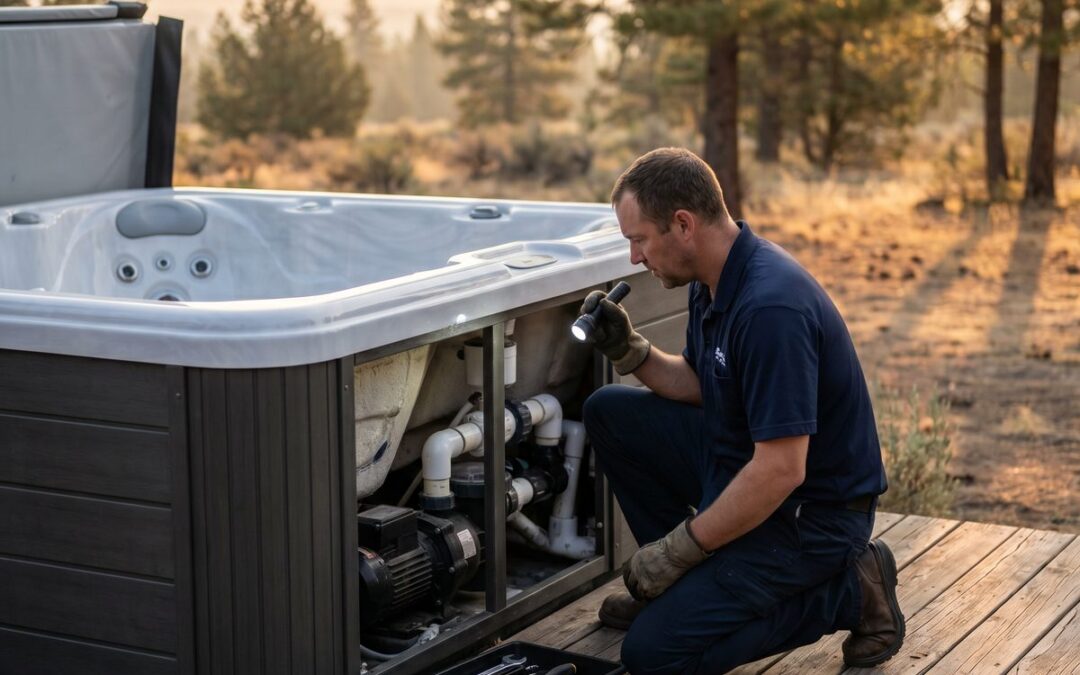
You head out for an evening soak, lift the cover, and notice the water sitting an inch or two lower than it was yesterday. Maybe there’s a damp patch on the patio that won’t dry, or the jets just don’t feel as strong as they used to. If any of that sounds familiar, you may be dealing with a leak—and the good news is that most hot tub leak repair situations are fixable, often without panic and sometimes without a service call.
Here’s the part worth taking seriously: even a small leak should never be ignored. Water that escapes into the cabinet can soak the foam insulation, damage your pump and heater, and quietly drive up your energy bills as the equipment works harder to keep up. Left alone, a $150 fix can turn into a four-figure repair.
This guide walks you through everything you need in plain language—how to spot a leak, what causes them, which DIY hot tub repair jobs are safe to handle yourself, when it’s smarter to call a pro, and what repairs typically cost. And because we’re a Central Oregon company that does this every day, we’ll show you how Aqua Clear makes both the repair and the long-term upkeep stress-free.
Key Takeaways
- Not all water loss is a leak. Evaporation and splash-out are normal—steady, unexplained drops are not.
- Most leaks come from plumbing, not the shell. Loose union fittings, worn pump seals, and aging gaskets are the usual suspects.
- A simple bucket test and dye test can confirm a leak and help you narrow down its location before you touch a tool.
- Many minor repairs are DIY-friendly, but leak sealers are only a temporary patch—not a cure for major plumbing failures.
- Central Oregon winters add risk. Freezing temperatures and improper winterization are a leading cause of cracked pipes and costly damage.
- Catching a leak early is the single best way to protect your equipment and avoid an expensive repair down the road.
Why Hot Tub Leaks Happen
Before you assume the worst, it helps to know the difference between normal water loss and an actual leak. Every hot tub loses some water to evaporation, and more so here in the high desert, where dry air and big temperature swings pull moisture out quickly. Splash-out from jets and entering and exiting the spa add to it. A drop of an inch or so per week is usually nothing to worry about.
A true leak is different. It’s persistent, it often shows up as water outside the tub, and it doesn’t slow down when the cover is on. When water loss outpaces what evaporation can explain, it’s time to investigate.
The most common causes of leaks include:
- Loose or worn union fittings around the pump and heater
- Failed pump seals that drip beneath the motor
- Cracked or aging plumbing lines and PVC joints
- Worn jet gaskets and O-rings that break down in hot water over time
- Damaged valves (diverter and shutoff valves are especially prone)
- Shell cracks, which are far less common but more serious
Age plays a role, too. As a hot tub gets older, constant pressure, vibration, and temperature cycling slowly loosen connections and wear out rubber components. It’s simple wear and tear, and it’s why a tub that’s been trouble-free for years can suddenly spring a leak.
Then there’s the environment—and in Bend, Sisters, and Redmond, that matters. Freezing temperatures are one of the biggest culprits behind serious leaks. Water left in plumbing lines can freeze, expand, and crack pipes, which is exactly why proper winterization is so important if your spa will sit unused through the cold months. Intense summer sun, heat exposure, and even a slowly shifting foundation can also stress the shell and plumbing enough to create new leak points.
3 Signs Your Hot Tub Has a Leak
Fast Water Loss
The clearest warning sign is water disappearing faster than evaporation can account for. If you’re topping off the tub every few days instead of every couple of weeks, pay attention.
Watch the level over a 24-to-48-hour window with the cover on and the spa idle. A small, gradual drop is normal. A noticeable drop overnight—or having to refill far more often than usual—points to a genuine leak that needs to be tracked down.
Wet Spots Around the Spa
Look for the evidence the water leaves behind. Puddles at the base of the tub, a perpetually soggy patch of concrete, wet decking, or damp insulation inside the cabinet are all red flags.
Moisture inside the equipment cabinet is especially telling—it usually points to an internal hot tub plumbing repair issue rather than simple splash-out. And because hot tubs combine water and electricity, any pooling near pumps, the heater, or wiring is a safety concern. If you see standing water around electrical components, shut the system off at the breaker before investigating further.
Unusual Equipment Behavior
Sometimes the tub tells you something’s wrong before you ever see a drop of water. When a leak lets air get drawn into the plumbing lines, it changes how the whole system runs.
Watch for weak or sputtering jets, noisy pumps, fluctuating water temperatures, or a heater that keeps shutting down. Many modern spas will also throw a low-flow error or pressure warning on the topside control panel. These behaviors don’t always mean a leak—but combined with water loss, they’re a strong clue.
How to Find a Hot Tub Leak
Effective spa leak detection is mostly about patience and a systematic approach. Here’s how to track one down.
Inspect the Pump and Equipment Area
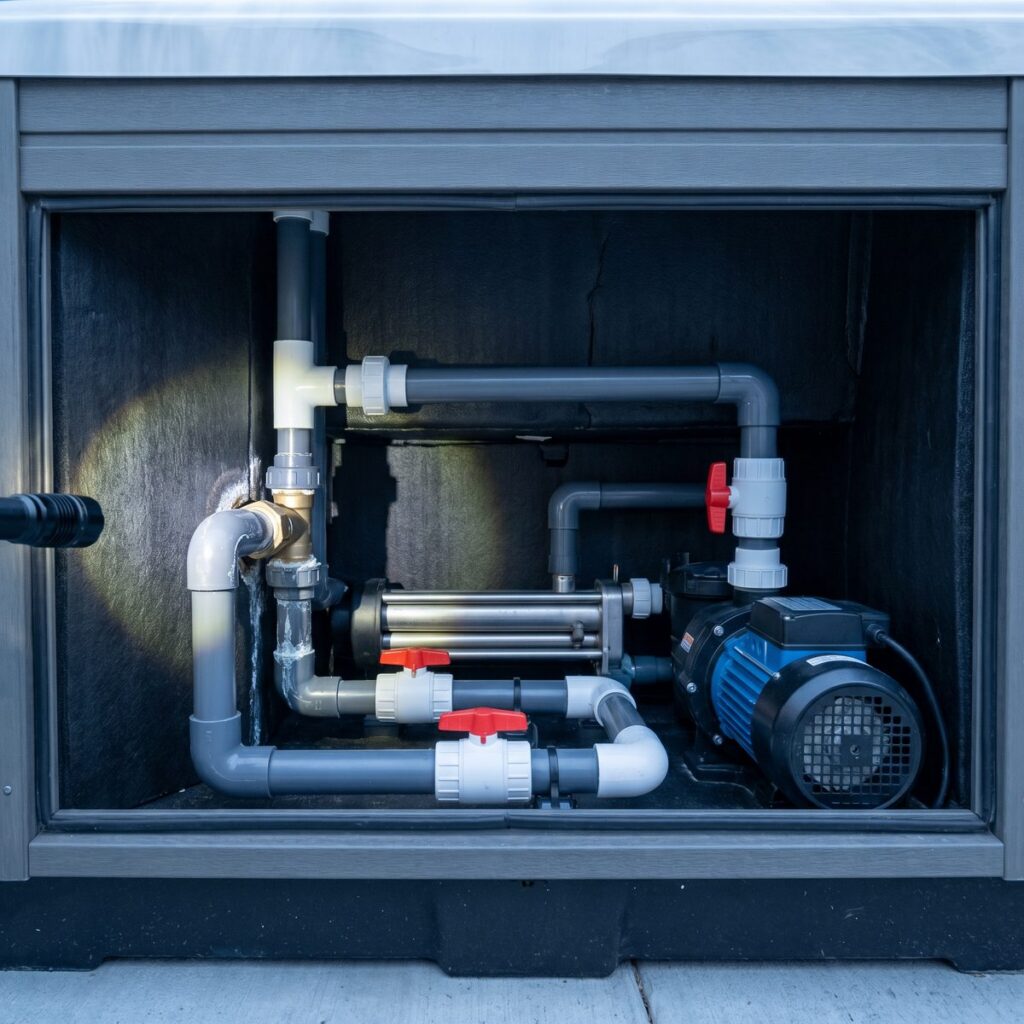
The equipment compartment is where most leaks live, so start there. Open the access panel and look closely around the pump, union fittings, heater, and valves, both while the system is running and while it’s off.
Standing water under the pump often means a worn pump seal. Mineral buildup, white crust, or corrosion around a fitting is a tell-tale sign that water has been escaping there over time. Checking during both idle and active cycles helps, since some leaks only appear under pressure.
Check Jets, Seals, and Plumbing Lines
Jets and their gaskets break down with age, and constant vibration slowly loosens plumbing connections. Grab a flashlight and inspect every jet body, gasket, pipe, and connection for moisture or drips.
Pay attention to where lines meet fittings—those joints are common failure points. A deteriorated jet gasket or a slightly loosened union is often the entire problem, and both are among the most fixable issues you’ll find.
Inspect the Hot Tub Shell
Shell leaks are uncommon but worth ruling out. Examine the acrylic surface for visible cracks, stress fractures, or chips, especially around jets and fittings where the shell takes the most stress.
Keep in mind that a shell leak behaves differently from a plumbing leak—water tends to track down the outside of the shell rather than pooling in the equipment bay. Many surface cracks in the acrylic are only cosmetic, but a true through-crack will need attention. For small, hard-to-see cracks, a dye test is your best tool.
Use Leak Detection Dye
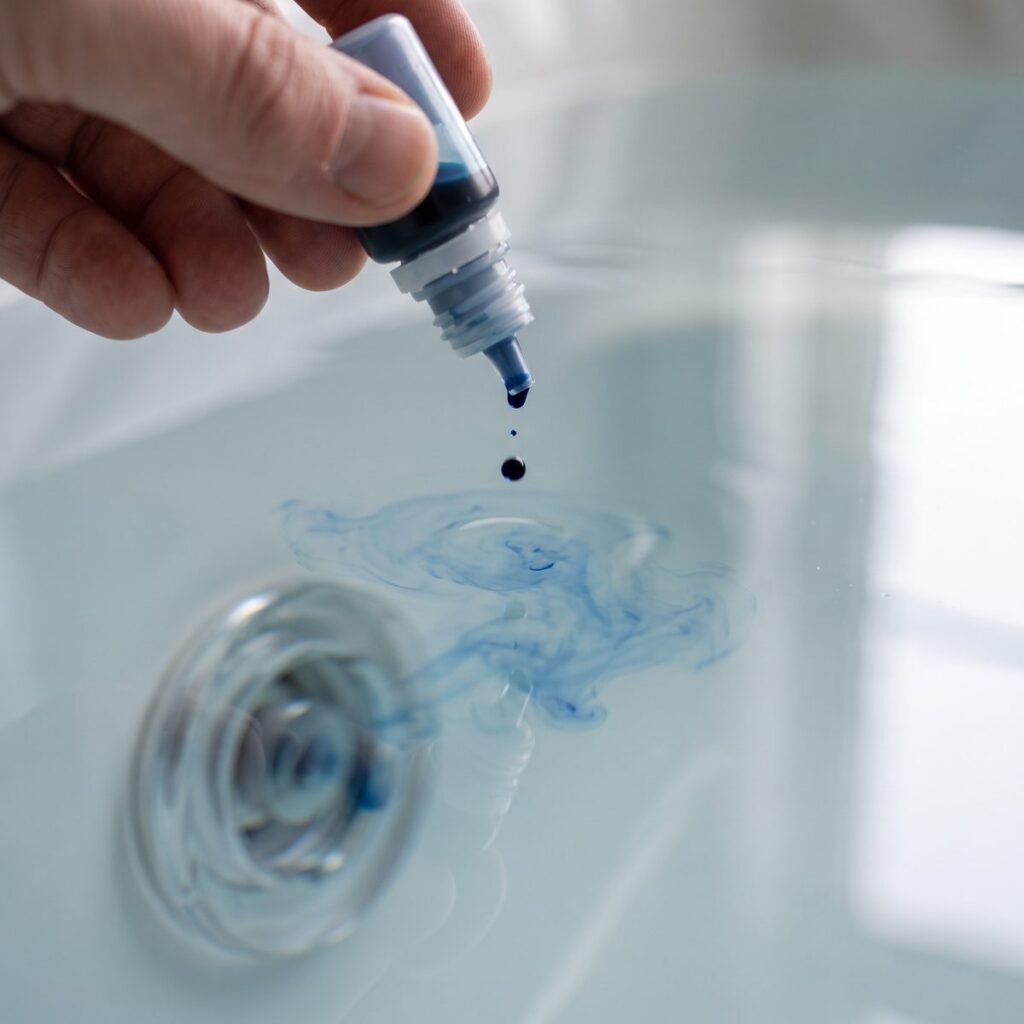
When you’ve narrowed the area down but can’t pinpoint the source, leak detection dye (or even a few drops of dark food coloring) does the trick. With the circulation pump off so the water is perfectly still, squirt a small amount of dye near the suspected spot.
If there’s a leak nearby, you’ll see the dye get pulled toward it like a tiny current. Work in good light, keep the water calm for the clearest result, and always stay mindful of electrical components while you inspect. For a more detailed walkthrough of these methods, the team at Swim University offers an excellent owner’s guide.
DIY Hot Tub Leak Repair: What You Can Safely Handle
Basic Repairs Suitable for DIY
Plenty of leaks come down to simple, beginner-friendly fixes. The most common DIY hot tub repair jobs include:
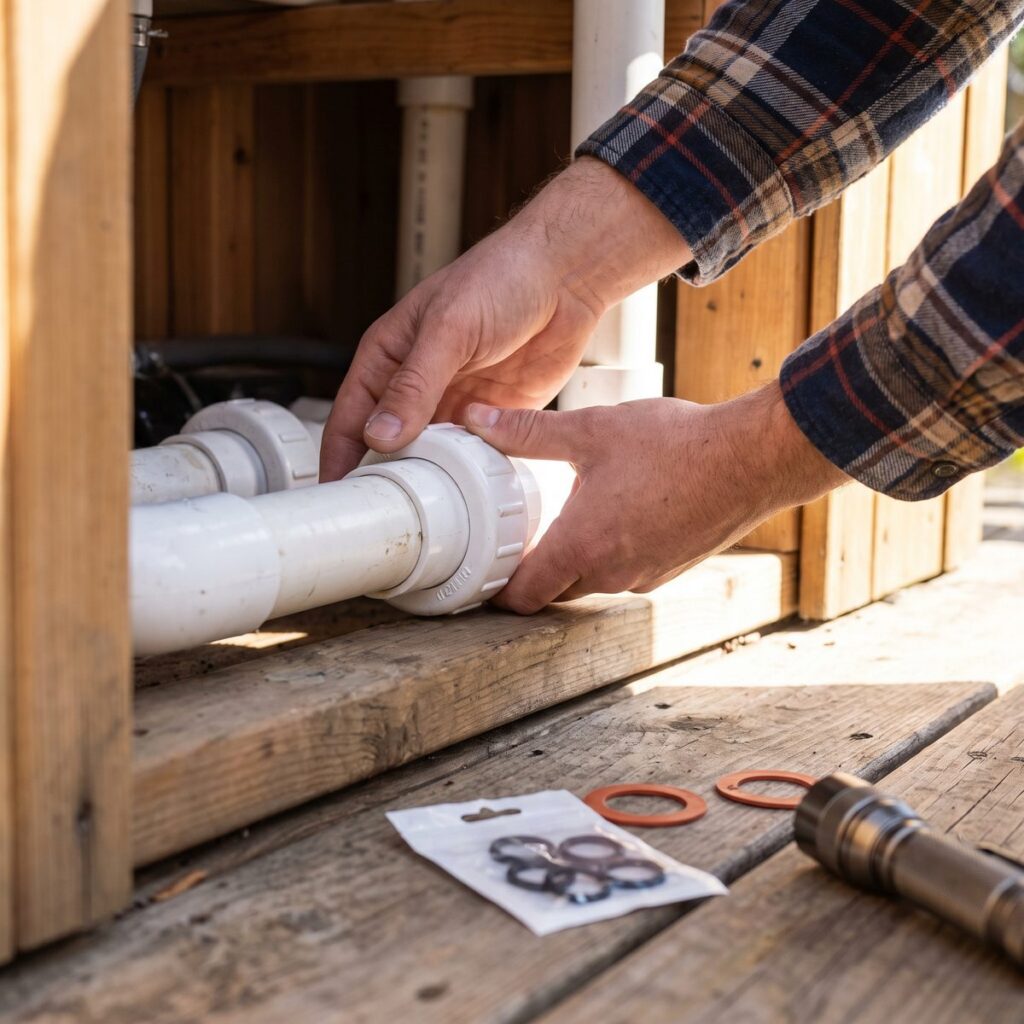
- Hand-tightening a loose union fitting at the pump or heater (never use a wrench—the plastic threads break easily)
- Replacing a worn O-ring or gasket on a jet, pump, or valve
- Swapping out a cracked jet that simply unscrews from the shell
You won’t need much: a flashlight, a few replacement gaskets or O-rings, and a little patience. Most of these repairs take anywhere from 15 minutes to an hour, and the parts are inexpensive. If you can find the leak and reach it, there’s a good chance you can handle it.
Leak Sealers: Do They Actually Work?
Liquid leak sealers are poured into the water and circulated so they can find and plug a small leak from the inside. For a slow drip or a tiny pinhole, they can genuinely work—and they’re a reasonable temporary fix when you need to buy time.
That said, know their limits. Sealers are not a reliable solution for major plumbing failures, cracked manifolds, or significant freeze damage. Relying on a sealer for a big leak usually just delays the real repair while the underlying problem gets worse. Think of them as a band-aid, not a cure.
Safety Precautions Before Any Repair
Water and electricity don’t mix, so a few rules are non-negotiable before you touch anything:
- Disconnect the power at the GFCI breaker—every time, no exceptions.
- Drain the water below the level of the component you’re working on (or fully, depending on the repair).
- Watch for electrical hazards, and if a leak is anywhere near wiring or the control box, stop and call a professional.
If at any point a repair feels beyond your comfort level, that instinct is worth trusting.
When to Call a Professional Hot Tub Repair Technician
Signs the Leak Is Beyond DIY Repair
Some leaks simply aren’t homeowner territory. It’s time to bring in a pro when you’re facing plumbing buried deep in the foam insulation, major shell damage, or a leak you’ve “fixed” two or three times that keeps coming back.
Recurring leaks usually mean the real source was never found. And improper repairs can do more harm than good—cracking a fitting, voiding a warranty, or letting wet foam quietly destroy your insulation. When the problem is hidden or stubborn, professional help saves money in the long run.
Benefits of Professional Leak Detection
A trained technician brings tools and experience you don’t have at home. Pressure testing, specialized detection equipment, and years of pattern recognition let a pro isolate a leak fast—often in places that would take a homeowner an entire weekend to find.
That means less guesswork, less wasted water, and a repair that actually holds. A correct diagnosis the first time is almost always cheaper than several rounds of trial and error.
What to Expect During a Professional Service Visit
When you book professional hot tub repair services, the visit usually follows a clear process. The technician inspects the equipment bay and plumbing, runs the system to locate the leak under pressure, and pinpoints the source.
From there, you’ll get a straightforward explanation of the fix, the parts involved, and the timeline. Many leaks are resolved in a single visit, while harder-to-source parts may take a few days. A good technician will also leave you with maintenance recommendations to help prevent the next leak before it starts.
Hot Tub Leak Repair Costs: What Homeowners Should Expect
Average Repair Costs by Leak Type
Costs vary widely depending on where the leak is and how hard it is to reach, but national averages give a useful ballpark. (Local pricing in Central Oregon may differ, so always get a quote.)
- Minor leaks (loose fittings, small cracks): roughly $100–$300
- Leak detection and repair, typical: around $200–$500
- Pump-related leaks / seal replacement: $300–$1,000+
- Jet or gasket replacement: often $50–$200 per jet
- Major or hard-to-access leaks, freeze damage, or shell repair: $500–$1,500+
Labor is the other variable. Many technicians charge $75–$200 per hour and a service-call fee of $100–$200, with cost driven up by accessibility, brand-specific parts, and how long the leak takes to find. Sources like Angi and HomeGuide track these ranges in detail.
Repair vs. Replacement Decision
When repair bills start adding up, the natural question is whether to fix the spa or replace it. This table breaks down the trade-offs:
| Factor | Repair Existing Hot Tub | Replace With a New Hot Tub |
|---|---|---|
| Age of the Hot Tub | Worth repairing if the spa is relatively new and structurally sound | Replacement may be better if the spa is 10–15+ years old |
| Repair Costs | Minor leaks and component fixes are usually cost-effective | Frequent or expensive repairs can exceed the spa’s value |
| Energy Efficiency | Older units may use more electricity and need more maintenance | Newer models offer better insulation and lower operating costs |
| Frequency of Problems | Occasional repairs are manageable | Constant leaks or recurring failures signal it’s time |
| Long-Term Value | Repairs can extend lifespan for several more years | A new spa adds updated features, warranties, and reliability |
| Overall Condition | Good shell, cabinet, and plumbing support repair | Cracked shells or major plumbing damage may justify replacement |
A useful rule of thumb: if a repair approaches half the cost of a new spa, replacement usually makes more sense. If you reach that point, our team can walk you through new hot tubs sized and built for Central Oregon conditions.
How Preventative Maintenance Saves Money
The cheapest leak is the one you prevent. Catching a worn gasket or a slightly loose union early might cost a few dollars in parts—while ignoring it can lead to soaked insulation, a failing pump, and a repair bill many times larger.
Regular maintenance also keeps your equipment running efficiently, which protects against premature failure and lowers your energy costs. Most importantly, consistent care extends the overall lifespan of your spa, turning a maintenance investment into years of added enjoyment. Routine hot tub service plans make this easy by keeping inspections on a schedule instead of leaving them to chance.
Why Homeowners Trust Aqua Clear for Hot Tub Repair
When a leak shows up, what you really want is someone who can find it fast and fix it right. Aqua Clear specializes in diagnosing and repairing complex hot tub leaks and equipment issues—from elusive plumbing leaks buried in the foam to pump seals, valves, and shell repairs.
What sets us apart is the experience. Our hot tub maintenance experts know Central Oregon spas inside and out, including the freeze-related issues that come with winters in Bend, Sisters, and the surrounding high desert. That local knowledge means faster diagnoses and fewer repeat visits.
We also believe a repair shouldn’t be a stressful experience. We focus on fast, reliable service built around your convenience, with transparent communication so you always know what’s happening and why. No surprises, no pressure—just honest answers.
Beyond the immediate fix, we offer comprehensive support to keep your spa healthy long term, including water care, routine inspections, and preventative servicing. As your local hot tub specialists, we tailor each repair solution to your spa and your situation—because every hot tub, and every homeowner, is a little different.
Conclusion
A leaking hot tub doesn’t have to mean the end of relaxing soaks—but it does call for prompt attention. Early leak detection is the single best thing you can do to prevent expensive, long-term damage to your pump, heater, and insulation.
Whether you tackle a loose fitting yourself with the safe DIY steps above or call in a professional for a hidden plumbing leak, the key is to act quickly rather than topping off the water and hoping it sorts itself out. The sooner a leak is found, the smaller and cheaper the fix.
If you’d rather skip the guesswork, we’re here to help. Contact our team for fast, dependable hot tub leak repair and maintenance—and get back to enjoying your spa with peace of mind.
Frequently Asked Questions
Can a hot tub leak cause higher electricity bills?
Yes. When water leaks into the cabinet, it can saturate the foam insulation that keeps your spa efficient. Wet insulation forces the heater and pump to work harder to maintain temperature, which quietly raises your energy costs—another reason to address leaks early.
Is it safe to use a leaking hot tub?
It’s best not to. A leak can worsen quickly, damage equipment, and—if water reaches electrical components—create a genuine safety hazard. Until the leak is repaired, turn the spa off and have it inspected rather than continuing to use it.
How long does hot tub leak repair usually take?
It depends on the source. A loose fitting or worn gasket can be fixed in under an hour, while a leak hidden in the foam or a part that has to be ordered may take a few days. Professional leak detection speeds things up by pinpointing the source quickly.
Will hot tub leak sealers damage spa equipment?
When used as directed for small, slow leaks, quality sealers generally won’t harm your equipment and can buy you time. The catch is that they’re a temporary fix, not a permanent repair for major plumbing failures—so use them as a stopgap, not a long-term solution.
How often should a hot tub be professionally inspected?
A yearly professional inspection is a smart baseline, and twice a year is even better if your spa sees heavy use or harsh winter conditions. Routine inspections catch worn seals and small leaks early, before they turn into bigger, more expensive problems.