
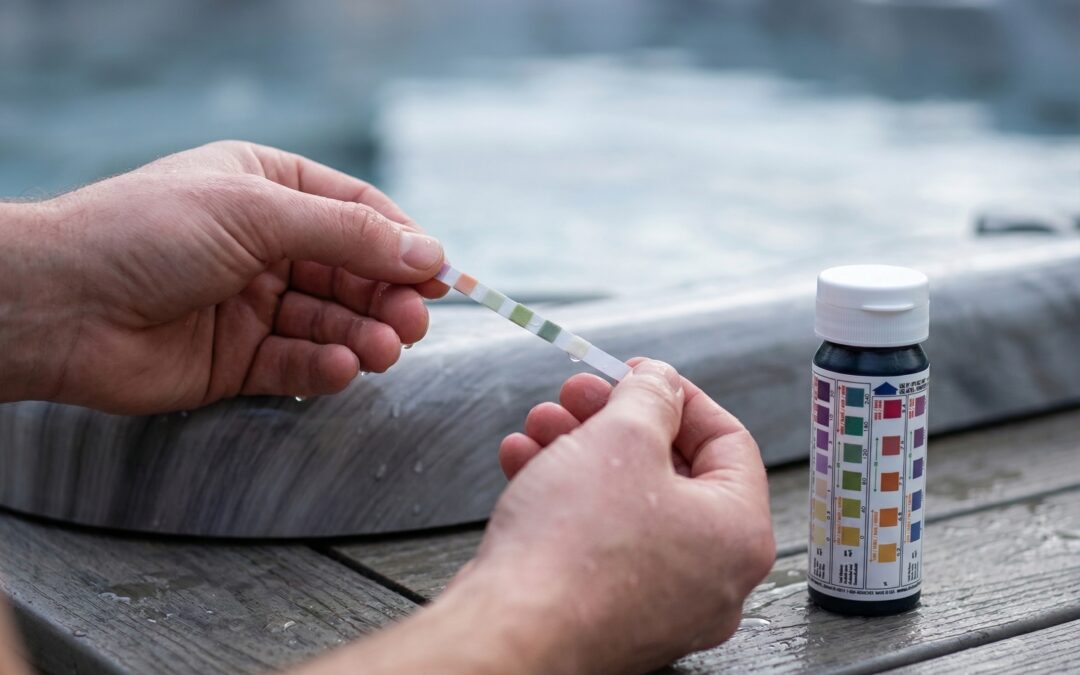
Keeping your hot tub clean isn’t complicated, but it does take one small, consistent habit: testing your water. Whether you’re soaking after a snowy day on Mt. Bachelor or winding down on a cool Sisters evening, you want water that feels good on your skin and is genuinely safe to use. The simplest way to know what’s going on under the surface is with hot tub test strips.
These little paper strips give you a quick read on what your water needs in just seconds. In this guide, you’ll learn exactly what hot tub test strips measure, how to use them correctly, how often to test, and how to avoid the most common mistakes new owners make. By the end, you’ll have everything you need to keep your spa water crystal clear all year long.
Key Takeaways
- Hot tub test strips are the easiest way to check water chemistry at home, no special skills required.
- Most strips measure pH, sanitizer (chlorine or bromine), total alkalinity, and calcium hardness.
- Test your water 2–3 times per week, and always after refilling or heavy use.
- Balanced water protects your skin, your equipment, and the lifespan of your hot tub.
- Store strips in a cool, dry place and replace them once they expire.
- When water looks or feels off, a quick test plus the right chemical adjustment usually solves it.
Why Hot Tub Water Testing Is Important for Spa Maintenance
Hot tubs run at warm temperatures that bacteria absolutely love. Without regular testing, your spa can quickly shift from a backyard retreat into a hotbed for skin irritation, cloudy water, and equipment problems.
Consistent hot tub water testing is what stands between you and those headaches. Balanced water:
- Kills bacteria and viruses before they can spread
- Keeps water comfortable for your skin and eyes
- Prevents foaming, scaling, and unpleasant odors
- Protects internal components like jets, heaters, and pumps from corrosion
- Extends the overall life of your hot tub investment
The CDC’s home hot tub water treatment guidelines emphasize that routinely testing chlorine and pH is one of the single most important steps for keeping any home hot tub safe to use.
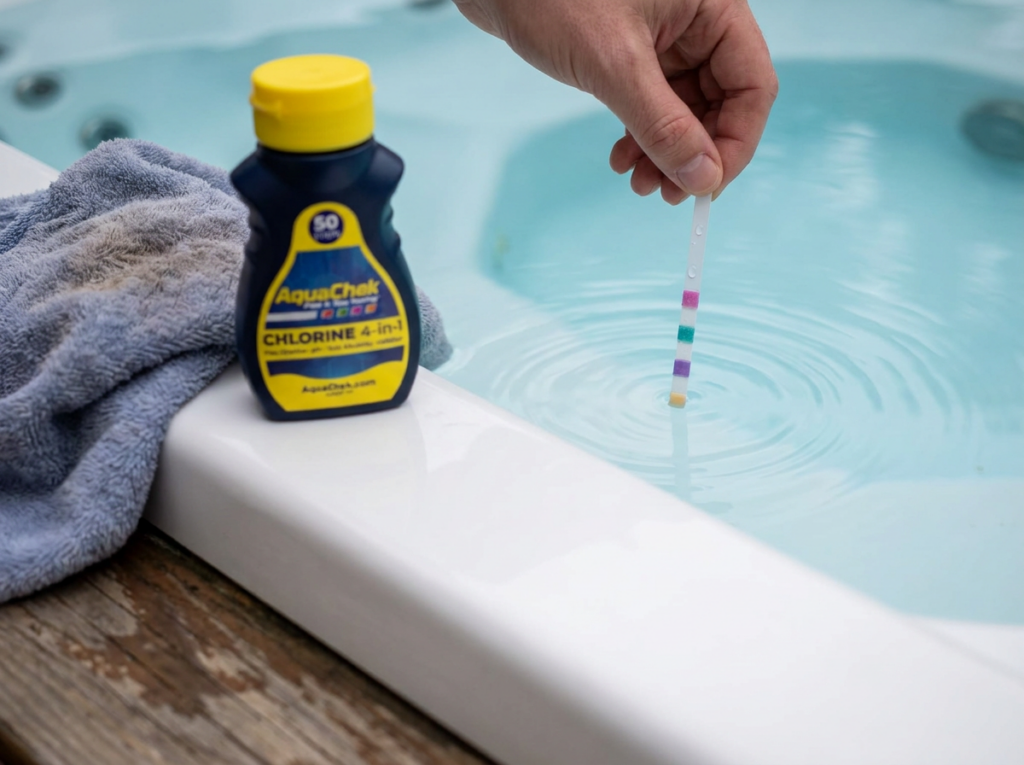
What Do Hot Tub Test Strips Measure in Spa Water?
Quality test strips measure four to six key elements at once. These elements work together to create what’s known as spa water balance, the sweet spot where water is clean, comfortable, and equipment-friendly.
pH Levels in Hot Tub Water Balance
pH measures how acidic or basic your water is on a scale from 0 to 14. For a hot tub, the ideal pH range is 7.2 to 7.8.
When pH dips too low (acidic), water becomes corrosive and can damage your spa’s metal components, sting your eyes, and dry out your skin. When pH climbs too high (basic), water gets cloudy, your sanitizer stops working effectively, and scale starts forming on jets, heaters, and filters.
Chlorine and Sanitizer Levels in Spa Water Testing
Sanitizer is your first line of defense against bacteria. Whether you use chlorine, bromine, or a salt-based system, this number tells you whether your water is actively killing germs.
For chlorine, aim for 1–3 ppm of free chlorine. For bromine, aim for 3–5 ppm. Low sanitizer means bacteria are multiplying. High sanitizer can cause skin and eye irritation along with that strong “chemical” smell most people don’t actually want in their spa.
Alkalinity Levels for Stable Hot Tub Water Balance
Total alkalinity acts like a buffer that keeps your pH stable. The ideal range is 80–120 ppm.
When alkalinity is too low, pH bounces around unpredictably (often called “pH bounce”), making it nearly impossible to keep your water balanced. When it’s too high, pH tends to drift upward and water gets cloudy. If your alkalinity ever climbs too high, our step-by-step guide on how to lower alkalinity in a hot tub walks you through the easy fix.
Hardness Levels in Hot Tub Water
Calcium hardness measures the amount of dissolved minerals in your water. The ideal range is 150–250 ppm for most acrylic hot tubs.
Soft water (low calcium) is corrosive and can eat away at internal components. Hard water (high calcium) creates scale buildup on jets, heaters, and along the waterline. In Central Oregon, where well water and municipal water can both run on the harder side, this is a parameter worth watching closely.
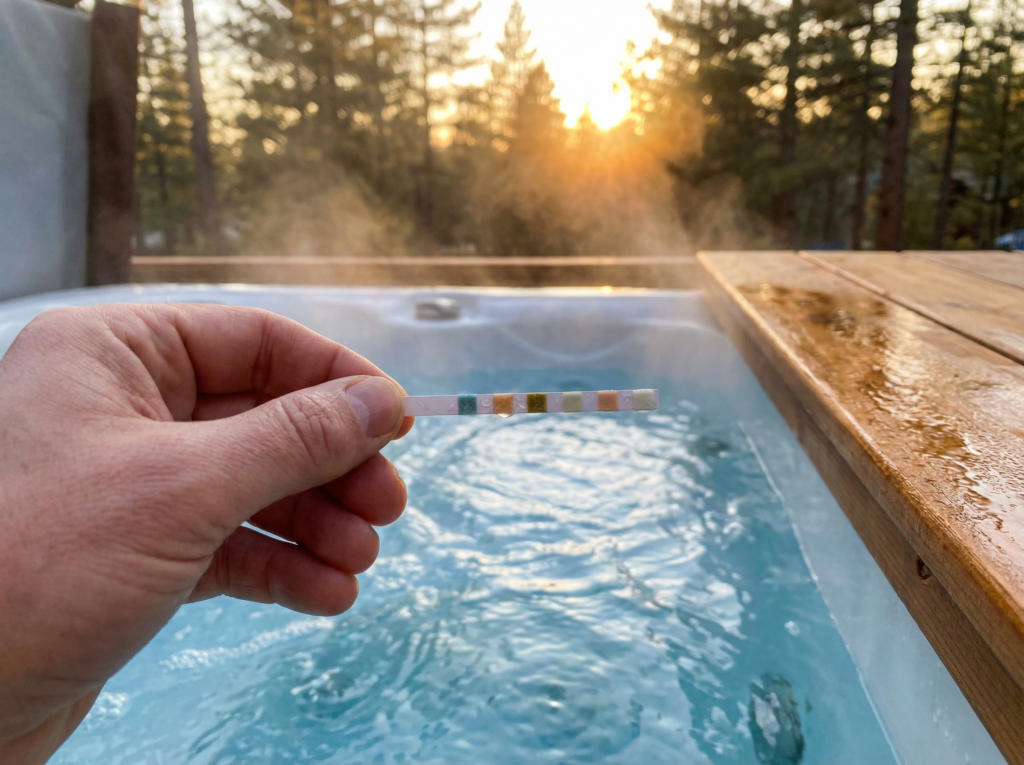
How to Use Hot Tub Test Strips Step by Step
Using hot tub test strips takes about 30 seconds once you know what you’re doing. Here’s the easy, step-by-step process.
Step 1: Collecting Water Sample for Testing
Don’t grab water from the surface. Reach down about forearm-deep into the spa to collect water that represents the bulk of what’s actually circulating through your tub.
Pull a single strip from the bottle and quickly reseal the container; humidity is the enemy of accurate strips. Dip the strip into the water for the time noted on the package (usually about one second), then remove it. Don’t shake off the excess water. Just hold it level so the test pads stay wet.
Step 2: Reading Hot Tub Test Strip Results
Hold the strip next to the color chart printed on the bottle. Compare each pad to the color blocks and read your results within the time window listed on the package, usually 15–30 seconds.
Reading too early or too late will give you a misleading number. If the lighting is poor outside, step into the garage or under a covered area where colors are easier to match accurately.
Step 3: Adjusting Spa Water Based on Results
Once you know what’s off, you can dose your water with the right chemical. Common adjustments include:
- Low pH: Add pH increaser (sodium carbonate)
- High pH: Add pH decreaser (sodium bisulfate)
- Low sanitizer: Add chlorine or bromine per the manufacturer’s directions
- Low alkalinity: Add alkalinity increaser
- High alkalinity: Add a small dose of pH decreaser and aerate the water
Always add chemicals to the water — never water to the chemicals — and run your jets for at least 15–30 minutes after dosing. Wait the recommended time before retesting and soaking. For a deeper look at what to add and when, see our guide to the best spa chemicals for a crystal clear hot tub.
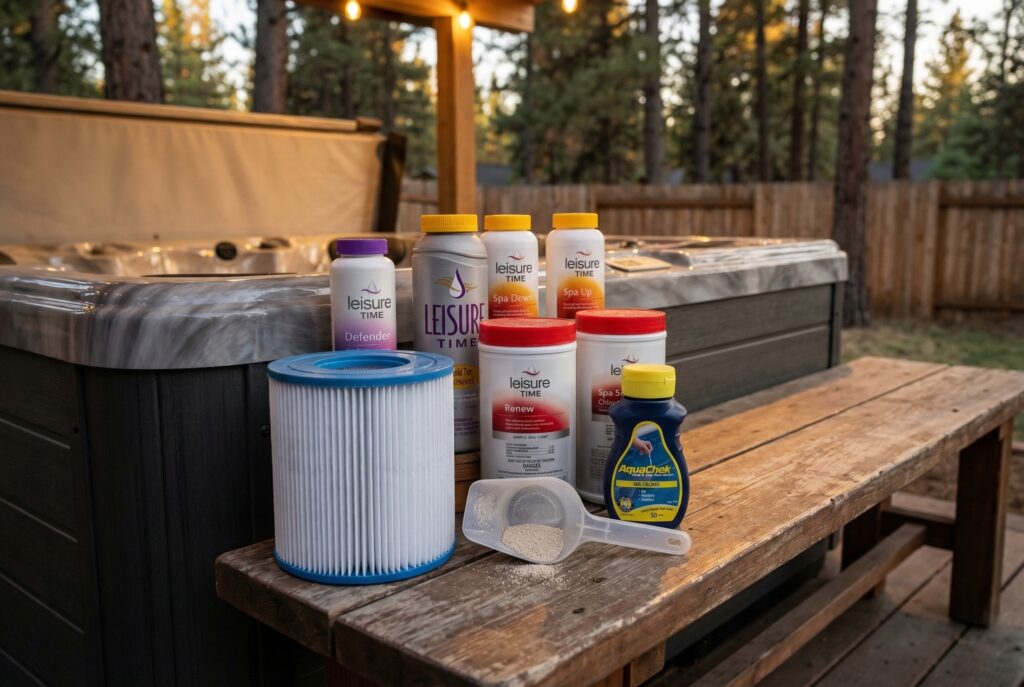
How Often to Use Hot Tub Test Strips for Accurate Results
For most hot tub owners, testing 2–3 times per week is the sweet spot. That said, you’ll want to test more often in certain situations:
- After heavy use (parties, multiple soakers, kids splashing around)
- After a fresh water fill or top-off
- Following heavy rain or snowmelt that might have splashed into the tub
- If the water smells, looks, or feels different than usual
- Before adding any chemicals
If you’re new to hot tub ownership, test daily for the first two weeks. You’ll start to see patterns in how your water behaves with your climate and usage, which makes long-term balance much easier.
Common Mistakes When Using Hot Tub Test Strips
Even simple tools can give bad readings if you skip the basics. Watch out for these common pitfalls:
- Reading at the wrong time. Too early or too late will distort the colors and give you a false reading.
- Touching the test pads with your fingers. Skin oils contaminate the strip and skew the results.
- Using expired strips. Most strips lose accuracy after 1–2 years. Always check the expiration date on the bottle.
- Storing strips poorly. Heat, humidity, and direct sunlight will ruin a brand-new bottle. Keep them tightly sealed in a cool, dry spot.
- Testing right after adding chemicals. Give your water at least 15–30 minutes of circulation before retesting.
- Ignoring small imbalances. A small drift today becomes a major problem next week. Address minor issues right away.
3 Strong Signs Your Hot Tub Water Balance Is Off
Even if you haven’t tested in a while, your spa will often tell you something’s wrong. Watch for these three signs:
- Cloudy or foamy water. Usually points to high pH, low sanitizer, or excess body oils and lotions in the water.
- Strong chemical smell. Counterintuitively, that “pool smell” means your sanitizer is overworked, not that you have too much. It’s caused by chloramines and signals a sanitizer problem.
- Skin or eye irritation. Itchy skin or red eyes typically mean pH is out of range, sanitizer levels are off, or both.
If you notice any of these, pull out a test strip immediately. For cloudy water specifically, our cloudy hot tub water troubleshooting guide walks through every likely cause and how to fix it.
Choosing the Best Hot Tub Test Strips for Your Spa
Not all test strips are created equal. When shopping for strips, look for these features:
- Multi-parameter strips that measure at least 4–6 elements (pH, total alkalinity, sanitizer, hardness, and ideally cyanuric acid)
- Clearly printed color charts that are easy to read in daylight
- Recent expiration dates — avoid strips that have been sitting on a shelf for years
- Compatibility with your sanitizer system (chlorine, bromine, or salt water hot tubs)
At Aqua Clear, we recommend Aquachek test strips for consistent readings. Water care experts at SwimUniversity recommend dipping your strip just under the surface, holding it still for about 15 seconds, and comparing it to the chart immediately; small habits that make a big difference in accuracy. If you’d rather skip the guesswork, you can also bring a sample of your hot tub water to our Bend or Sisters showroom and we’ll run a full analysis for you, free of charge.
Hot Tub Maintenance Routine Using Test Strips
The easiest way to stay on top of water care is to build testing into a simple routine. Here’s a schedule that works well for most Aqua Clear customers across Central Oregon:
| Frequency | Task |
|---|---|
| 2–3x per week | Test water with strips and adjust chemicals as needed |
| Weekly | Wipe waterline, add shock treatment, rinse the filter |
| Monthly | Deep-clean filter, check jets, inspect cover |
| Quarterly | Drain and refill (every 3–4 months for most spas) |
| Annually | Replace filter cartridge and schedule a professional service check |
This routine keeps your water balanced, your equipment protected, and your hot tub ready whenever you are. Pair it with a quality water care system like AquaFinesse and maintenance gets even simpler.
Aqua Clear Hot Tubs: Expert Help for Spa Water Balance
At Aqua Clear Hot Tubs, we’ve been helping Central Oregon homeowners enjoy their spas for years. With locations in Bend and Sisters, we’re your local resource for everything hot tub-related — from your first purchase through years of carefree ownership.
Our team can help you with:
- Expert hot tub selection and custom orders
- Professional installation across Bend, Sisters, Redmond, Sunriver, and Black Butte
- Ongoing maintenance and water care support, including professional hot tub service and chemical guidance
- Service packages and repairs when something goes wrong
- Free in-store water testing at either showroom
If you’re not sure where to start, bring a sample of your water into our Bend showroom at 20505 Robal Ln or our Sisters location at 413 W Hood Ave. We’ll test it on the spot, walk you through your results, and help you head home with exactly the products your spa actually needs.
Conclusion
Testing your hot tub water doesn’t have to be complicated. With a quality bottle of test strips and 30 seconds, two or three times a week, you’ll keep your spa water clean, comfortable, and ready for whenever you want to soak.
The habit pays off in better water quality, longer equipment life, and far fewer headaches. And when you have questions, you don’t have to figure it out alone, the Aqua Clear team is here to help. Stop by either showroom or fill out our Get Started form and we’ll take it from there.
Frequently Asked Questions
How accurate are hot tub test strips?
Quality hot tub test strips are accurate enough for everyday home use — usually within 10–15% of professional results. For best results, store the strips properly, use them before they expire, and follow the timing instructions exactly. For major decisions like a full drain-and-refill, it’s worth having your water tested professionally at your local hot tub dealer.
Can I use pool test strips for a hot tub?
Technically yes, but it’s not ideal. Pool strips usually focus on cyanuric acid (stabilizer), which isn’t very relevant to most covered hot tubs. They also don’t always cover the parameters most important for spas, like bromine. Strips specifically labeled for spas or hot tubs will give you more useful data and a clearer picture of your water balance.
What is the ideal water balance for a hot tub?
For most hot tubs, the ideal ranges are: pH 7.2–7.8, total alkalinity 80–120 ppm, free chlorine 1–3 ppm (or bromine 3–5 ppm), and calcium hardness 150–250 ppm. Keep all four in range and your water will stay clear, safe, and comfortable to soak in.