
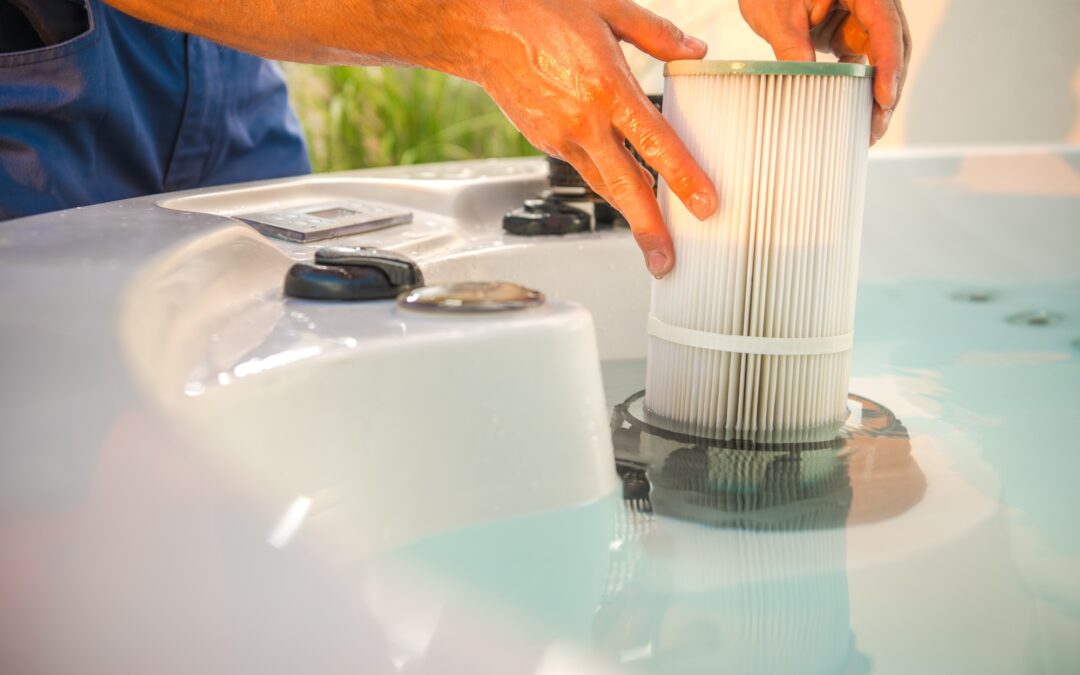
If your spa water has turned cloudy, your jets feel weaker than usual, or there’s a faint smell when you lift the cover, the culprit is often hiding in plain sight: your filter. Knowing how to clean a hot tub filter is one of the simplest, highest-impact maintenance habits you can build, and it takes less time than most people expect.
Your filter is the hardest-working part of your spa. Every time the pump runs, water passes through it, and the filter traps the oils, lotions, hair, dust, and fine debris that would otherwise cloud your water and stress your equipment. When that filter gets clogged, everything downstream suffers: water clarity, sanitizer performance, circulation, and even your energy bill.
This guide walks you through everything you need: how to spot a dirty filter, how often to clean it, the exact step-by-step process, the mistakes to avoid, and when it makes more sense to call in a pro. Whether you’re a first-time spa owner in Bend or a seasoned soaker in Sisters, you’ll come away with a reliable cleaning routine you can repeat with confidence.
Key Takeaways
- Rinse your filter weekly with a garden hose and deep-clean it monthly with a dedicated filter cleaner for the best results.
- A dirty filter causes cloudy water, weak jets, odors, and higher energy use. These are your early warning signs.
- Never use household detergents, bleach, or a pressure washer. They damage filter media and throw off your water chemistry.
- Always rinse out all cleaner and let the filter dry before reinstalling to prevent foaming.
- Plan to replace your filter about once a year, and sooner if the pleats are torn, matted, or no longer rinse clean.
What Does a Hot Tub Filter Actually Do?
Think of your filter as the kidney of your spa. As water circulates through the pump and heater, it’s pushed through the filter media, the pleated, fabric-like material that captures contaminants before clean water returns to the tub. A typical cartridge filter has three parts: the pleated media that does the filtering, a rigid plastic core that gives it strength, and end caps that seat it into the filter housing.
Most residential spas use pleated cartridge filters, which are reusable and designed to be cleaned repeatedly. Some smaller or portable spas use disposable filters instead. Either way, the job is the same: trap dirt, body oils, and debris so your water stays clear and your sanitizer can focus on killing bacteria rather than fighting visible gunk.
When a filter clogs, water can’t move through it efficiently. That restricted flow forces the pump to work harder, reduces circulation, and lets contaminants build up in the water. The result is the cloudy, tired-looking water that sends so many owners searching for answers. Clean filtration is the quiet foundation of a healthy spa.
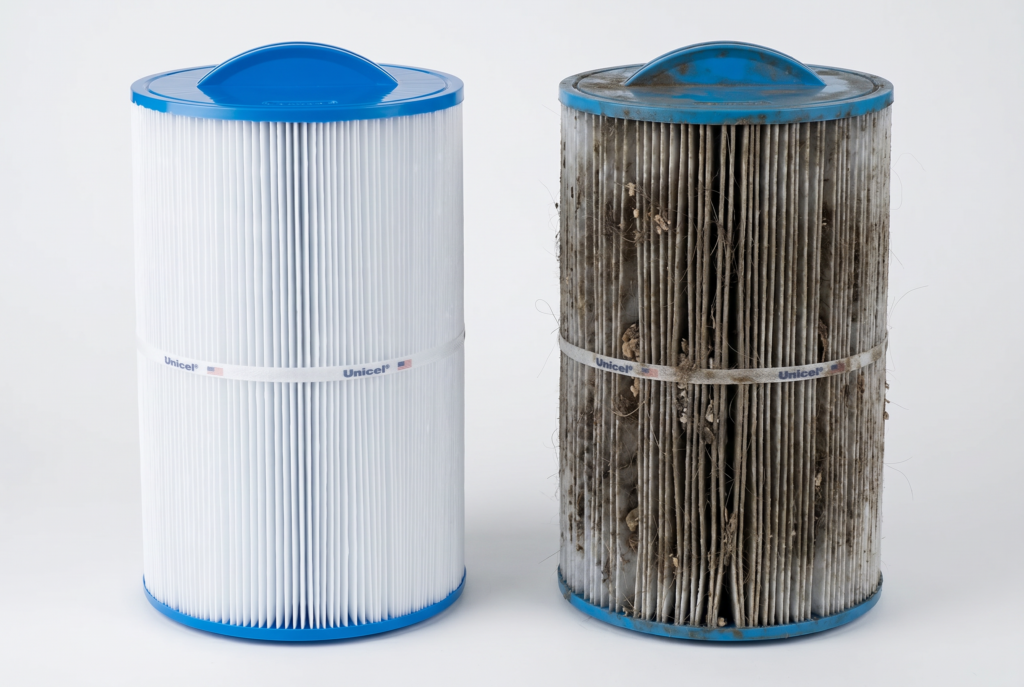
4 Signs Your Hot Tub Filter Needs Cleaning
Your spa usually tells you when the filter needs attention. Here are the four signs to watch for.
1. Cloudy or Foamy Water. Cloudy water is the most common red flag. When the filter can’t keep up, body oils, lotions, and fine particles stay suspended in the water instead of being trapped and removed. You may also notice persistent foam, which points to a buildup of organic residue your filter can no longer capture. A dirty filter also makes your chlorine or bromine work overtime, so your sanitizer burns off faster than it should.
2. Weak Jet Pressure and Poor Circulation. If your jets have lost their punch, a clogged filter is a likely cause. Debris packed into the pleats restricts water flow, which weakens jet pressure and slows overall circulation. Poor circulation also makes heating less consistent, and your spa works harder to hold temperature, especially on cold Central Oregon mornings. Many owners overlook this sign because it creeps up gradually.
3. Unpleasant Odors or Skin Irritation. A neglected filter can’t remove the organic matter that feeds bacteria. That leads to musty odors and, in some cases, skin irritation after a soak. Warm, poorly filtered water is exactly where germs like *Pseudomonas* (the cause of “hot tub rash”) can take hold, which is why the CDC emphasizes consistent maintenance and water care for safe soaking. If the water smells off, the filter is one of the first things to check.
4. Increased Energy Usage. A blocked filter forces your pump to push against resistance, drawing more power and running longer to keep water moving. Over time, that extra strain shortens equipment life and quietly raises your electric bill. Regular filter cleaning is one of the cheapest forms of preventative maintenance, and a few minutes now protects expensive components later.
How Often Should You Clean a Hot Tub Filter?
There’s no single magic number, but a layered schedule works well for almost every spa. Frequency depends on how often you use your tub and how many people are in it.
Weekly Maintenance Recommendations. Once a week, remove the filter and give it a thorough rinse with a garden hose, spreading the pleats apart so water flushes out trapped hair and debris. This quick habit takes five minutes and dramatically extends filter life. If you use your spa heavily, with frequent guests, post-Mt. Bachelor soaks, or kids in and out, rinse more often.
Monthly Deep Cleaning Schedule. About once a month, move beyond a rinse to a chemical soak using a spa-safe filter cleaner. Soaking dissolves the embedded oils, minerals, and residue that a hose can’t reach. Adjust the timing for your season and usage: a spa that sees nightly winter use needs more frequent deep cleaning than one used a few times a month.
When to Replace Instead of Clean. Even the best-maintained filter eventually wears out. According to The Cover Guy, it’s best to replace your filter about once a year, because water keeps cycling through and breaks down the media over time. Replace your filter when you see frayed or collapsed pleats, permanent gray discoloration, or a cartridge that no longer rinses clean. An old filter compromises water clarity no matter how carefully you clean it.
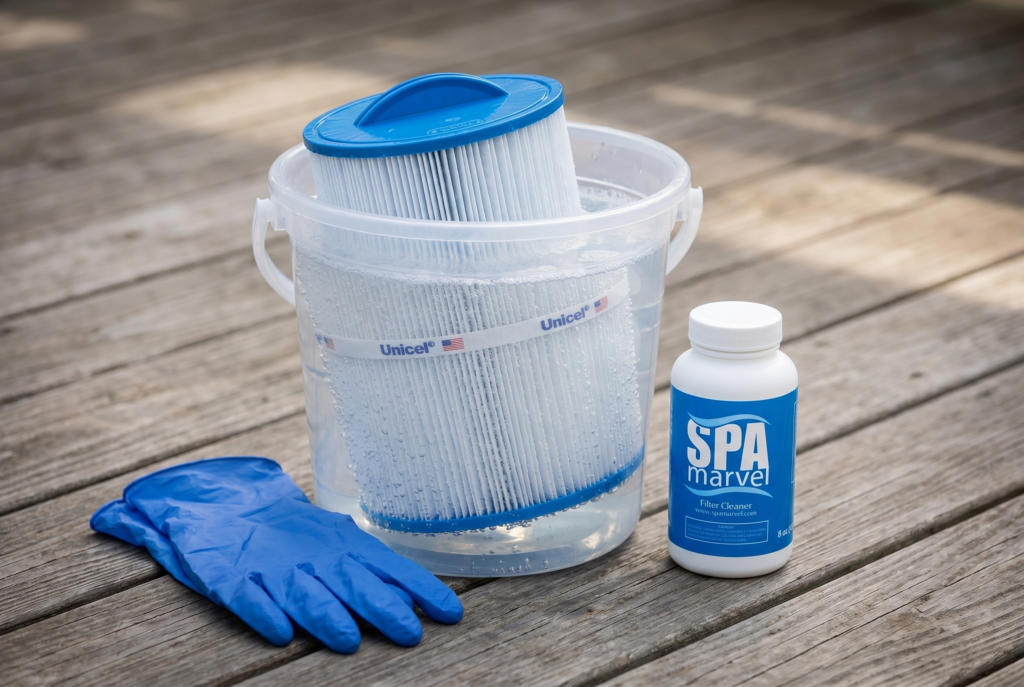
Tools and Supplies Needed to Clean a Hot Tub Filter
You don’t need much to get the job done, just the right products used the right way.
Essential Cleaning Supplies.
- A garden hose with an adjustable or filter-flushing nozzle
- A spa-safe filter cleaner (spray or soak formula)
- A bucket large enough to fully submerge the cartridge
- A pair of gloves to keep cleaner off your hands
Using a chemical designed specifically for spa filters matters, because these products loosen grease and oils without harming the media or leaving residue that disrupts your water chemistry.
Products to Avoid. Skip the shortcuts. Household dish soap, laundry detergent, and bleach may seem convenient, but they cling to filter fibers and cause heavy foaming the moment your jets turn back on. Bleach in particular breaks down the media and shortens filter life. While a diluted vinegar soak is a popular home remedy for light buildup, a dedicated filter cleaner is far more effective at cutting through the body oils that cause most clogs, and it rinses cleaner.
Choosing the Right Filter Cleaner. Spray cleaners are great for fast weekly touch-ups, while soaking solutions handle deeper monthly cleaning. Look for biodegradable, spa-specific formulas that are compatible with pleated cartridge media. If you’re unsure which product fits your filter, the team at Aqua Clear can point you to the right hot tub chemicals and accessories for your specific model.
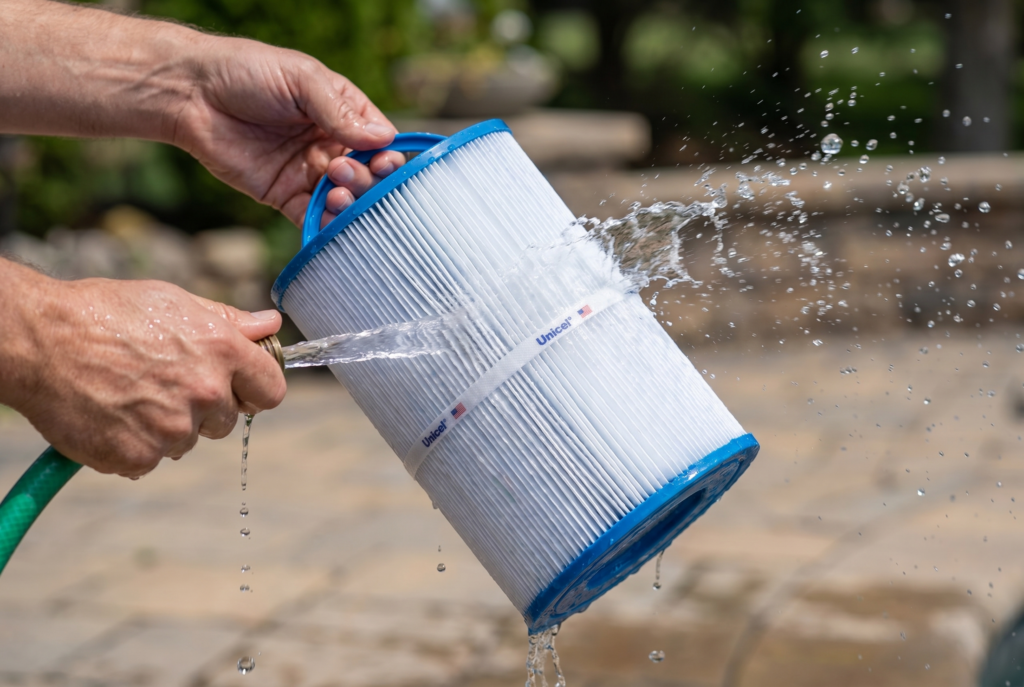
Step-by-Step Guide: How to Clean Hot Tub Filter Properly
Follow these six steps for a complete cleaning. For a deeper reference on the soak process, SwimUniversity’s filter walkthrough is a helpful companion.
- Turn Off the Hot Tub. Always shut off power at the breaker before you start. This protects you from electrical hazards and prevents the pump from running dry while the filter is out. Never operate the spa without the filter in place.
- Remove the Filter Carefully. Locate the filter, usually in the skimmer well near the waterline, and remove it gently by unscrewing or lifting it out, depending on your model. Check your owner’s manual if you’re unsure. While it’s out, inspect the filter housing for trapped debris.
- Rinse the Filter Thoroughly. Hold the hose at about a 45-degree angle and rinse between every pleat, working top to bottom. The angle flushes debris out rather than driving it deeper. Use steady water pressure, not a blast, to protect the delicate media.
- Soak the Filter in Cleaning Solution. For a deep clean, fill your bucket with water and add filter cleaner per the label instructions. Submerge the cartridge fully and let it soak. A few hours works for routine cleaning; an overnight soak is best for heavily used filters with stubborn oil buildup.
- Rinse and Dry Before Reinstalling. Rinse the filter again until no foam or cleaner remains. Any leftover residue will foam up when the jets restart. Letting the filter dry before reinstalling helps lift remaining debris and lets you inspect the pleats for wear.
- Restart and Test the Spa. Seat the clean filter back in place, restore power, and let the water circulate. Once it’s flowing, check your jet pressure and water clarity, then test and balance your water chemistry to finish the job.
Deep Cleaning vs. Quick Rinsing: What’s the Difference?
Both methods matter. The trick is knowing when to use each. This table breaks it down.
| Cleaning Method | When It’s Needed | Main Purpose | What to Include | Recommended Frequency |
|---|---|---|---|---|
| Quick Rinsing | Light debris buildup and regularly maintained hot tubs | Remove surface dirt and maintain consistent circulation | Rinse filters with water to clear dust, hair, and loose particles | Weekly or every 1–2 weeks |
| Deep Cleaning | Heavy usage, oil/lotion buildup, or neglected maintenance | Restore filtration performance and improve water quality | Soak filters in a cleaning solution to remove embedded contaminants and grease | Monthly or every 4–6 weeks |
| Post-Party Cleaning | After gatherings or periods of high spa usage | Prevent water contamination and excessive filter clogging | Thorough rinse or deep clean depending on debris level | As needed after heavy use |
| Seasonal Cleaning | Before or after seasonal usage changes | Maintain efficiency and extend filter lifespan | Inspect, deep clean, and rotate backup filters if available | Every season |
| Filter Rotation | For spa owners using multiple filters | Reduce downtime and increase overall filter longevity | Swap clean backup filters while dirty ones are being cleaned | Ongoing maintenance practice |
Common Mistakes to Avoid When Cleaning Hot Tub Filters
A few well-meaning habits do more harm than good. Steer clear of these.
Using High-Pressure Washers. It’s tempting to blast a dirty filter clean, but a pressure washer tears the pleats and frays the media. Once that material is damaged, the filter can’t trap fine particles, meaning dirtier water even after “cleaning.” Stick to a standard hose with moderate pressure. We recommend using the “jet” feature on a hose sprayer.
Reinstalling Soapy or Dirty Filters. Putting back a filter that’s still caked with residue or soaked in cleaner transfers contaminants right back into your water and can trap moisture that encourages bacterial growth. Rinse fully, and ideally let the cartridge dry before it goes back in.
Ignoring Water Chemistry. Filter care and water balance go hand in hand. Improper pH or sanitizer levels clog filters faster and let buildup form. The CDC recommends keeping spa water in the pH 7.0–7.8 range with adequate sanitizer, which both protects bathers and reduces strain on your filter. Test regularly and your filter will stay cleaner, longer.
How Clean Filters Improve Hot Tub Performance
A clean filter pays you back in three clear ways.
Better Water Clarity and Hygiene. A filter that flows freely removes contaminants efficiently, keeping water visibly clear and reducing the demand on your sanitizer. That means fewer chemical adjustments and a healthier, more inviting soak.
Improved Energy Efficiency. When water moves easily through clean media, your pump works less and circulation runs smoothly. Heating stays consistent and your spa draws less power, a meaningful saving over a Central Oregon winter of regular use.
Longer Equipment Lifespan. Proper filtration protects your pump and heater from the strain and debris that cause premature wear. Consistent filter care is one of the most cost-effective ways to extend the life of your entire system.
When to Call a Professional Hot Tub Maintenance Service
Most filter cleaning is a simple DIY job, but some situations call for an expert eye.
Persistent Cloudy Water After Cleaning. If your water stays cloudy even after a thorough cleaning and balanced chemistry, the issue may run deeper, such as hidden biofilm in the plumbing or a circulation problem. A professional can diagnose what a surface clean can’t reach.
Frequent Filter Clogging. A filter that clogs again and again often signals an underlying water chemistry imbalance or aging equipment. Recurring problems are worth a professional inspection before they turn into a costly hot tub repair.
Benefits of Routine Professional Maintenance. A scheduled service visit covers a full inspection, water balancing, and deep cleaning in one stop. For many owners, that convenience, plus the long-term savings from catching small issues early, is well worth it. Aqua Clear’s hot tub maintenance services are built around exactly this kind of stress-free, preventative care.
Why Aqua Clear Hot Tubs Is a Trusted Partner for Spa Maintenance
At Aqua Clear Hot Tubs, we’ve spent years helping Central Oregon homeowners keep their spas clean, balanced, and running beautifully. From water quality management to full spa maintenance, our team understands the local climate and what it takes to keep your hot tub performing through every season, from summer evenings in Redmond to snowy soaks near Sunriver.
We believe spa ownership should be stress-free, which is why we focus on customer education, expert guidance, and ongoing support. Our professional cleaning, inspection, and maintenance services are designed to prevent costly repairs and protect your investment for the long haul. When you want help that goes beyond a quick rinse, our specialists are right here in Bend and Sisters to keep your water crystal clear.
Conclusion
Learning to clean your hot tub filter is one of the easiest ways to protect your water quality, your comfort, and your equipment. A simple rhythm of weekly rinses, monthly deep cleans, and timely replacement keeps your spa clear, efficient, and ready whenever you are.
If you’d rather leave the upkeep to the experts, or you’re running into problems a cleaning won’t fix, we’re here to help. Get started with Aqua Clear Hot Tubs and let our team handle the maintenance so you can simply enjoy the soak.
FAQs
Can you clean a hot tub filter in a dishwasher?
It’s not recommended. Dishwashers use high heat and detergent that can warp the plastic core and leave soap residue in the media, causing foaming when you restart your spa. Stick to a hose rinse and a spa-safe filter cleaner soak instead.
Why does my hot tub filter get dirty so quickly?
Heavy use, body oils, lotions, and unbalanced water chemistry all speed up clogging. If yours seems to dirty unusually fast, check your pH and sanitizer levels, since out-of-range water lets buildup form on the filter much faster.
Should I clean my hot tub filter after shocking the water?
Yes. Shocking loosens contaminants the filter then captures, so a rinse after shocking helps clear that load and keeps your filter working efficiently. It’s a good habit after any heavy treatment or big gathering.
Can a dirty filter damage my hot tub pump?
It can. A clogged filter restricts water flow, forcing the pump to work harder and run hotter, which accelerates wear over time. Keeping the filter clean is one of the simplest ways to protect your pump and heater.
How many hot tub filters should I keep on hand?
Keeping at least one spare filter is smart. You can swap in the clean filter while the dirty one soaks, so your spa is never down, and you’ll always have a backup if one wears out unexpectedly.