
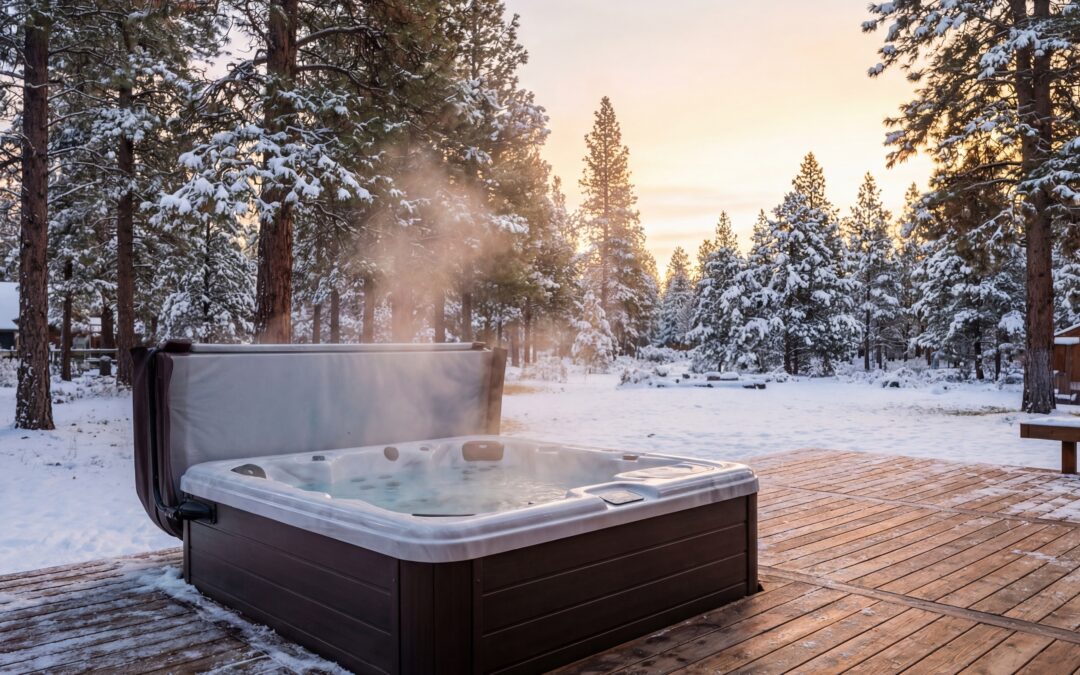
Winter is upon us, and knowing how to winterize a hot tub is essential to protect it from freezing temperatures. Any water left inside the plumbing, heater, or pump can freeze and expand, causing cracks, leaks, and costly damage. Even if you plan to keep your hot tub running, a sudden power outage could leave standing water at risk of freezing within hours. Winterizing your spa keeps it protected, preventing these unexpected repairs and ensuring it’s ready to use come spring.
When Should You Winterize Your Hot Tub in Central Oregon?
Timing is everything when it comes to winterizing your hot tub. The best time to start is before the first hard freeze hits Central Oregon. In Bend and Sisters, temperatures can drop quickly in late fall, sometimes catching homeowners off guard. Cold snaps and early snow can happen as early as October or November, so it is important to stay ahead of the weather.
If you wait until after a freeze, water inside your hot tub’s pipes and components can expand and cause cracks or leaks. These repairs can be costly and sometimes beyond fixing. By winterizing your hot tub early, you give yourself peace of mind and keep your spa protected all season. We recommend checking your local forecast and planning to winterize once nighttime temperatures consistently dip below 32°F.
Tools and Supplies You’ll Need to Winterize a Hot Tub
Having the right tools and supplies makes the process of winterizing much easier and safer. Here’s a simple checklist to help you get started:
- Submersible pump: This helps you remove most of the water quickly from your hot tub.
- Wet/dry vacuum: Useful for clearing water from the lines, jets, and hard-to-reach spots.
- Clean towels: These help you soak up any leftover water in the shell or around components.
- Non-toxic antifreeze: Make sure to choose antifreeze made for hot tubs or RVs. This type is safe for your spa’s plumbing and the environment.
- Tarp or spa cover: A sturdy cover or tarp keeps out snow, ice, and debris during winter.
Using non-toxic antifreeze is very important. Regular automotive antifreeze can be dangerous and may damage hot tub parts. Non-toxic antifreeze helps prevent any leftover water from freezing and hurting the pipes. Having these basic tools on hand will make every step of the process smoother and ensure you do not miss anything important.
How to Winterize a Hot Tub: A Step-by-Step Guide
Effective hot tub winterization isn’t just about shutting down your hot tub—it’s about removing every drop of water from the system. Even small amounts of trapped water in jets, pipes, or valves can freeze and cause hidden damage that only appears once you refill the tub. By taking the right steps now, you’ll protect your investment and avoid unpleasant surprises when warmer weather returns.
Step 1: How to Drain a Hot Tub
Draining all the water is the most important part of winterization. Any leftover water can freeze and damage the plumbing. Here’s how to do it right:
- Turn off the power: Shut off the breaker at the control panel to avoid electrical issues while working.
- Use a sump pump: Place the pump in the footwell to remove most of the water quickly. This method is much faster than using the built-in drain valve.
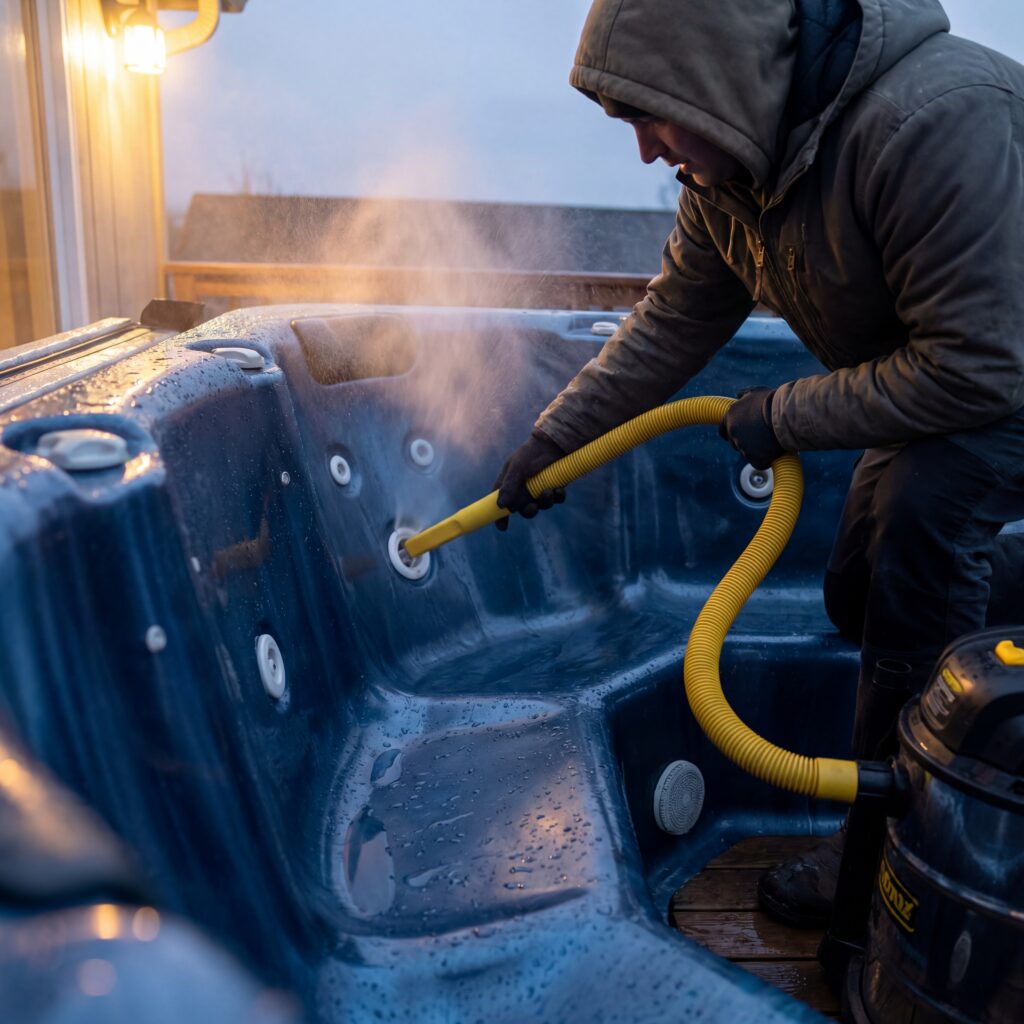
- Vacuum out remaining water: Use a wet/dry vacuum to remove water from the floor, low areas, and any corners of the tub.
- Vacuum every jet, air valve, and fitting: Insert the vacuum nozzle into all openings to pull out any trapped water in the plumbing.
In our experience, areas like the air blower line and diverter valves often trap water, so give these a bit of extra attention. Spending a few extra minutes here can make a big difference in preventing freeze damage.
Step 2: Open the Cabinet and Drain Hot Tub Pump, Heater, and Unions
Even after draining the shell, water will remain inside the internal equipment if it’s not released. Follow these steps to make sure everything is fully drained.
- Remove the side panels: Use a screwdriver or drill to access the plumbing, pump, and heater inside the cabinet.
- Open the drain plugs on the pump and heater: These small plugs allow water trapped inside the equipment to escape.
- Loosen the unions: Unions are the large fittings connecting the plumbing to the pump and heater. Loosen them slightly to release any remaining water from the lines.
- Vacuum the unions and exposed pipes: Insert the wet/dry vacuum nozzle into the open fittings and suction out any water left inside.
- Leave the cabinet open for a few hours: Let the moisture evaporate completely before closing everything back up.
Pro Tip: Place a moisture absorber, like DampRid, inside the cabinet to prevent condensation buildup during winter. This keeps the internal components dry and protects against mold and corrosion.
Step 3: Add Non-Toxic Hot Tub Antifreeze for Extra Protection
Even with careful draining, small amounts of water often remain in the pipes, jets, and valves. Adding non-toxic antifreeze provides additional protection by preventing this water from freezing.
- Use only non-toxic, spa-safe antifreeze: Automotive antifreeze is toxic and can damage your equipment. Stick with products designed specifically for hot tubs.
- Pour antifreeze into the jets, air valves, and drain plugs: Use a funnel to ensure the antifreeze gets deep into the plumbing lines where water may still be lurking.
- Label the tub: Add a note on the cover reminding you (or others) to flush the antifreeze from the system before refilling the tub in the spring.
Why Use Antifreeze? No matter how well you drain the tub, it’s difficult to remove all water from the system. Antifreeze prevents this trapped water from freezing and cracking your pipes or equipment.
Step 4: Clean Hot Tub and Store the Filters
With the water drained and antifreeze applied, it’s time to give your spa a deep clean and prepare removable parts for storage.
- Wipe down the shell: Use a non-abrasive cleaner to scrub the interior, preventing stains, dirt, or mold from accumulating while the tub is not in use.
- Clean or replace the filters: If you plan to reuse your filters, rinse them thoroughly, let them dry, and store them in a sealed plastic bag with a bit of baking soda to keep them fresh and odor-free over winter. Alternatively, consider replacing them in the spring to start the season with optimal water quality. When it’s time to restart your spa, visit our store for high-quality filters designed for durability and top performance.
- Clean the cover: Use a mild cleaner to wipe down the cover and apply a protective conditioner to prevent cracking and drying in cold weather.
Step 5: Secure the Hot Tub Cover and Add a Tarp
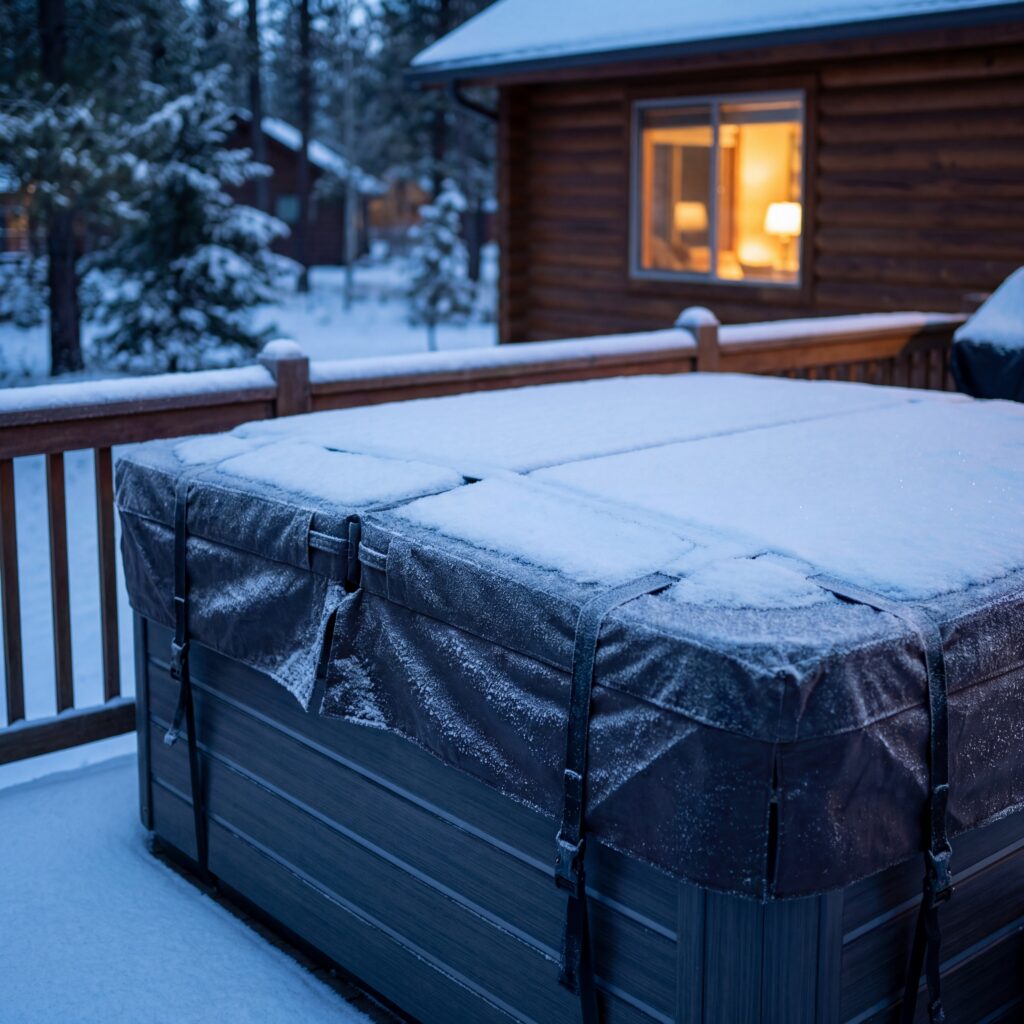
A snug cover will help keep snow, ice, and debris out of the hot tub during the winter. Adding a tarp offers additional protection and helps your cover last longer.
- Inspect the cover for damage: Look for any cracks or areas where the seal is compromised. If the cover is worn out, replace it to ensure proper insulation.
- Add a tarp over the cover: This shields the cover from snow and ice, reducing wear and tear.
- Secure the tarp with bungee cords or straps: This will keep the tarp in place, even during strong winds or heavy snowfall.
Common Mistakes to Avoid When You Winterize a Hot Tub
It’s easy to overlook small details, but even little mistakes can lead to expensive repairs. Here are some of the most common errors homeowners make:
Not fully draining water from the lines is a top mistake. Even a small amount left in pipes or jets can freeze and cause cracks. Always use a wet/dry vac to remove every last drop.
Forgetting to remove filters is another issue. Wet filters left in the tub can hold water in the system, making it harder to dry everything out. Always take them out and store them indoors.
Skipping antifreeze might seem like a shortcut, but it leaves your pipes vulnerable. Non-toxic antifreeze gives an extra layer of protection against freezing.
Leaving the cover loose or unsecured is risky. A loose cover lets in snow, ice, and animals, which can damage your hot tub over the winter.
Here at Aqua Clear, we have seen how these small mistakes can turn into big repair bills. Take your time, double-check each step, and you will save yourself time and money in the long run.
Why Some People Consider Not Winterizing a Hot Tub
While winterizing is often the go-to option, some spa owners choose to keep their hot tub running throughout winter to avoid issues that can arise from long periods of inactivity. Just like a car that sits unused, a hot tub that remains idle for months can develop minor issues when you restart it in the spring. Pumps and heaters are designed to stay in motion, and leaving them idle too long can lead to stiffened seals, mineral buildup, or even clogs that may impact performance.
Keeping the hot tub running and set to about 80 degrees helps prevent these issues by keeping the water flowing and parts in use. For customers choosing this option, we offer monthly hot tub care services—perfect for those who won’t be using their spa as often but want to ensure it’s well-maintained. In our experience, customers who keep their hot tub running appreciate the consistent performance come spring, as it avoids the “stiffness” that can develop in pumps and seals from lack of use. Monthly care can make all the difference in keeping your spa trouble-free and ready to use.
Optional: Install a Wi-Fi Hot Tub Monitoring System
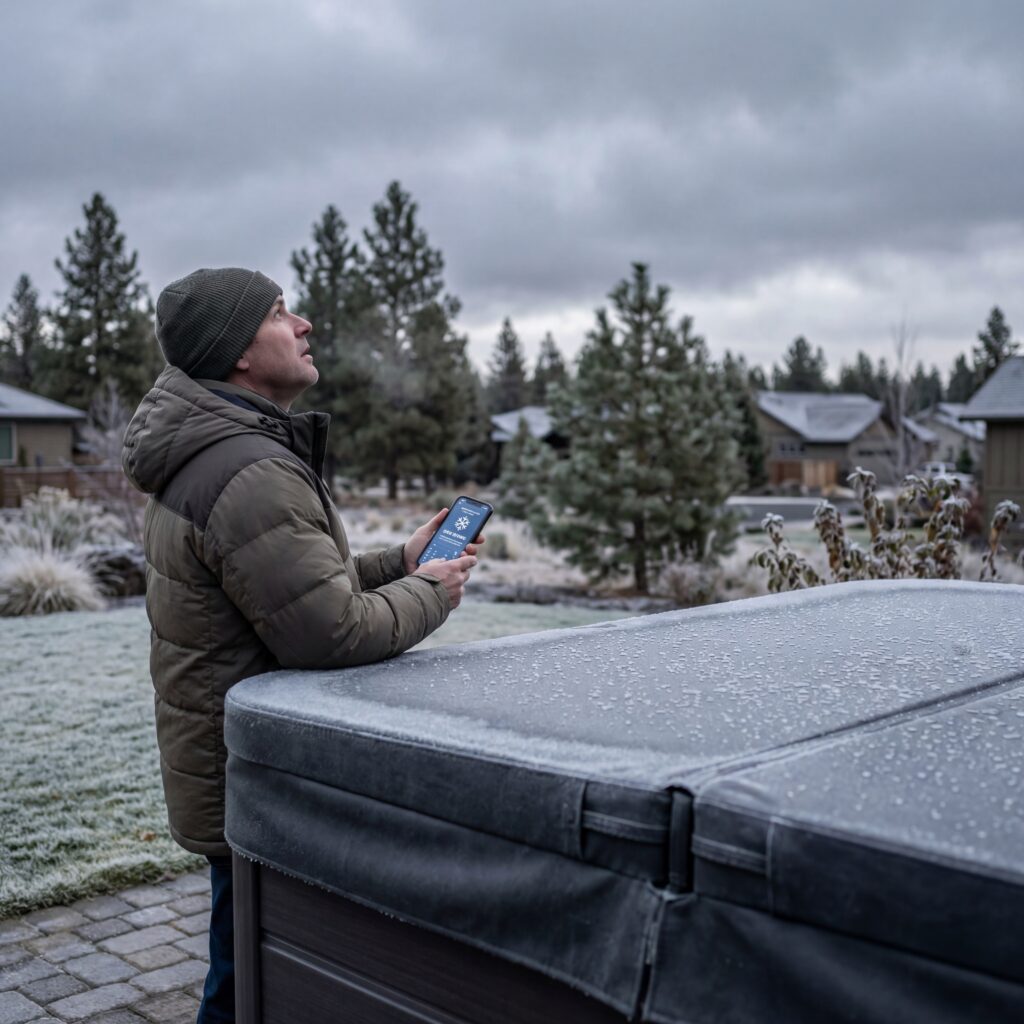
If you plan to run your hot tub throughout the winter, a Wi-Fi monitoring system is a smart investment. It allows you to monitor your spa remotely and get real-time alerts if anything goes wrong.
- Receive instant alerts: Get notified if the power goes out or if the water temperature drops dangerously low.
- Control the spa from your phone: Some systems let you restart the pump or heater remotely to prevent freezing.
- Stay in control while traveling: Monitor your spa from anywhere, ensuring it’s protected even if you’re away from home.
From what we’ve seen, customers who travel during winter find these systems invaluable. If you’re away and your hot tub loses power, simply give us a call at 541-410-1023, and we’ll place a space heater in the cabinet to keep it from freezing while we diagnose and repair the issue. This added service can make all the difference in keeping your hot tub safe through unexpected winter challenges.
Why a Frozen Hot Tub Can Be Beyond Repair
If water freezes inside your hot tub, the damage can be catastrophic—often leaving it beyond repair. When water freezes, it expands by nearly 10%, putting immense pressure on pipes, pumps, heaters, and other components. Cracked plumbing, ruptured seals, and broken equipment are not only costly to replace, but the damage can be extensive enough that repairs are no longer practical. Even if some parts can be replaced, hidden leaks caused by freezing often go unnoticed until the tub is refilled in the spring. By that time, the water loss or malfunctioning components could make the tub unsafe or unusable.
When multiple parts are damaged, the cost of repairs can quickly exceed the value of the spa—leaving total replacement as the only option. In cases of severe freeze damage, the entire hot tub becomes an asset loss, requiring you to purchase a new spa.
Bottom Line: If your hot tub freezes, there’s no easy or affordable fix—it’s often the end of the road for the spa.
Proper winterization is your best defense against these costly scenarios. Once water freezes inside the system, there’s no going back, so taking the time to drain and protect your hot tub thoroughly will help you avoid an expensive loss.
Hot Tub Winter Maintenance vs Full Winterization: What’s the Difference?
It is important to know the difference between winter maintenance and full winterization, especially in Central Oregon where winters can be harsh. Here is a simple table to help you decide which is right for you:
| Hot Tub Winter Maintenance | Full Winterization |
|---|---|
| Hot tub stays heated and ready to use all winter | Hot tub is fully shut down and sealed until spring |
| Expect $30–$50+ per month in extra energy costs | No ongoing energy costs once winterized |
| Requires weekly chemical checks and water balancing | No chemical maintenance needed until spring |
| Filters stay in and need regular cleaning | Filters are removed, cleaned, and stored indoors |
| If power goes out, water can freeze and crack pipes within 24–48 hours | No water in the system means no freeze risk |
| Best if you use the hot tub at least a few times per month | Best if you won’t use the spa for 6+ weeks |
| Consider a Wi-Fi monitor to alert you to temperature drops | A tarp and secure cover are all you need |
Bottom line: If you plan to use your hot tub all winter and can monitor it regularly, winter maintenance works well. If you will be away or prefer a hands-off approach, full winterization is the safer choice—especially in Central Oregon.
Winter maintenance means you keep your hot tub running and continue to use it. You will need to check your chemicals, water level, and cover regularly. This option is great if you love soaking in the winter and do not mind the extra effort and energy costs.
Full winterization means you shut down your hot tub for the season. This is best if you will not use your spa for weeks or months, or if you are leaving town. Central Oregon’s cold weather makes this the safest option if you are not around to check your spa regularly.
Should You Winterize Hot Tub or Hire a Pro?
Winterizing your hot tub isn’t complicated, but it requires patience and attention to detail. Missing a single jet or valve could lead to costly repairs in the spring. If you’re comfortable with the process and have the right tools, doing it yourself can save money. However, hiring a professional ensures everything is done perfectly, giving you peace of mind.
At Aqua Hot Tubs, we specialize in professional hot tub winterization service. Our technicians will drain your spa, vacuum all plumbing lines, open unions, and inspect key components to make sure your tub is winter-ready.
Hot Tub Winterization Services from Aqua Hot Tubs!
Learning how to winterize a hot tub doesn’t have to be a hassle. With a few careful steps—like draining the water, adding antifreeze, and securing the cover—you can protect your spa from freezing temperatures and prevent costly damage. Whether you handle it yourself or bring in a professional, knowing how to properly winterize your hot tub safeguards your investment and ensures it’s in perfect shape, ready for you to enjoy when warmer weather returns. Taking these precautions now means a smooth, worry-free reopening in the spring!
Don’t risk your investment—schedule your hot tub winterization today and relax knowing your spa will be in perfect shape when spring arrives.