
Which is right for your home wellness routine: home sauna vs steam room?
Heat exposure can help you feel calm, relax sore muscles, and support overall wellness, but the results differ between a dry sauna and a moist steam room. While both the sauna and the steam room feel great, they work in different ways.
This guide covers health benefits, safe use, and costs, so you can choose what fits your home and your goals. If you decide a sauna is right for you, Aqua Clear has both traditional and infrared saunas for sale, along with experts to help guide you through the process.
Quick take: A sauna uses dry heat at higher temperatures. A steam room uses moist heat at lower temperatures. When people compare a steam room vs sauna, this is the key idea to remember.
Sauna vs Steam Room: What Is the Difference?
Both use heat to relax the body, ease stress, and support recovery. The big differences are the type of heat, the level of humidity, and how each room is built. Below, we explain what sets them apart so you can choose the right fit.
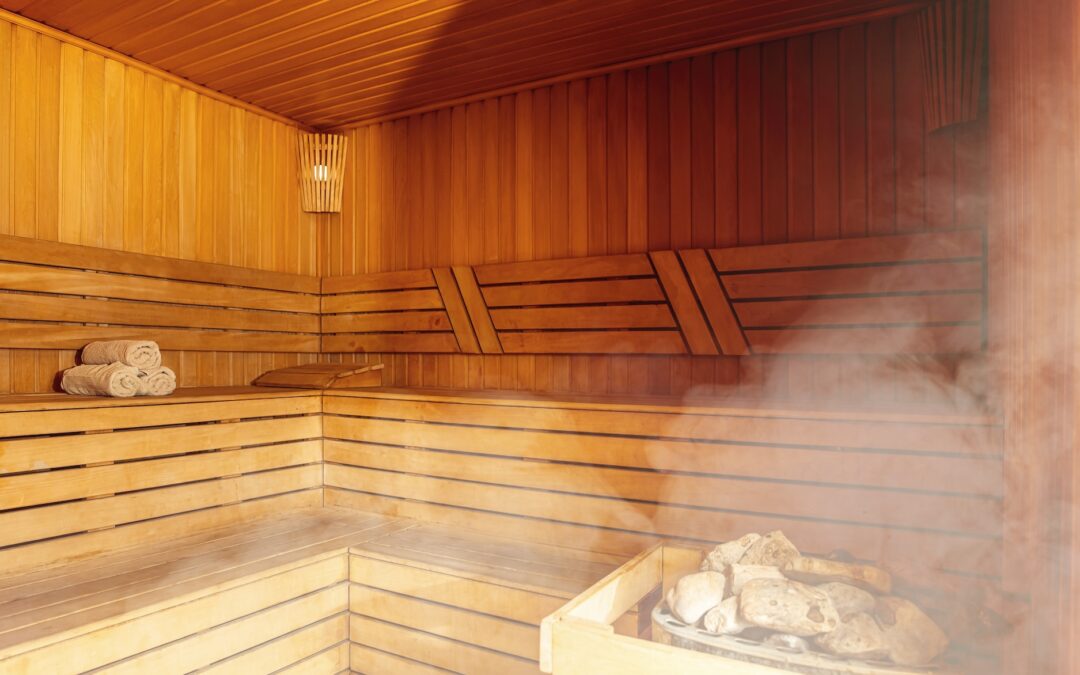
A traditional dry sauna is constructed of wood, often cedar or hemlock, and heats the air to about 180°F- 200°F. Stones are placed on an electric or wood-burning heater to soak up heat and warm the room from top to bottom. Humidity stays low, around 10 to 20 percent, even when you pour water on the stones. That splash creates a quick burst of steam near the heater, but the air in the room stays mostly dry.
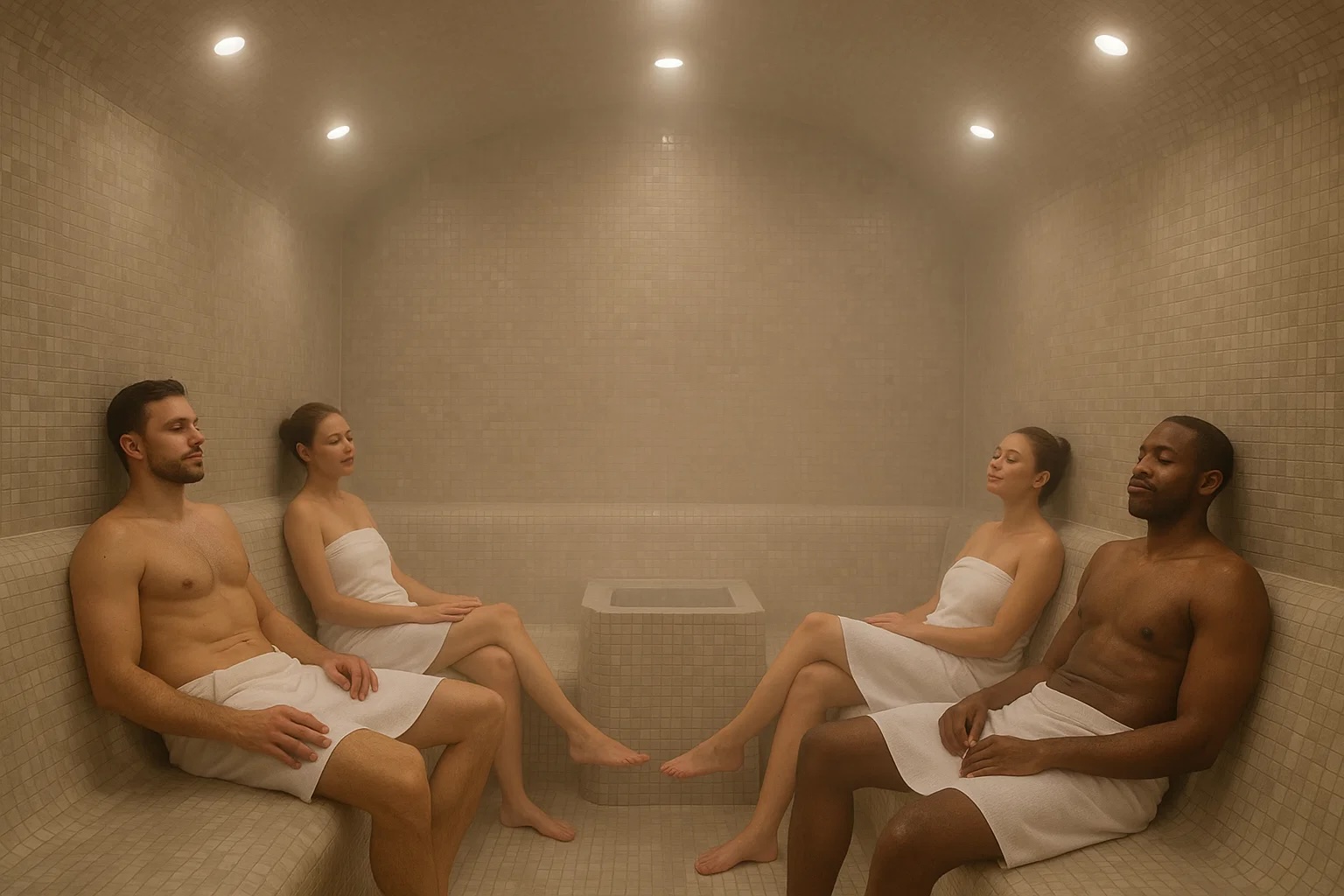
A steam room runs cooler, about 110 to 120°F, but the humidity is close to 100 percent. The room has tile or acrylic walls that hold warm vapor. A small generator boils water and sends steam into the space. Since every surface gets wet, the walls and ceiling are sealed so moisture does not leak into nearby areas. Many steam rooms include a small aromatherapy cup for a few drops of essential oil.
Sauna vs Steam Room Benefits
How a Sauna Helps the Body
Sitting in the dry heat sends more blood to the skin and muscles. Your heart rate rises a little, like it does during a brisk walk. This gentle push can support heart and cardiovascular health. The high heat also helps the body make helpful proteins that repair cells and may lower inflammation over time. The heat relaxes muscles and helps them feel less stiff after a workout or a long day at a desk. Families in Finland have used traditional saunas to enhance wellness for centuries. Aqua Clear partners with Finlandia to build traditional Finnish saunas, so you can bring that time-tested experience home.
How a Steam Room Helps the Body
Moist air keeps skin soft and smooth. Steam can loosen mucus in your nose and throat, which makes breathing easier during a cold or allergy flare-up. The warm mist also helps you unwind, which is why many people leave a steam room feeling calm and refreshed. Sweating in steam can help the body flush a little extra salt and waste without drying out the skin.
Knowing these effects can help you match the room to your goal. Pick a sauna for deep muscle relief and a gentle heart boost. Choose a steam room for skin comfort and easier breathing. If you are unsure, prioritize your top goal and choose the option that matches it. People with sinus pressure often prefer steam, while athletes often lean toward the dry heat of a sauna.
Sauna vs Steam Room After a Workout: Which Is Better?
Heat therapy can help you recover after a workout. Right after you finish, your muscles hold waste from hard work, like lactic acid. A sauna warms your body quickly, opening blood vessels and bringing fresh oxygen to tired muscles. Spending 10 to 15 minutes in your sauna can ease stiffness after lifting or sprints. Many people feel less sore the next day when they stretch and take a short sauna.
Sauna: When comparing sauna vs steam room after workout routines, the sauna has the stronger evidence. The higher temperature boosts circulation, helps muscle repair, and gives the heart a small workout. This improved blood flow helps flush waste and reduce swelling so muscles feel looser.
Steam room: Warm, moist air can feel good, hydrate skin, and ease breathing. It may help you relax and loosen up for light stretching. But research does not show that steam speeds muscle repair more than a normal cool down and rehydration. If you feel overheated or dehydrated, skip steam until you cool down and drink water.
Bottom line: pick a traditional sauna for recovery and heart health. Use steam mainly for comfort and easy breathing. Wait a few minutes for your heart rate to slow before entering. Keep heat time to ten to fifteen minutes while you learn what feels best.
When to Use a Sauna vs Steam Room
- Sinus pressure or a cold: Choose a steam room, because warm vapor opens nasal passages and soothes dry airways. If your unit has an aroma cup, add one drop of eucalyptus essential oil.
- Joint pain or stiffness: Choose a sauna, because deep heat warms tissue and boosts blood flow so movement feels easier. After you cool down, do gentle stretches.
- Skin care focus: Choose a steam room, because moist air hydrates skin and makes pores easier to clean. Rinse with cool water afterward.
- After cardio: Choose a sauna to keep blood moving and support recovery. Rehydrate first, wait until your heart rate settles, and keep the session to about ten minutes.
Home Sauna vs Steam Room: Installation and Cost Considerations
There are many different models and features for both home saunas and steam rooms. In this section, we will focus on the most common installation steps and typical cost considerations.
Space and Build Needs
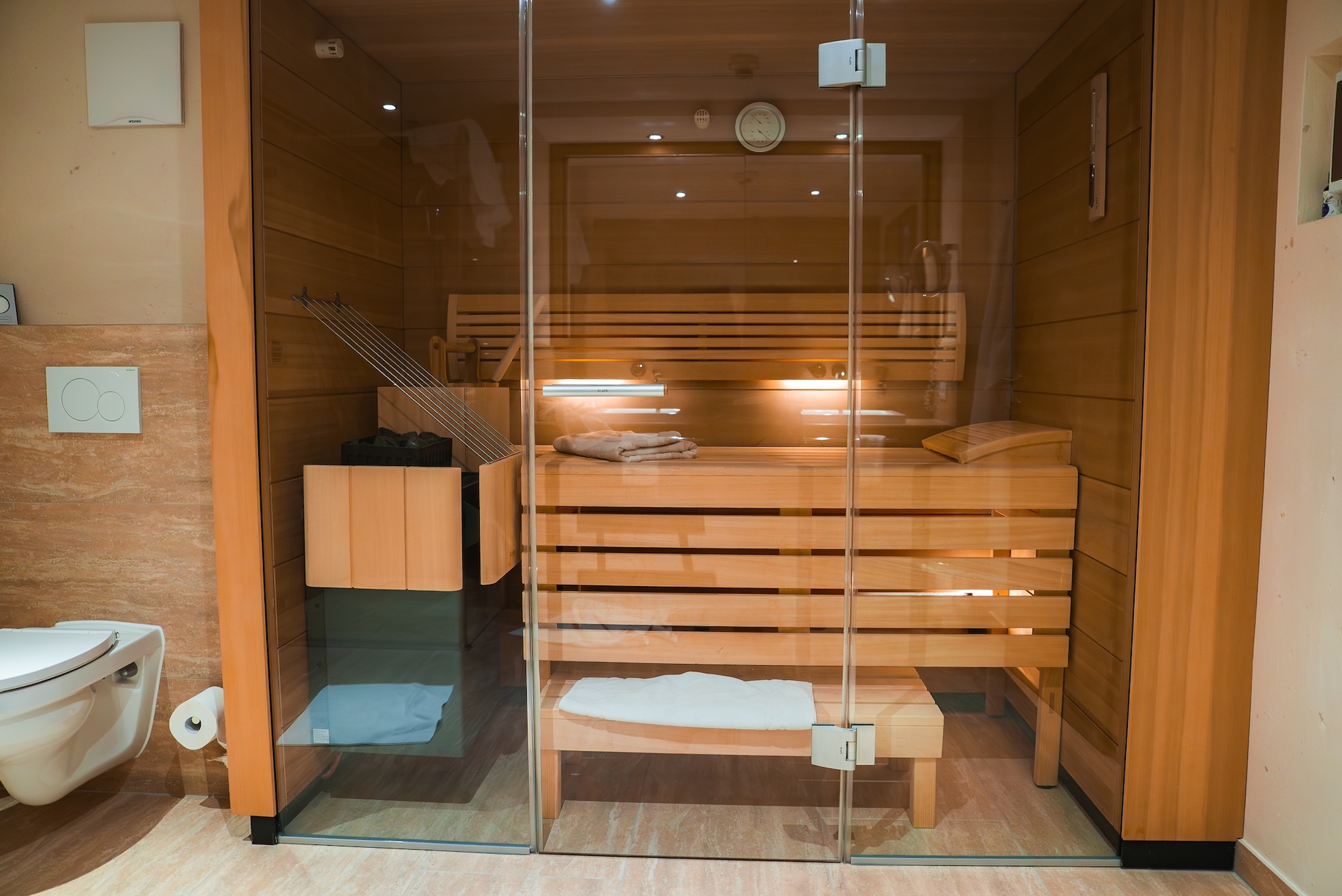
Sauna: Choose a prefab kit for fast setup or a precut kit for a built-in look. Prefab kits come in many sizes and can also be placed outdoors with a roof kit. Precut packages are cut to your room and use traditional Finnish wood and benches, so you get a custom finish with the simple setup of a kit.
Steam room: Choose a prebuilt steam room for a self-contained, shower-size unit, or build a custom steam room into your bathroom. Prebuilt units have a sealed base, walls, and a door that drop into place. Custom builds use tile or solid panels with full waterproofing, a slight ceiling slope, and a separate steam generator and drain. In both cases, plan for good ventilation because steam adds a lot of moisture to the air.
Install Steps
Sauna: Prefab kit: Labeled panels click together with basic tools. An electrician connects a 240-volt line. Most are done in about a day. Precut kit: Parts are cut to your room. A carpenter frames and insulates, then installs the panels, benches, door, and heater. An electrician connects the 240-volt line. Most take one to two days.
Steam Room: Most steam rooms hook up to hot and cold water, a drain, and a 110-volt GFCI outlet. Many homeowners can place the unit, attach the water lines, connect the drain, and plug in the generator with basic tools. Put it where a shower used to be to keep things simple. This is much easier than building a custom tile steam room, in which case a contractor will need to be consulted.
Price Guide
Sauna: A good two-person sauna starts around $9,000. Larger four to six-person models can reach $15,000 or more, especially with premium wood or smart controls.
Steam room: Basic kits often start around $3,000 to $6,000. Units with extras like digital controls, rainfall shower heads, aromatherapy, or lighting can range from $6,000 to $10,000.
Upkeep and Safety
Sauna: Saunas have very little upkeep and maintenance. Wipe benches, shake out mats, and let the cabin dry after each session. Check heater stones monthly and replace any that crack. Many customers who own a Finlandia sauna have been using it for 50 years with little to no repairs.
Steam room: Wipe glass and door gaskets, leave the door open to dry after use, and run a bathroom fan to remove moisture. In hard-water areas, descale the steam generator a few times each year. Due to the moisture, you must be diligent about mold. If mold occurs, then all the respiratory health benefits of the steam room are diminished by the harmful effects of the mold.
Recently, we helped a homeowner pick between a prefab and a precut home sauna kit from Finlandia. We visited the house, measured a 5-by-6-foot nook, and marked where the door, benches, and heater would go. They chose a prefab cedar kit. When the pallet arrived, they carried the labeled panels inside. They set the base, clicked the walls together, and screwed in the benches and backrest. An electrician hooked up the 240-volt line and mounted the wall control. They were so happy to enjoy their sauna the very next day.
For many homes, a sauna still offers the easiest setup, the lowest upkeep, and the best long-term value. See our best home sauna recommendations to find models that fit many budgets.

How to Choose Between a Sauna and Steam Room
Use this quick checklist to choose:
Wellness goals: For deep muscle relief and a gentle heart boost, choose a sauna. For easier breathing and hydrated skin, choose a steam room.
Space: A sauna can fit many spots, including small nooks or even outdoors with the right kit. A steam room must be indoors and needs waterproof walls, a drain, and room for the generator.
Budget: Costs vary by model and use. A steam room is often cheaper to buy. A sauna can cost more upfront.
Maintenance comfort level: A sauna needs simple wipe-downs and quick checks. A steam room needs regular cleaning and moisture control.
Who is using it: Kids and older adults may prefer the lower heat of a steam room. Athletes often prefer the stronger dry heat of a sauna.
For most homes, a traditional sauna is the more versatile choice for daily use, placement, and upkeep. Browse our current saunas for sale to compare sizes and features.
Explore the Best Saunas for Sale at Aqua Clear
Here at Aqua Clear, we partner with Finlandia for prefab and precut sauna kits, and we also carry Maax infrared saunas. Many buyers choose a traditional sauna over a steam room because it is simple to set up without a bathroom remodel. A sauna can live in a basement, garage, or spare room, and it can even go outdoors with a roof kit. Lower moisture makes cleaning easy, and the cedar or hemlock cabin gives you a classic look and feel.
Simply share your room size and a quick photo, and we make the ordering process seamless. Our team will compare prefab and precut options that fit your space, review heaters and controls, and confirm delivery timing. We place the order, and the crate ships to your doorstep. If you need help during setup, our team is available by phone.
Ready to compare sizes and prices? See specials and payment plans on our saunas for sale page, or visit our showroom to talk with a specialist.

FAQ: Sauna vs Steam Room
Which is healthier overall?
Both can help. Choose a sauna if your goal is heart health, deep muscle relief, or post-workout recovery. Choose a steam room if your goal is skin hydration or easier breathing.
Can I use both on the same day?
Yes, but be aware of how you’re feeling. Cool down and drink water before any heat. If you feel hot or dehydrated, wait until you recover. Keep sessions short, listen to your body, and leave right away if you feel lightheaded. Avoid alcohol and always hydrate.
How long should I stay inside?
Sauna: start with five to eight minutes. Work up to ten to fifteen minutes at about 170 to 195°F. Steam room: start with five to eight minutes. Work up to ten to fifteen minutes at about 110 to 115°F. Two or three sessions per week is enough for most people.
Are there risks?
Avoid heat if you have a fever, an active infection, open wounds, or have just consumed alcohol. People with heart disease, low blood pressure, kidney disease, or who are pregnant should ask a clinician first. Never use heat alone if you feel unwell. Exit right away if you feel dizzy, nauseated, or short of breath.
What works better in cold weather?
In cold weather, a traditional sauna warms your core more deeply because the air is hotter and drier, while a steam room feels warm on the surface but does not raise core temperature as much. They can also be placed outdoors with a weather-ready model or roof kit.
Still have questions? Browse our saunas for sale, visit our Bend and Sisters showrooms, or call Aqua Clear at (541) 410-1023. Our team is happy to help you choose the best option for your home.