
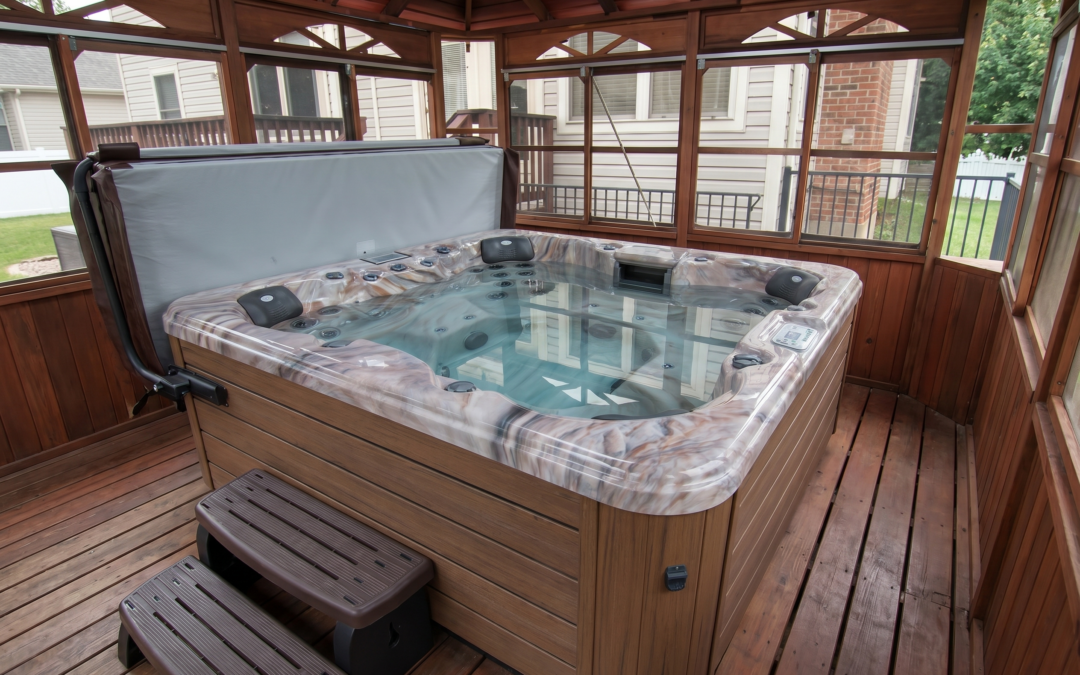
After a long day skiing at Mt. Bachelor or a demanding hike along the Cascade Lakes, there’s nothing quite like coming home to your own personal wellness retreat. More Central Oregon homeowners are turning their backyards into spaces where they can recover, decompress, and unwind. Two of the most popular options on the table are saunas and hot tubs.
So when it comes to sauna vs hot tub, which one actually fits your life better? Both deliver real, well-researched wellness benefits, but they work in completely different ways. One heats the air around you to help your body sweat. The other surrounds you in warm, jet-massaged water that eases tension from the outside in.
This guide walks through the health benefits, costs, maintenance, installation, and lifestyle fit of each, so by the end, you’ll know exactly which option is right for your home. We’ll also cover whether you can (and should) have both. Aqua Clear Hot Tubs has helped homeowners across Bend, Sisters, and the surrounding area choose customized hot tubs, saunas, swim spas, and cold plunge tubs for years, and we’ll share what we’ve learned along the way.
Key Takeaways
- Saunas use dry or infrared heat (150°F–195°F) to warm your body through the air, while hot tubs use heated water and jets (100°F–104°F) for hydrotherapy.
- Saunas tend to be better for quiet, focused heat therapy and cardiovascular conditioning.
- Hot tubs shine for muscle and joint relief, hydrotherapy, and social or family use.
- Hot tubs generally cost more to operate monthly; saunas have lower long-term running costs.
- Many serious wellness setups include both, often paired with a cold plunge for contrast therapy.
- The best choice depends on your goals, available space, budget, and how you want to feel after a session.

What’s the Difference Between a Sauna and a Hot Tub?
The simplest way to put it: a sauna heats the air around you, while a hot tub heats the water around you. That single difference shapes everything else: how you use it, how it feels, who it’s best for, and how you maintain it.
How a Sauna Works
A traditional sauna heats the air inside an enclosed wood-lined space using an electric or wood-burning heater, often paired with stones that you can ladle water over to add a burst of steam. Most traditional saunas run between 150°F and 195°F, with sessions lasting anywhere from 15 to 30 minutes.
An infrared sauna, on the other hand, uses infrared lamps to directly warm your body rather than the surrounding air. Because the heat penetrates the skin more directly, infrared models typically operate at gentler temperatures of 110°F–140°F. Both styles induce sweating and the same wellness response. They just get you there differently.
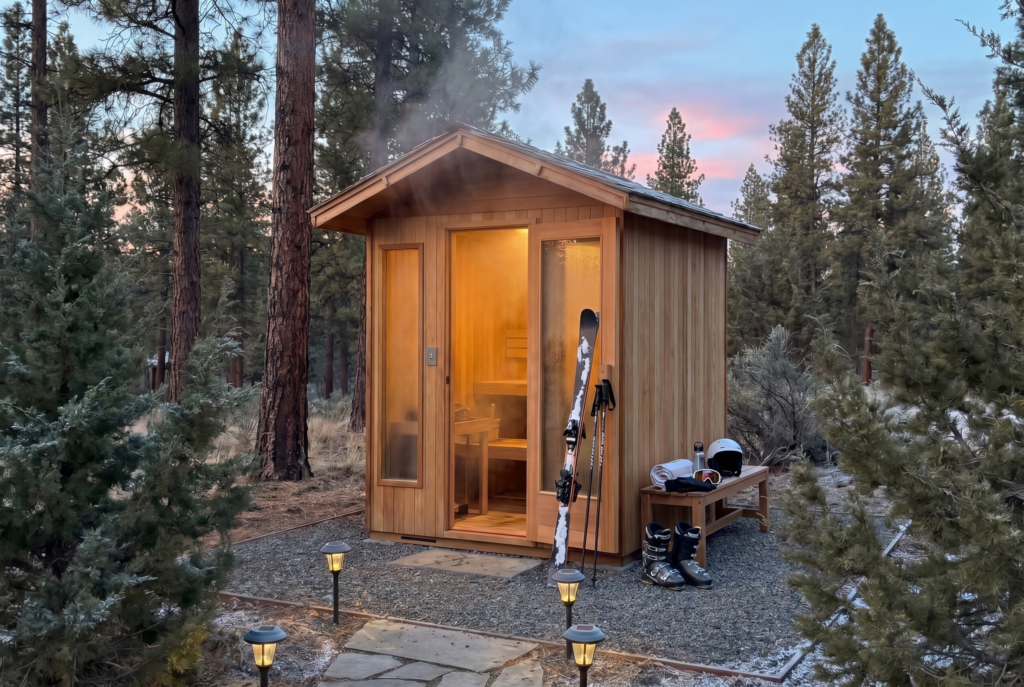
Saunas can be installed indoors or outdoors. Many Central Oregon homeowners convert a spare room, garage corner, or covered outdoor space into a personal sauna. Custom outdoor cabin-style saunas are also popular for backyards with mountain views.
How a Hot Tub Works
A hot tub holds heated water, usually between 100°F and 104°F, that’s continuously filtered and treated to keep it clean and safe. Powerful jets deliver targeted massage to the back, shoulders, calves, and feet, combining heat, buoyancy, and pressure into what’s known as hydrotherapy.
Hot tubs are designed to stay on around the clock, so they’re always ready when you are. Most sessions last 20 to 30 minutes, and the experience is more immersive than a sauna. You’re not just warming up, you’re being gently massaged by water at the same time.
Hot tubs are most commonly installed outdoors on a reinforced pad with proper electrical access. They’re a natural fit for Central Oregon backyards, especially in winter when a soak with snow falling around you is hard to beat.
Sauna vs Hot Tub: Quick Comparison Table
Here’s how the two stack up at a glance:
| Feature | Sauna | Hot Tub |
|---|---|---|
| Heat Type | Dry or infrared heat warms the body through the air | Heated water with massage jets surrounds the body |
| Average Temperature | 150°F–195°F (traditional); 110°F–140°F (infrared) | 100°F–104°F |
| Main Wellness Benefit | Sweating, circulation, cardiovascular conditioning | Hydrotherapy, muscle and joint relief |
| Relaxation Style | Calm, quiet, heat-focused | Soothing soak with warm water and jets |
| Social Experience | More personal, often quiet | Great for families, couples, and hosting |
| Installation Needs | Ventilation and electrical setup | Reinforced foundation, electrical, water access |
| Maintenance | Basic cleaning, occasional wood care | Weekly water chemistry, filter and cover care |
| Operating Costs | Lower monthly energy use (only on during sessions) | Higher monthly energy use (runs 24/7) |
| Indoor or Outdoor | Either | Most commonly outdoor |
| Best For | Heat therapy and quiet wellness time | Hydrotherapy and social relaxation |
Sauna vs Hot Tub Health Benefits
Both products are backed by growing bodies of research. They share some overlapping wellness benefits like stress relief, improved circulation, and post-workout recovery, but each has its own strengths. Here’s how the hot tub vs sauna health benefits actually stack up.
Sauna Benefits vs Hot Tub Benefits
Regular sauna use has been studied extensively, especially in Finland where it’s been part of daily life for centuries. Research links consistent sauna sessions to improved cardiovascular health, lower blood pressure, and reduced markers of inflammation.
Other reported benefits include:
- Increased circulation as blood vessels dilate in response to heat
- Mental clarity and stress reduction after sessions
- Improved sleep quality for many regular users
- Post-workout muscle relaxation and recovery
- A measurable feeling of mental “reset” similar to a workout high
Most published research has focused on traditional dry saunas, though preliminary studies on infrared saunas show overlapping benefits with potentially better tolerance for people sensitive to high heat.
Hot Tub Health Benefits
Hot tubs deliver the unique combination of heat, buoyancy, and targeted massage that makes hydrotherapy so effective. The warm water lowers blood pressure as your blood vessels relax, while buoyancy takes pressure off joints and the jets work directly on tight muscles.
Common hot tub benefits include:
- Relief from sore muscles and tight joints
- Better sleep when used 1–2 hours before bed
- Lower stress and easier evening wind-down
- Pain relief for chronic conditions like arthritis and lower-back tension
- A shared, screen-free space for couples and families
For a deeper look at how warm-water therapy works, our hot tub benefits guide breaks down hydrotherapy in more detail.
Sauna vs Hot Tub for Cardiovascular Health
This is one area where research currently leans slightly in the sauna’s favor. Long-term studies, including the well-known Finnish cohort research summarized by the Cleveland Clinic, suggest that frequent sauna use is associated with reduced cardiovascular risk and better heart-rate variability.
Hot tubs show promising effects on circulation and blood pressure too, with some early research suggesting benefits comparable to moderate exercise. The takeaway: both support cardiovascular wellness, but the sauna currently has a deeper research base. As always, talk with your doctor before adding either to a heart-health routine.
Which Is Better for Recovery?
If you’re an active person who skis all winter, mountain bikes the Bend trail systems, and runs near the Three Sisters, recovery matters. Both options help, just in different ways.
A sauna is excellent for systemic recovery: sweating, circulation, mental decompression after a hard effort. A hot tub is excellent for targeted recovery: warm jets directly on the legs after a long ride, or on the shoulders after a paddle on the Deschutes.
Many serious athletes use both, and pair them with a cold plunge for full contrast therapy. The hot-to-cold cycle is one of the most effective recovery protocols you can do at home.
Hot Tub vs Sauna Health Benefits for Different Lifestyles
The best choice often comes down to who you are and how you live. Here’s how the decision tends to play out across common lifestyles in Central Oregon.
Best for Busy Professionals
If your day ends with answering emails at 7 p.m. and you just want to switch your brain off, hot tubs are tough to beat. A 20-minute soak before bed is one of the most reliable ways to drop into rest mode.
Saunas work well too. A quick 15-minute session can clear mental fog and reset stress levels fast. Many professionals build a short sauna session into their evening routine the way others use a workout.
Best for Families and Entertaining
Hot tubs are inherently social. Most models seat 4 to 7 people, and they create a space where conversation flows easily, with no screens and no distractions. They’re popular with families and small gatherings around Bend, Sisters, and the Sunriver area.
Saunas are typically more personal and quiet. Most home saunas fit 2 to 4 people, but the experience itself is more focused and less conversational. Most people sit in comfortable silence.
Best for Fitness and Recovery
Both work well for active people, but the best results often come from using them in combination. A typical advanced recovery routine might look like:
- Light cardio or workout
- 15-minute sauna session
- Short cold plunge (1–3 minutes)
- 15-minute warm-water soak
This kind of contrast cycle is one reason home wellness setups in Central Oregon often include all three: sauna, hot tub, and cold plunge.
Best for Year-Round Use in Central Oregon
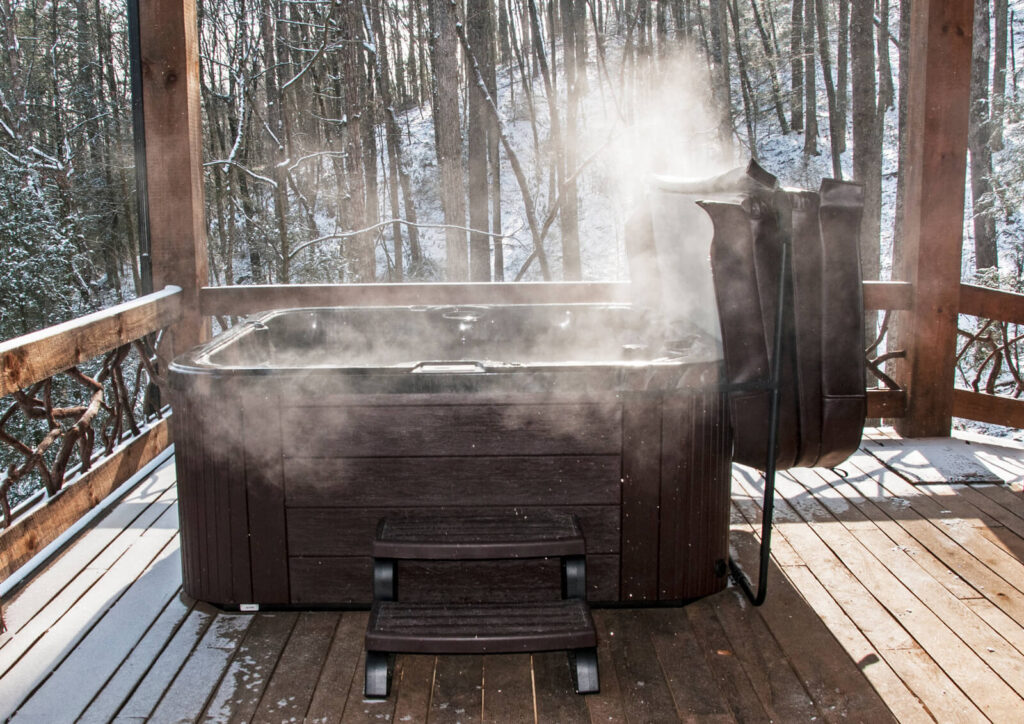
Central Oregon’s climate, with cold winters, real snow, warm dry summers, and big temperature swings, is actually ideal for both. Quality insulated hot tubs are built to perform in subfreezing temperatures, and there’s nothing better than steaming into the snow on a clear January night in Bend.
Saunas are loved year-round too, with peak use in the cool shoulder seasons of spring and fall. Outdoor saunas with a window view of the Cascades are increasingly popular in Sisters and Black Butte.
Steam Room vs Hot Tub vs Sauna: How Do They Compare?
People often lump saunas and steam rooms together, but they’re meaningfully different. A steam room vs hot tub comparison adds a third option to the mix: humid heat versus dry heat versus warm water.
- Sauna: dry heat, low humidity, 150°F–195°F
- Steam room: wet heat, near 100% humidity, 110°F–120°F
- Hot tub: heated water with massage jets, 100°F–104°F
Steam rooms are mostly found in commercial spas and gyms because they require waterproof tile, drainage, and complex moisture management. They’re rarely a practical home installation. For more on the dry-versus-steam side of this question, see our sauna vs steam room breakdown.
For home use, the real choice is sauna or hot tub, or both.
Sauna vs Hot Tub Costs: Upfront, Operating, and Maintenance
Cost matters. Here’s an honest breakdown of what you’re looking at in each category.
Upfront Costs
Saunas generally range from $9,000 for a basic indoor model to $20,000+ for a high-end outdoor cedar sauna with custom features. Infrared saunas tend to land on the lower end of that range, traditional outdoor cabin saunas on the higher end.
Hot tubs typically start around $7,000 for an entry-level model and climb to $20,000 for premium spas with advanced jets, lighting, sound systems, and premium insulation. Custom, made-to-order hot tubs at Aqua Clear are priced based on the specific features and finishes you choose.
Monthly Operating Costs
This is where the two diverge significantly:
- Saunas use energy only during sessions. Monthly costs are usually low, often $10 to $30 depending on use.
- Hot tubs run continuously to maintain water temperature, plus heating jets and the filtration system. Monthly costs typically run $30 to $80, with lower energy costs for well-insulated models.
Cold Central Oregon winters do push hot tub operating costs up, but quality insulation and a tight-fitting cover make a meaningful difference.
Long-Term Maintenance Costs
Saunas have minimal recurring costs: occasional wood treatment, cleaning supplies, and the eventual replacement of heater elements or stones every several years.
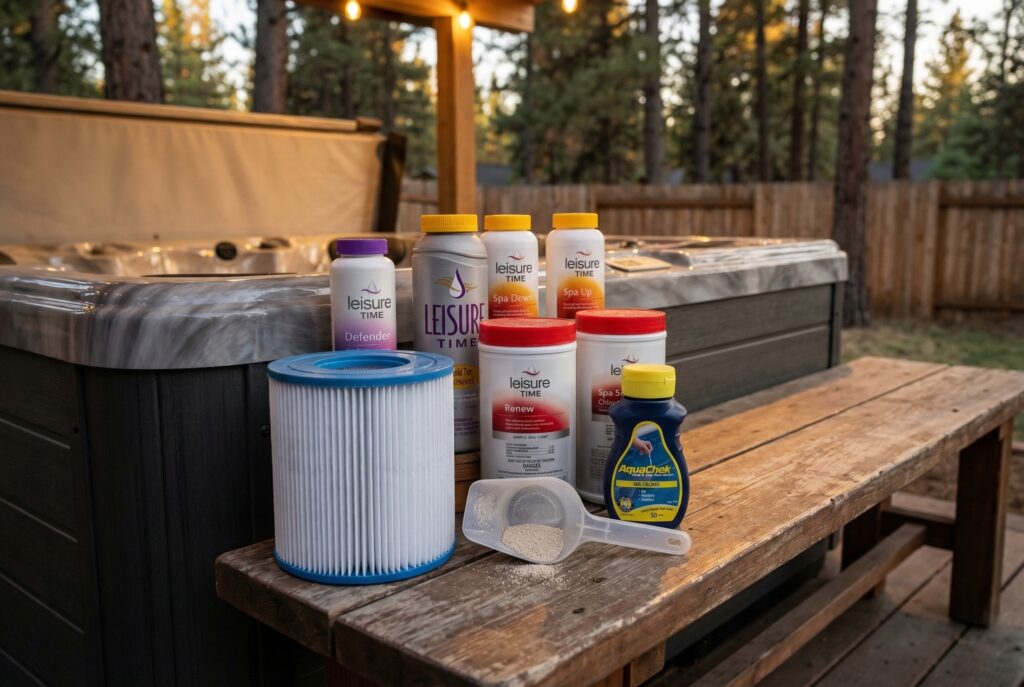
Hot tubs require ongoing investment in sanitizers, balancers, filters, and periodic water changes. Filters need cleaning monthly and full replacement every 1–2 years. Many homeowners use Aqua Clear’s hot tub service to handle all of it.
Which Is Easier to Maintain?
If “low maintenance” is high on your priority list, this section matters.
Sauna Maintenance
Sauna care is refreshingly simple:
- Wipe down benches and floors after each session
- Air out and ventilate between uses
- Deep clean with mild soap every few weeks
- Apply wood conditioner once or twice a year
- Inspect heater stones or infrared elements annually
That’s it. There’s no water chemistry to manage and no filters to clean.
Hot Tub Maintenance
Hot tub maintenance is more involved:
- Test and adjust water chemistry weekly (pH, alkalinity, sanitizer)
- Clean filters monthly
- Drain and refill the spa every 3–4 months
- Wipe down the shell and cover regularly
- Schedule professional service annually
Many Central Oregon homeowners simply use Aqua Clear’s professional maintenance services and skip the chemistry side entirely. It’s a popular option for second homes in Sunriver and Black Butte where owners aren’t always on-site.
Sauna vs Hot Tub Installation and Space Requirements
Installation is more involved than most first-time buyers expect. Here’s what to plan for.
A sauna needs:
- A space at least 4×6 feet for two people, larger for bigger units
- A 240V electrical line for most full-size models (some smaller infrared units run on 120V)
- Proper ventilation to manage moisture and air quality
- Either an indoor wall buildout or an outdoor pad with drainage
A hot tub needs:
- A level, reinforced concrete pad, paver patio, or properly rated deck
- 240V GFCI electrical service for full-size models
- Clear delivery access (sometimes requiring a crane for tricky backyards)
- Convenient water access for filling and refilling
Aqua Clear handles delivery, site coordination, and installation across Bend, Sisters, Redmond, Sunriver, and the surrounding region. We also walk customers through any local permitting or setback requirements before purchase.
Can You Have Both a Sauna and a Hot Tub?
Absolutely! A lot of serious home wellness setups have both.
The combination gives you the best of every world. Use the sauna for systemic heat therapy and stress relief, the hot tub for muscle recovery and social time, and add a cold plunge tub for full contrast therapy. It’s a complete wellness ecosystem built right in your backyard.
Aqua Clear offers customized hot tubs, saunas, swim spas, and cold plunge tubs that can be combined into one cohesive backyard setup. Whether you have a small patio in central Bend or a sprawling property out toward Sisters, there’s a configuration that fits.
How to Choose the Right Option for Your Home
Still on the fence? Walk through these five quick questions:
- What are your main wellness goals? Quiet heat therapy and cardiovascular conditioning lean sauna. Hydrotherapy, joint relief, and social use lean hot tub.
- How much space do you have? Saunas fit indoors in tight footprints. Hot tubs need outdoor space with proper foundation.
- What’s your realistic budget, upfront and monthly? Saunas are cheaper to run. Hot tubs cost more month to month but offer broader use cases.
- How often will you actually use it? Daily quick sessions favor saunas. A few longer soaks per week favor hot tubs.
- Who else will use it? Solo wellness or quiet couples lean sauna. Families, friends, and hosting lean hot tub.
Still unsure? That’s exactly why local consultation matters. A short conversation with someone who knows Central Oregon homes, climates, and lifestyles often makes the choice obvious.
Why Central Oregon Homeowners Choose Aqua Clear Hot Tubs
Aqua Clear has been the trusted local wellness partner for homeowners across Bend, Sisters, Redmond, Sunriver, Black Butte, and the surrounding communities for years. Here’s what sets us apart:
- Customized, made-to-order products: saunas, hot tubs, swim spas, and cold plunge tubs configured to your space and goals
- Two local showrooms: Bend (20505 Robal Ln) and Sisters (413 W Hood Ave) for in-person consultation and product demos
- Expert guidance, not pressure. We help you find the right product, even if it’s the simpler one
- Full-service installation: site prep coordination, delivery, install, and electrical guidance
- Ongoing maintenance and repair: local team, fast response, real expertise
Ready to start the conversation? You can get started online or stop by either showroom for a tour.
Safety Tips for First-Time Sauna and Hot Tub Owners
A few non-negotiables before you take that first session:
- Hydrate: drink water before, during, and after any heat or hot-water session
- Limit sessions: 15–20 minutes in a sauna, 20–30 minutes in a hot tub for most adults
- Skip both after alcohol: combining heat with alcohol can dangerously drop blood pressure
- Check with your doctor first if you’re pregnant, on heart medication, or managing a chronic condition
- Supervise children at all times around hot tubs
- Cool down gradually after a sauna, avoiding anything strenuous right away
- Listen to your body: dizziness, lightheadedness, or nausea means session over
These rules are simple, but ignoring them is how people get hurt. Treat heat seriously and you’ll get years of safe enjoyment from either product.
Final Thoughts: Sauna or Hot Tub?
There’s no universally “better” choice in the sauna vs hot tub debate. The right answer depends on your wellness goals, your space, your budget, and how you want to feel when you step out.
If you want focused heat therapy, quiet wellness sessions, and cardiovascular benefits, lean sauna. If you want hydrotherapy, muscle relief, social space, and year-round soaks under the stars, lean hot tub. And if you want the most complete wellness setup possible, get both and add a cold plunge while you’re at it.
Either way, the team at Aqua Clear Hot Tubs is here to help. Stop by the Bend or Sisters showroom, or fill out our Get Started form for a personalized recommendation. We’ll help you find the option that actually fits your life, not just the one that sells.
Frequently Asked Questions
Which is better for you, a sauna or a hot tub?
Neither is universally better. It depends on what you want from a wellness routine. Choose a sauna if you want quiet, focused heat therapy and cardiovascular benefits. Choose a hot tub if you want hydrotherapy, muscle relief, and a space to share with family or friends. Many homeowners ultimately add both.
Can a sauna or hot tub help increase home value?
Quality home wellness features can boost buyer appeal, especially in lifestyle-driven markets like Bend and Central Oregon. They typically don’t add dollar-for-dollar what they cost, but they make homes more attractive and can help them sell faster, especially with the increase in remote workers and wellness-focused buyers moving to the area.
Which option is better for year-round use in Central Oregon weather?
Both work year-round here. Hot tubs shine in winter, when soaking in falling snow is a Central Oregon classic, while saunas are loved across all four seasons, with peak appeal in the cool shoulder months of spring and fall. Quality insulated hot tubs are specifically built to handle the deep winter temperature swings the region is known for.
How long should you stay in a sauna or hot tub during one session?
Plan on 15 to 20 minutes in a sauna and 20 to 30 minutes in a hot tub for most adults. Tolerance varies based on temperature, hydration, and individual health, so start shorter and build up. If you ever feel lightheaded, dizzy, or overheated, end the session immediately.
Are saunas or hot tubs more energy efficient for everyday use?
Saunas are generally more energy efficient per session because they only run when in use. Hot tubs cost more to operate because they maintain water temperature 24/7, though high-quality insulation and a tight-fitting cover significantly close the gap. Modern energy-efficient hot tubs perform far better than older models.
What safety tips should first-time sauna or hot tub owners know before use?
Stay hydrated, limit session time, avoid alcohol before or during use, check with your doctor if you have a medical condition, supervise children around hot tubs at all times, and cool down gradually after a sauna. Listen to your body: dizziness or nausea means stop immediately.
Do saunas help lower cortisol?
Research suggests that regular sauna use is associated with reduced stress markers, including cortisol, particularly when sessions are paired with relaxation practices like deep breathing. A systematic review published on PubMed points to meaningful effects on stress management and relaxation, though individual results vary. Most regular users report a noticeable drop in stress and improved sleep quality.
Is a hot tub good for joint pain?
Warm-water therapy has long been used to ease joint stiffness, arthritis pain, and general aches. The combination of heat, buoyancy, and jet massage relieves pressure on joints and relaxes surrounding muscles. Research on hot tub therapy for rheumatoid arthritis suggests it may help reduce joint inflammation, ease pain, and improve mobility. If you’re managing a specific condition like arthritis or psoriatic arthritis, talk with your doctor about how to safely incorporate hot tub use into your routine.