

After a long day on the trails near Bend or a morning of laps at Mt. Bachelor, few things sound better than sinking into warmth. More and more people, though, are pairing that heat with something bracing: a quick dip in cold water. Using a sauna and cold plunge together has moved from elite locker rooms and Nordic tradition into everyday backyards.
The practice is called contrast therapy. In simple terms, it means deliberately alternating periods of heat, usually from a sauna, with short periods of cold exposure, such as a cold plunge. Rather than using either one in isolation, you move between them in a planned, repeatable routine.
In this guide, we’ll walk through what happens in your body during each phase, what the research actually says (and doesn’t say), how to build a beginner-friendly sauna and cold plunge routine, and the safety precautions that matter most.
Key Takeaways
- Contrast therapy alternates sauna heat with brief cold-water immersion to create two very different physiological responses in one session.
- Research suggests contrast water therapy may reduce perceived muscle soreness compared with simply resting, though it hasn’t been shown to beat other popular recovery methods.
- Beginners do best with short, comfortable exposures. Colder or longer doesn’t automatically mean better.
- Hydration, calm breathing, and skipping alcohol are essential parts of a safe routine.
- People with heart conditions, blood pressure concerns, a history of fainting, or who are pregnant should talk with a healthcare professional first.
- A thoughtful home setup makes the routine easier to stick with, which is where most of the long-term value comes from.
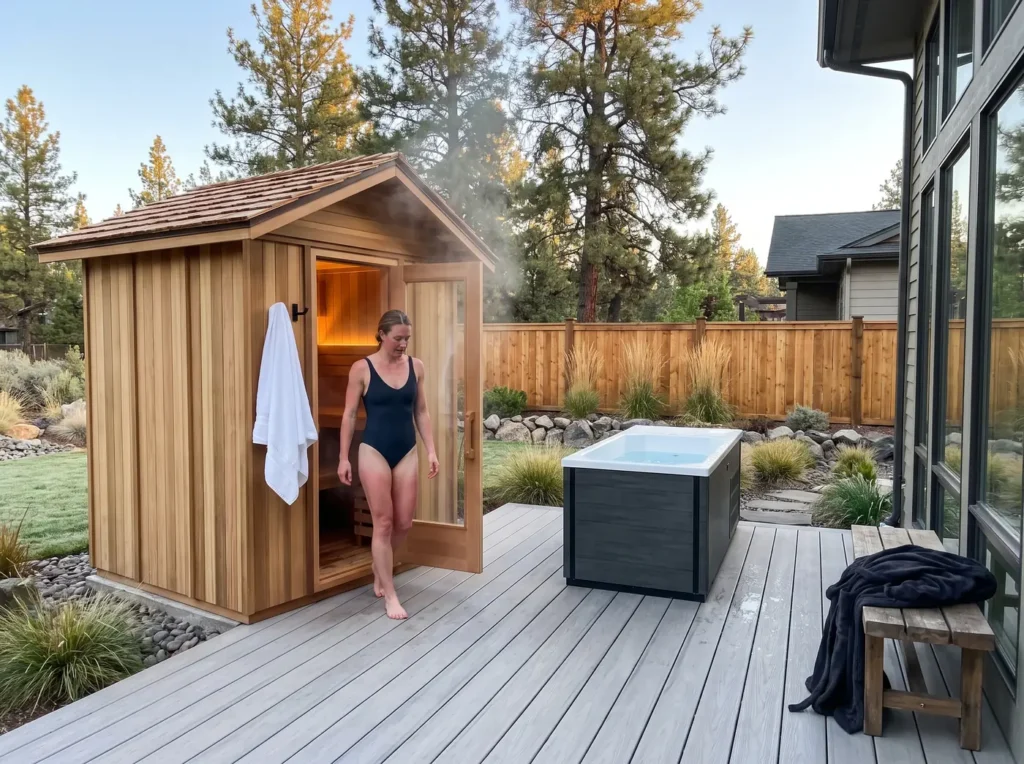
What Is Sauna and Cold Plunge Contrast Therapy?
How the Heat-and-Cold Cycle Works
Sauna exposure raises your skin and core temperature. Your heart rate climbs, blood vessels near the skin widen, and more blood flows toward the surface so your body can release heat. That increases cardiovascular demand, even though you’re sitting still.
Cold water does nearly the opposite. When you step into a cold plunge, blood vessels near the skin narrow (vasoconstriction), your sympathetic “fight or flight” system fires up, and your body works to protect its core temperature.
Moving between these two states is what makes a contrast cycle feel so different from using a sauna or cold water alone. You get the slow, enveloping warmth of heat followed by a sharp, alerting jolt of cold, and then the gradual return to equilibrium. Think of it as a wellness and recovery routine, not a medical treatment. Contrast therapy isn’t proven to treat or cure any condition.
Why People Combine Sauna With Cold Exposure
People reach for this pairing for a handful of reasons:
- Post-exercise recovery and reduced soreness
- Relaxation and stress relief
- Circulation and that “flushed” feeling afterward
- Building mental resilience through controlled discomfort
- General wellness and simply feeling good
It helps to separate what research supports from what people report feeling. Studies on muscle soreness are reasonably encouraging. Feeling refreshed, energized, or clear-headed is very common, but those are subjective benefits. Your experience will also depend on session length, temperature, personal tolerance, the type of exercise you did, and your overall health.
What Happens to Your Body During Sauna Exposure?
Inside a traditional sauna, air temperatures commonly run between roughly 175°F and 210°F, while infrared saunas operate at lower air temperatures and warm the body more directly. Either way, your body responds the same basic way: heart rate rises, blood shifts toward the skin, and you start to sweat.
Sweating is your body’s cooling system. It’s worth clearing up a common myth here: sweating is not a meaningful “detox” mechanism. Your liver and kidneys do that work. What sweating does do is cost you fluid, which is why hydration matters so much.
Interestingly, sauna sessions often feel deeply relaxing even though your cardiovascular system is working harder. According to Harvard Health, your pulse can rise by 30% or more during a sauna session, and a short session can leave the average person sweating out about a pint of fluid. Harvard also notes that saunas appear safe for most healthy people. Warmth, quiet, and a break from screens all likely contribute to that calm.
If you’re still deciding between heat sources, our guide to infrared vs. traditional saunas breaks down the differences.
What Happens During a Cold Plunge?
The first few seconds in cold water trigger what’s called the cold-shock response: a reflexive gasp, rapid breathing, and a spike in heart rate. Blood vessels in your skin and limbs constrict to keep warm blood near your vital organs.
This is exactly why breathing control matters most when you first get in. Slow, steady exhales help you settle through that initial shock instead of fighting it. After 30 to 60 seconds, most people find their breathing calms down.
A cold plunge is also very different from a cool shower. Water immersion pulls heat from your body far more efficiently than air or a spray of water, because water conducts heat much faster and surrounds you completely. That makes a cold bath or plunge a much stronger stimulus, and it’s why short exposures go a long way. For more on the basics, see our post on cold plunge benefits and tips for beginners.
Potential Benefits of Combining Sauna and Cold Plunge
Here’s an honest look at the most commonly discussed sauna cold plunge benefits, and how strong the evidence is for each.
| Potential Benefit | What We Know |
|---|---|
| Exercise recovery | Contrast water therapy has been linked to less muscle soreness and strength loss after hard exercise compared with passive rest. Study quality is mixed, and it hasn’t consistently outperformed other recovery methods. |
| Circulation | Heat widens blood vessels and cold narrows them. That alternating response is real, but it doesn’t mean contrast therapy universally “improves circulation” over time. |
| Relaxation | Sauna heat tends to feel calming, while cold creates a strong alerting response. Many people enjoy the calm-then-clear contrast. |
| Mental resilience | Choosing controlled discomfort and breathing through it can feel empowering. It’s a personal practice, not a mental health treatment. |
| General wellness | Best viewed as one piece of a healthy lifestyle alongside sleep, nutrition, and movement. |
| Sleep | Some people report sleeping better after evening sauna sessions. Evidence is still emerging, and results vary from person to person. |
The American Medical Association sums up contrast therapy benefits this way: alternating heat and cold may ease soreness and stiffness in the short term and help you feel ready to move again sooner, but evidence for lasting, long-term health benefits is still weak. It works best as a supportive recovery tool, not a stand-alone treatment.
The takeaway: contrast therapy is a reasonable, enjoyable recovery option, not a miracle. Be wary of claims that it “detoxes” you, “boosts immunity,” or “burns fat.” Those aren’t well supported.
Sauna and Cold Plunge for Post-Workout Recovery
Athletes and active adults are especially drawn to sauna recovery and cold water because they care about muscle soreness, how recovered they feel, and how ready they are for the next session. Whether you’re training for the Pole Pedal Paddle or just keeping up with weekend mountain biking, that’s a fair goal.
But there’s an important distinction between short-term recovery and long-term training adaptation. Cleveland Clinic explains that cold’s anti-inflammatory effect can dampen the signals your body uses to build muscle after strength training, so a poorly timed plunge may interfere with your gains.
That doesn’t mean cold is bad. It means timing matters. If your main goal is building strength or muscle, consider separating cold plunges from heavy lifting sessions by several hours, or saving them for rest days. If you’re in a heavy competition stretch or doing back-to-back events, faster short-term recovery may take priority. We dig into heat timing more in sauna before or after a workout.
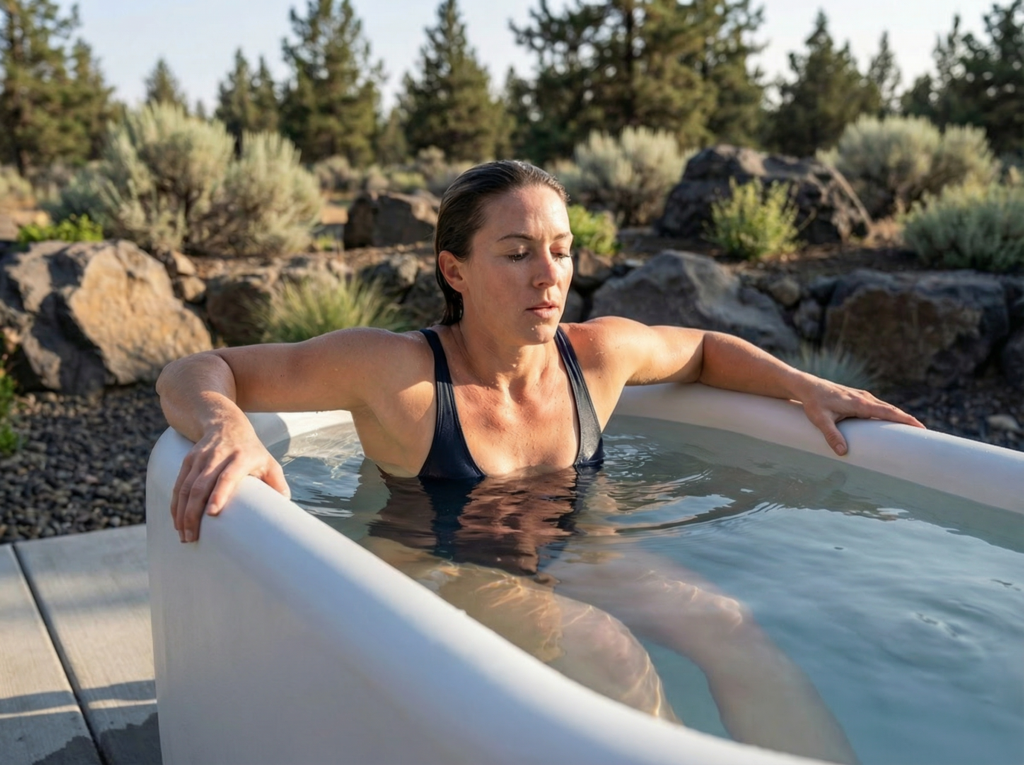
How to Build a Sauna and Cold Plunge Routine
A Beginner Contrast Therapy Sequence
Here’s a simple hot and cold therapy routine to start with. Treat it as an example, not a universal prescription, and adjust to how you feel.
- Warm up in the sauna. Start with a comfortable session, often 8 to 15 minutes, at a temperature that feels pleasantly warm rather than punishing.
- Transition to the cold. Step into the cold plunge for a brief exposure, roughly 30 seconds to 2 minutes for beginners, in water that feels cold but manageable.
- Rest and stabilize. Sit or stand somewhere neutral for a few minutes and let your breathing and heart rate settle.
- Repeat only if you feel good. One to three rounds is plenty when you’re starting out.
- Rewarm gradually and hydrate. Towel off, put on warm layers, and drink water.
For context, most studies in the PLOS ONE review used about one minute of cold water per round. In other words, short exposures are normal, even in research settings.
The goal is controlled exposure, not seeing how long you can tolerate discomfort. Consistency and comfort will serve you far better than extremes.
How Experienced Users Can Adjust the Recovery Circuit
Once your body is used to the routine, you might lengthen a sauna round slightly, lower the water temperature a few degrees, or add another round. Change one variable at a time, and remember that colder or longer doesn’t automatically produce greater benefits.
Every round adds to your total thermal stress. Three rounds of heat and cold is a much bigger load on your body than one. Pay attention to how you feel during and after sessions, and how you sleep that night, rather than copying extreme protocols from social media.
How Long Should You Stay in the Sauna or Cold Plunge?
There’s no single ideal duration. The right session length depends on temperature, your tolerance, hydration, fitness, and how much experience you have with heat and cold.
As general examples, many people do well with sauna rounds of about 10 to 20 minutes and cold plunges of 1 to 3 minutes. Beginners should start at the shorter end of both. Colder water calls for shorter exposures, and very hot saunas call for shorter rounds too.
One rule of thumb that keeps people safe: don’t increase duration and intensity at the same time. If you lower the water temperature, keep your time the same or shorter until you adjust.
How Often Should You Use Sauna and Cold Plunge Therapy?
Frequency should fit your activity level, recovery needs, and tolerance. There’s no need to jump into an aggressive daily schedule.
- Recreational wellness use: Many people enjoy two to four sessions per week as a relaxing ritual.
- Structured recovery: Athletes may plan sessions around training days, with attention to the timing concerns above.
Check in with yourself regularly. If you notice cumulative fatigue, poor sleep, trouble staying hydrated, or a heavy training load, scale back. Our post on how often you should cold plunge goes deeper on cold-specific frequency.
Sauna First or Cold Plunge First?
| Approach | Potential Purpose | Key Consideration |
|---|---|---|
| Sauna → Cold Plunge | Classic contrast therapy sequence | Heat exposure followed by controlled cold stress |
| Cold Plunge → Sauna | Rewarming-focused sequence | May feel more comfortable after cold exposure |
| Alternating multiple times | More advanced contrast routine | Increases total thermal stress |
| Single modality | Simpler recovery or wellness session | May be preferable for beginners |
Sauna followed by cold plunge is the most recognizable order, and it’s how most people picture contrast therapy. That said, there’s no universal medical “best” sequence.
Let your goal guide you. Want to feel relaxed and drowsy before bed? Many people prefer ending with warmth. Want to feel alert and energized? Ending with a short cold dip is popular. And if you just enjoy one modality more than the other, that’s perfectly fine too.
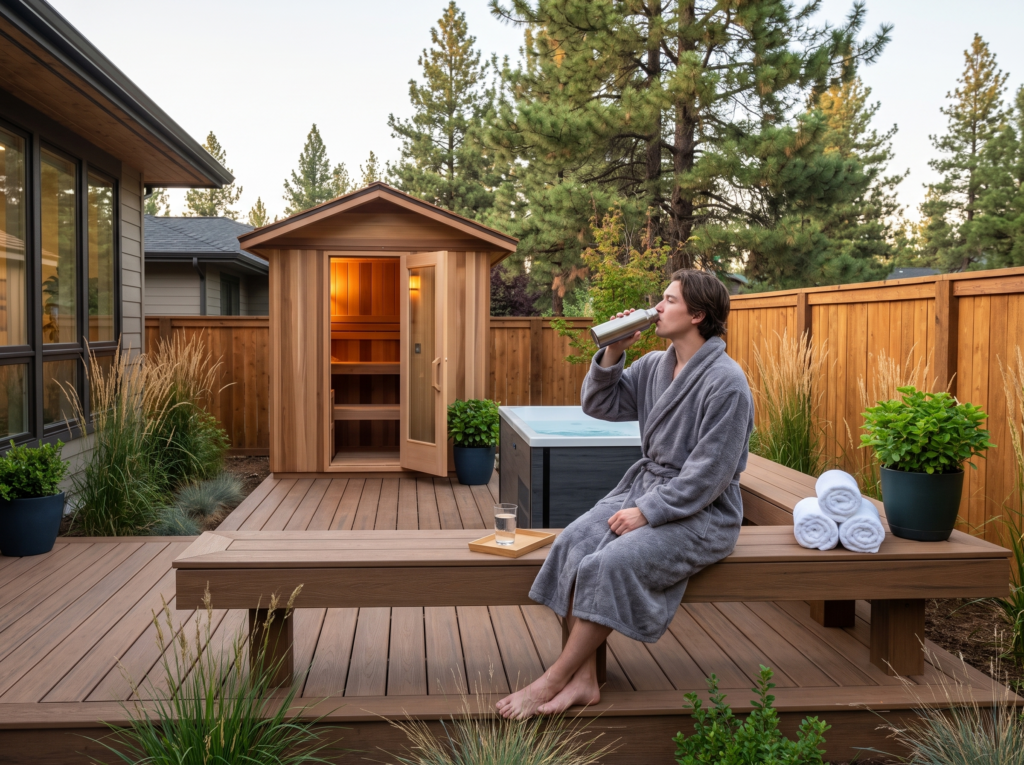
Hydration, Breathing, and Recovery Between Sessions
Hydration: You can lose a meaningful amount of fluid through sweat in a sauna, especially in Central Oregon’s dry high-desert air. Drink water before your session, keep some nearby, and rehydrate afterward. Adding electrolytes can help after longer sessions.
Breathing: When you enter cold water, focus on calm, controlled breathing with long, slow exhales. Avoid deliberately hyperventilating or holding your breath, which can increase risk, especially in water.
Recovery between rounds: Give your body a few minutes to stabilize between heat and cold. Stand up slowly when leaving the sauna, since lightheadedness is common. And skip alcohol before or during sessions. Combining alcohol with heat exposure is a well-documented safety risk.
Common Mistakes That Can Make Contrast Therapy Less Effective
- Going too extreme too soon. Very high sauna temperatures, long sessions, or near-freezing water aren’t prerequisites for a useful routine. Moderate exposures work.
- Ignoring hydration. Fluid loss from heat can lead to dizziness, fatigue, and poor tolerance in the cold.
- Treating discomfort as the goal. Severe shivering, dizziness, confusion, chest discomfort, or difficulty breathing are signals to stop, not signs of a “good” session.
- Copying athlete protocols. Routines built for highly experienced users or elite athletes shouldn’t be your starting point.
Who Should Be Cautious With Sauna and Cold Plunge Therapy?
Significant heat and cold exposure both place real stress on the cardiovascular system. That’s part of why they’re effective, and also why they aren’t right for everyone.
Talk with a qualified healthcare professional before starting if you have cardiovascular disease, uncontrolled high or low blood pressure, a history of fainting, are pregnant, or have any other medical condition that could be affected by temperature extremes. The same goes if you take medications that affect heart rate, blood pressure, or temperature regulation.
Stop your session immediately and seek appropriate medical attention if you experience:
- Chest pain or pressure
- Fainting or near-fainting
- Severe dizziness
- Confusion
- Unusual shortness of breath
- Feeling seriously unwell in any way
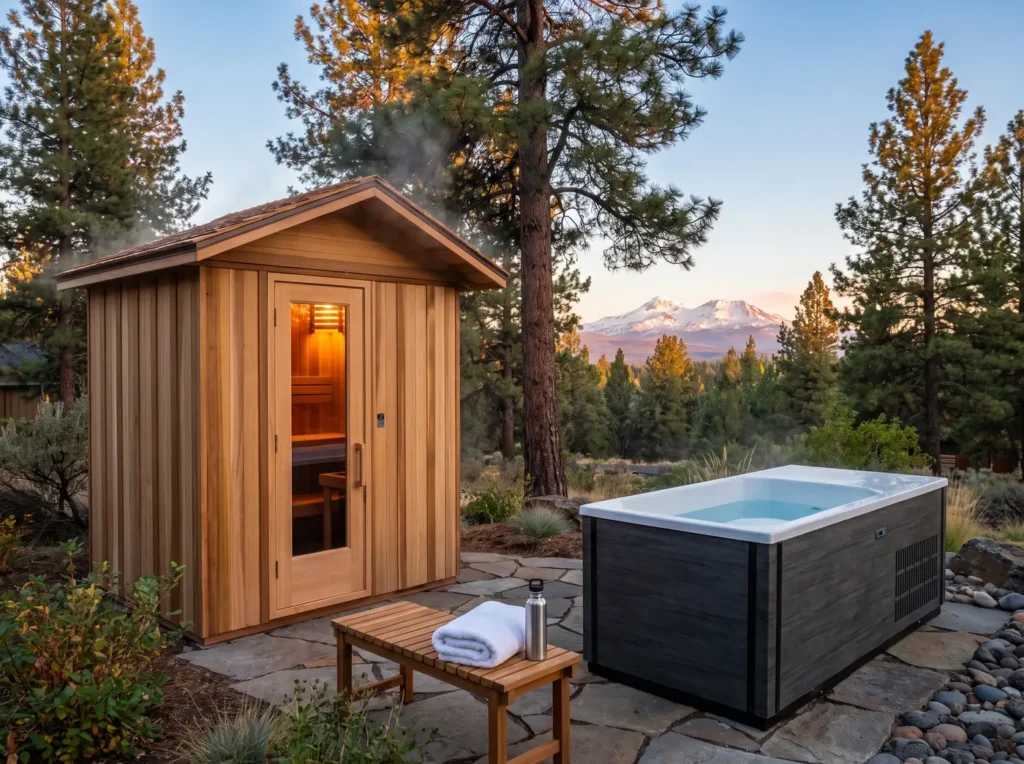
Creating a Sauna and Cold Plunge Setup at Home
Having your own setup removes the biggest barrier to consistency: getting there. Here’s what to think through.
Choosing the Right Sauna Experience
When comparing home saunas, consider:
- Available space indoors or outdoors
- Sauna type, such as traditional or infrared
- Capacity and how many people will use it
- Electrical requirements and installation needs
- Ventilation and placement
- How often you realistically plan to use it
The best choice fits your lifestyle, not just the highest temperature or largest model. If you’re ready to explore options, take a look at our home saunas, and our team can help you find the right fit for your space.
Planning the Cold Plunge Area
A good cold plunge setup is about more than the tub itself. Think about:
- Access and placement close to your sauna so transitions are quick
- Drainage and water sanitation
- Temperature control, especially through Central Oregon’s hot summers and freezing winters
- Safe entry and exit with secure steps or handholds
Keep the transition area free of slip hazards like ice or wet decking, and avoid long walks through extreme weather between heat and cold. Then plan the full experience: sauna, plunge, a place to sit, towels, robes, and water within reach. Our cold plunge tubs are a great place to start your research.
Sauna and Cold Plunge vs. Other Recovery Options
| Recovery Method | Primary Experience | Best Suited For |
|---|---|---|
| Sauna | Heat exposure and relaxation | Heat-based wellness and recovery |
| Cold plunge | Cold-water immersion | Cold exposure and post-exercise use |
| Sauna + cold plunge | Alternating thermal exposure | Contrast therapy |
| Hot tub | Warm-water immersion | Relaxation and hydrotherapy |
| Stretching/mobility | Movement-based recovery | Flexibility and mobility |
| Massage | Manual soft-tissue work | Relaxation and muscle comfort |
These options are complementary, not interchangeable. Research hasn’t crowned one method as universally superior, so your goals and preferences should decide. Many households pair a sauna and plunge with warm-water hydrotherapy in one of our hot tubs, or add low-impact exercise and recovery with a swim spa.
How to Make Contrast Therapy a Sustainable Wellness Habit
The routine you’ll actually keep doing beats the “perfect” one you abandon after two weeks. A few things help:
- Convenient access. Equipment steps from your back door gets used far more than a gym across town.
- Realistic session length. Even 20 to 30 minutes total can fit into a busy evening.
- Simple prep. Keep a water bottle, towels, and a robe ready to go.
- Built-in recovery time. Don’t rush straight from the plunge into your next obligation.
Most importantly, remember that a sauna and plunge complement the foundations of health and recovery. Quality sleep, good nutrition, steady hydration, and appropriate training still do the heavy lifting.
Conclusion
A sauna and cold plunge routine combines two very different experiences: the slow, relaxing warmth of heat and the sharp, alerting response to cold. It’s easy to see why it has become so popular with athletes and wellness-minded adults alike, and the research on post-exercise soreness is genuinely encouraging.
The principles are simple. Start gradually. Prioritize safety. Stay hydrated. Breathe calmly in the cold. And don’t assume that more intensity means more benefit.
If you’re thinking about building a dedicated wellness space at home, the team at Aqua Clear Hot Tubs would love to help you plan a sauna and cold plunge setup that fits your space, schedule, and Central Oregon lifestyle. Stop by our Bend or Sisters showroom, or get started online to talk with a local expert.
FAQs
Can you do a sauna and cold plunge on the same day as a workout?
Yes. Many people use contrast therapy after endurance workouts, sports, or general fitness sessions. If your main goal is building strength or muscle, consider waiting several hours after heavy lifting before a cold plunge, or using it on rest days, since research suggests regular cold immersion right after strength training may blunt long-term gains.
Should you eat before using a sauna and cold plunge?
A light snack an hour or so beforehand is usually fine and can help prevent lightheadedness. Avoid a large, heavy meal right before your session, and never combine heat or cold exposure with alcohol. Drink water before, during, and after.
Can sauna and cold plunge therapy help with sleep?
Some people find that an evening sauna session helps them relax and fall asleep more easily, while a cold plunge late in the day can feel energizing for others. Evidence on sleep is still emerging, so pay attention to how your own body responds and adjust the timing and sequence accordingly.
What should you wear in a cold plunge and sauna?
A swimsuit works well for both. Many people sit on a towel in the sauna, and some use neoprene gloves or booties in the cold plunge to keep hands and feet comfortable. Remove jewelry and metal accessories before the sauna, since metal can get very hot. Keep a robe and warm layers nearby for rewarming.
How should you clean and maintain a home cold plunge?
Rinse off before getting in, keep the plunge covered when not in use, and follow the manufacturer’s guidance for filtration and sanitation. Test and balance the water regularly, clean or replace filters on schedule, and drain and refill the tub periodically. The Aqua Clear team can recommend the right water care products and service plan for your setup.