
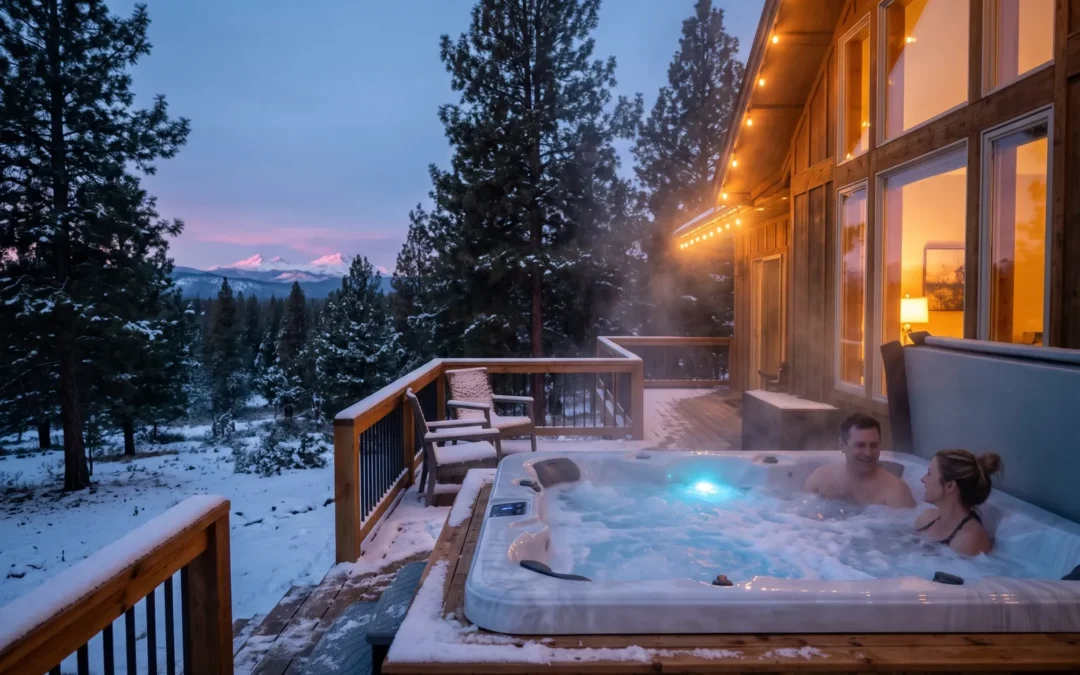
There are few better ways to end a Central Oregon winter day than sinking into steaming water while snow settles on the junipers. After a day on Mt. Bachelor or an afternoon clearing the driveway, warm water can be especially soothing.
Using your hot tub in winter is also when owners have the most questions. Snow piles up on the cover. Nights drop well below freezing. The power bill creeps up, and the walk from the back door turns to ice.
This guide is for owners who plan to keep soaking all season. If you would rather shut your spa down until spring, our guide on how to winterize a hot tub covers that path step by step.
Here, we cover four things: managing snow load, freeze protection, holding heat without wasting energy, and getting in and out safely.
Key Takeaways
- A maintained, powered and covered spa is built to run in the cold. The main winter risks are losing power, slips, overheating and getting chilled on the way out.
- Clear snow early with a soft push broom. Do not use a metal shovel on the cover, do not try to break ice off it, and do not stand on it.
- Heated, circulating water resists freezing, so leave the tub powered on and learn how your model’s freeze-protection mode works.
- A tight, dry cover, a steady setpoint, and less open-lid time do the most to control winter energy use.
- Have a power-outage plan based on your manufacturer’s guidance, and call a technician if you suspect anything has frozen.
Is It Safe to Use a Hot Tub in Winter?
Yes, with a few conditions. Modern spas are insulated and engineered to run through freezing weather, and with regular upkeep, hot tubs designed for year-round use handle a Bend or Sisters winter without trouble.
When people ask, “is it safe to use a hot tub in cold weather?”, the honest answer is that the equipment is rarely the problem. The risks are slipping on the way there, staying in too long, and getting chilled on the way back.
Start with temperature. The U.S. Consumer Product Safety Commission advises keeping spa water at or below 104°F, and that ceiling does not change because the air is cold. Our post on the ideal hot tub temperature can help you pick a setpoint that suits your household.
Cold air on your face can hide how warm your body is getting. Take shorter soaks than you would in summer, and get out sooner if you feel lightheaded, flushed or drowsy.
Drink water before and after, because you still sweat in a spa when it is 15°F outside. Skip the alcohol. It adds to drowsiness and dehydration, and the CPSC warns that it raises the risk of drowning.
If you are pregnant or have a heart or blood pressure condition, check with your doctor before soaking. Cleveland Clinic explains why hot water can put extra strain on the heart. For children, follow your owner’s manual and your pediatrician’s advice.
Comfort matters too. Steam, cold air and wet hair all change how a soak feels. Wet hair can freeze within minutes on a clear high-desert night, which is why a hat is standard winter equipment for experienced soakers.
Winter-Ready or Winterized? Choosing Your Cold-Season Plan
You have two sound options once the weather turns. You can keep the tub running and enjoy it, or you can drain it and shut it down properly. The one thing to avoid is the middle ground, where a tub sits full, unattended and unchecked. At Aqua Clear, we typically recommend keeping your tub running around 80 degrees if you’re not going to be using it. We think of it like a car, keeping it running prevents the risk of a pump or heater not turning back on in the spring.
Three questions usually settle it. The first is how often you will soak. If the answer is weekly or more, keep it running. Winter is when most owners use their spa the most.
The second is how long you will be away. A second home in Sunriver or Black Butte that sits empty for months is a candidate for shutdown, or for a service plan with regular check-ins.
The third is how comfortable you are with winter upkeep. Brushing off snow and testing water in the cold is not difficult, but it has to happen.
If shutting down makes more sense, do it thoroughly. Our winterizing guide explains the process, because a partial hot tub winterization can leave water in the lines to freeze. You cal also give us a call at 541-410-1023, and we can take care of winterizing for you.
If you are keeping the tub running, run through this short readiness checklist before the first hard freeze:
- Cover: no sagging, waterlogging, torn seams or broken straps and locks
- Water level: topped up to the mark your manufacturer recommends
- Filters: cleaned, or replaced if they are worn
- Heater and circulation: the tub reaches and holds its setpoint, and every pump runs without odd noises
Managing Snow Load on Your Hot Tub and Cover
Central Oregon gets two kinds of snow: light, dry powder and the heavy, wet kind that arrives when a storm comes in warm. The wet kind is what strains covers. Its weight presses on the foam cores, and over time they bow, crack or take on water.
Every hot tub cover has a rated snow load, and ratings vary widely by brand and model. Look up the manufacturer’s specification for yours rather than trusting a number you read online. If you cannot find it, we can help you track it down.
Clearing Snow Without Damaging the Cover
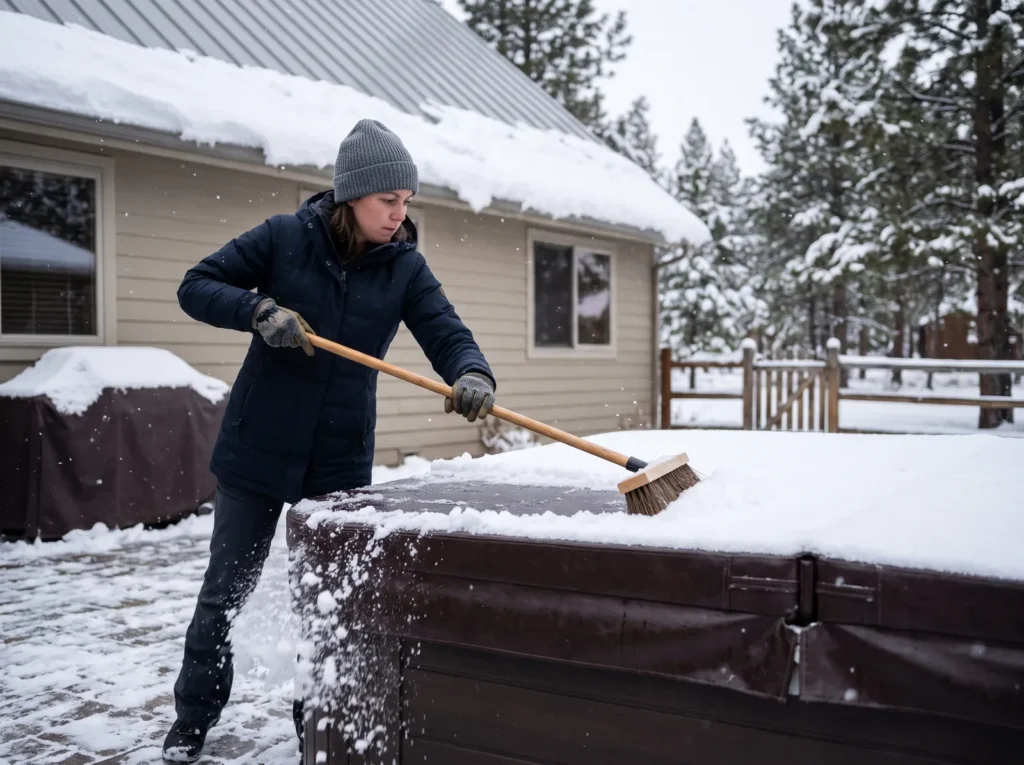
Clear early. Fresh snow brushes off easily, while snow that thaws and refreezes turns into a bonded slab. For anyone using a hot tub in snow regularly, a quick sweep after each storm is easier than one big dig-out.
Use a soft push broom or a foam snow brush, and push the snow off instead of scraping. Leave metal shovels in the garage, because one slip can slice the vinyl and let moisture into the foam.
Never chip at ice. If the cover has iced over, let the tub’s own heat and a milder afternoon loosen it. While you are out there, clear around the cabinet so the panels and equipment door stay accessible.
Look Up and Around
The cover is not the only thing carrying weight. Metal roofs release snow in heavy slabs, and a tub under an eave can take a hit that damages the cover or cabinet. Ice dams and icicles overhead drip meltwater that refreezes on the cover and steps.
Gazebos and pergolas have their own load limits, so clear them according to their manufacturer’s guidance. Check the deck or pad as well. It already carries a full tub, and meltwater should drain away from the base instead of pooling and refreezing.
If you are planning a new spa or moving an existing one, placement solves most of these problems before they start. Our hot tub installation guide covers what to look for in a site.
Never Stand or Sit on the Cover
Covers are built to insulate and to carry an evenly spread load, not a person. That applies to kids, pets and anyone reaching to clear the far side.
Watch for signs that a cover needs replaced. It feels much heavier than it used to, which means the foam has absorbed water. The center sags or holds puddles. The vinyl is cracked, the seams have split, or steam escapes along the fold. Snow melting quickly on top is another clue, because it shows heat is passing straight through. Any of these means it is time for a replacement.
Freeze Protection: Keeping Water Moving When Temperatures Plunge
The principle behind hot tub freeze protection is simple. Heated, moving water resists freezing. Still water in a narrow pipe does not. So when temperatures get bitterly cold, the most important thing you can do is keep the tub running, powered and circulating.
Most modern spas include a freeze-protection mode. When sensors detect low temperatures, the system runs the pumps, and on many models the heater, to push warm water through the plumbing. The trigger temperature and behavior differ by brand, so confirm how yours works in the owner’s manual.
Keep in mind that freeze protection needs electricity. It cannot help during an outage.
Check the Equipment Bay
The cabinet shelters your pumps, heater and plumbing, and it holds waste heat from the equipment. Make sure every panel is in place and fastened tight, and feel for drafts around the access door.
Look for exposed plumbing or missing insulation, and check for drips or damp spots. A small leak in autumn can become a split fitting in January.
Your Power-Outage Plan
Winter storms do knock out power here, so decide what you will do ahead of time. Start by reading your manufacturer’s outage guidance now, while the power is on.
How long a tub holds its heat depends on its insulation, cover, water volume, wind exposure and the outside temperature. No single timeframe applies to every spa, which is why the manual for your model matters more than general advice.
During an outage, keep the cover closed and latched. Every peek releases heat you cannot replace. Note when the power went out and check your utility’s restoration estimate.
Call a professional early if the outage looks extended, if it is very cold or windy, or if you are away from the property. Do not improvise. Draining a tub in freezing weather, or restarting equipment that may have ice in it, can cause more damage than the outage did. Get guidance from the manufacturer or a technician first.
If you think freezing has already happened, our hot tub repair team can assess the equipment and plumbing but it typically is a total loss if anything has frozen. Having a WI-FI unit installed can alert you if you’re out of town and help make sure you can take action as fast as possible.
Warning Signs to Act On
Four things deserve a same-day call in freezing weather: error codes on the control panel, ice visible in the lines or equipment bay, a pump that hums but will not prime, and a water level that keeps dropping.
Keeping Your Hot Tub Water Warm and Your Energy Bill in Check
Winter soaking costs more electricity. The heater works harder when the air is 10°F than when it is 60°F, and no accessory changes that. What you can control is how much heat escapes.
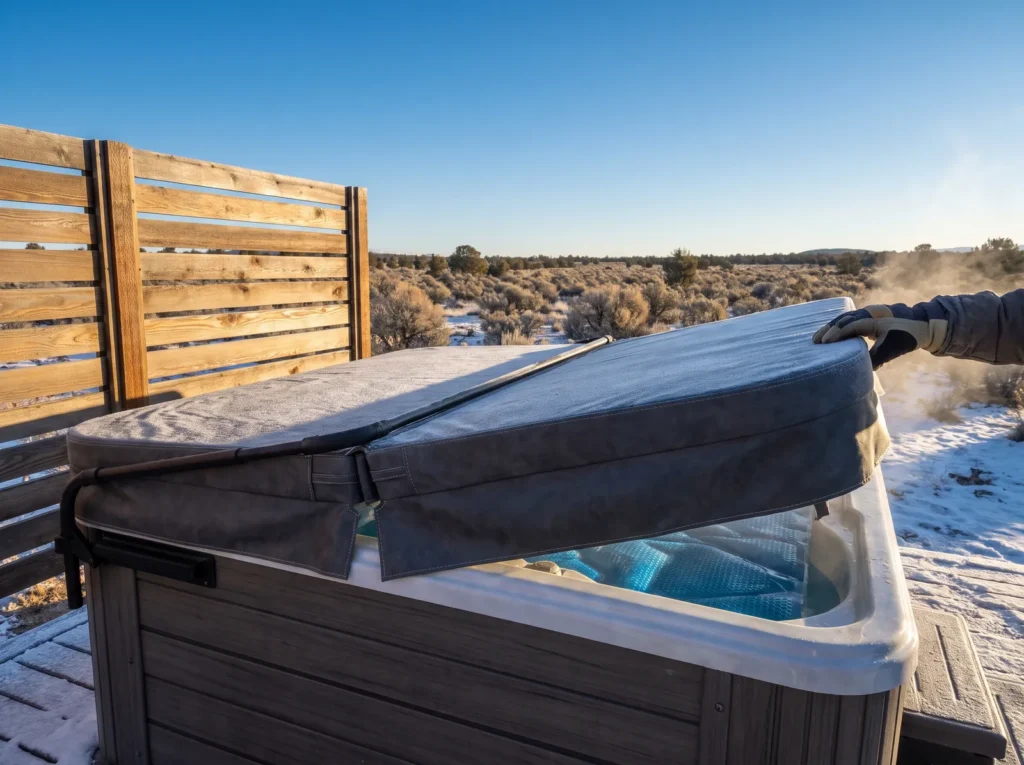
With the lid open, evaporation carries off heat fast, especially on a cold, dry, windy night. That is why the less time the cover spends off, the less your heater has to make up.
With the lid closed, the picture is more mixed. Insulation quality, cover condition, weather and your thermostat setting all play a part. Our temperature guide explains how the setpoint fits in.
| Heat-loss source | What is happening | Fix |
|---|---|---|
| Worn cover | Waterlogged foam insulates poorly, and gaps at the fold or skirt let steam out | Replace the cover and check that it seals all the way around |
| Wind exposure | Wind strips heat from the cabinet and from the water surface when the lid is open | Add a windbreak such as a privacy screen, fence panel or evergreen planting |
| Thin insulation | Heat leaks through the cabinet walls and floor | Ask a technician about insulation upgrades, and keep panels sealed |
| Open lid time | Evaporation pulls heat out of the water quickly | Open the cover only when you are ready to get in, and close it as soon as you are out |
| Low water level | Air can enter the lines, circulation suffers and the heater may shut off | Top up to the recommended level, and store a hose indoors so it is not frozen when you need it |
Practical Ways to Keep Your Hot Tub Warm in Winter
A floating thermal blanket is the simplest add-on. It sits on the water under the main cover, cuts evaporation and protects the cover’s underside from moisture.
A windbreak helps next. Even partial shelter on the prevailing-wind side makes an open-lid soak more comfortable and slows heat loss from the cabinet.
A lid lifter earns its place in winter. When the cover is easy to move, people close it promptly, and it stays off the snowy ground. And if your cover is past its prime, replacing it is usually the upgrade that pays back fastest.
Setpoint Habits
Hold a steady temperature. Letting the water drop a long way and then reheating it for the weekend makes the heater run for hours in the coldest air, and it leaves less margin if something goes wrong.
If your tub has an economy or sleep mode, read how it behaves before relying on it in deep cold. If your model does not offer one, do not try to imitate it by switching the tub off.
Safe Entry and Exit in Snow and Ice
Most winter hot tub safety problems happen within ten feet of the tub, not in it. Plan the route as carefully as the soak.
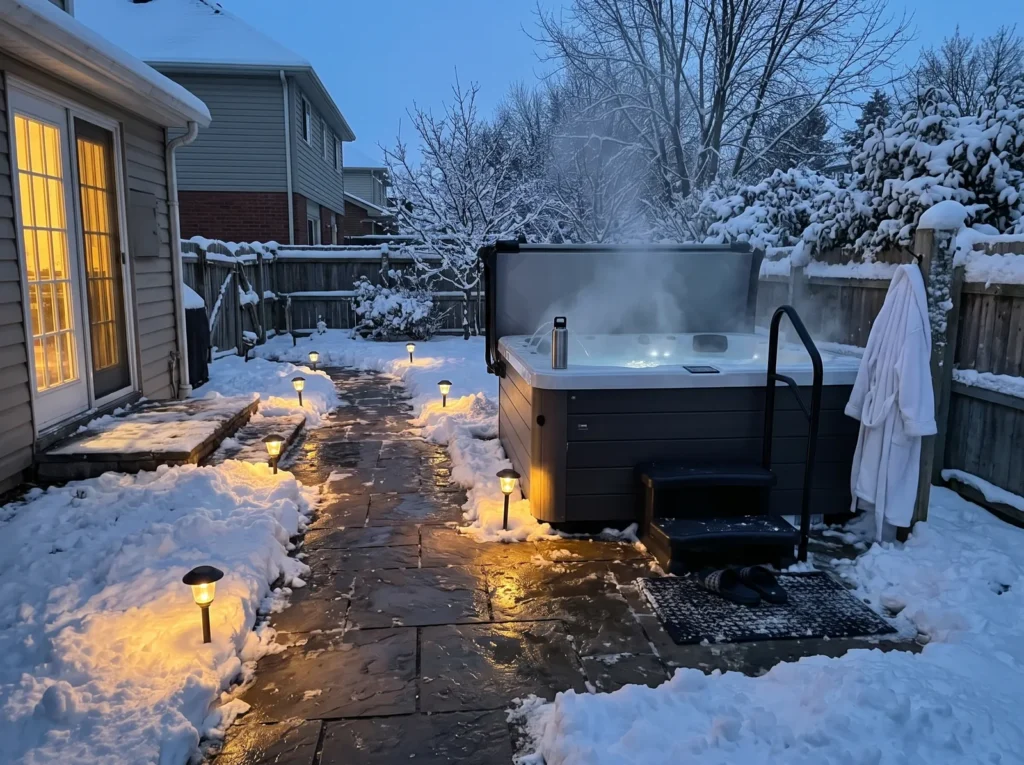
Clear the path from the door to the steps before you change into a swimsuit. Add traction with sand, or with an ice melt suited to your deck or pavers, and keep it from being tracked into the water. Non-slip mats or grip treads on the steps and landing are worth having all season.
Light matters as much as grip. It is dark by 5 p.m. in December, and path lights or a motion light make ice patches visible.
A Simple Entry and Exit Routine
Brush snow off the cover and steps, then open the cover fully and stow it on the lifter instead of leaning it against the cabinet. Set sandals and a robe within arm’s reach of where you will climb out.
Use the handrail going in and coming out, since wet feet on a cold step have very little grip. At the end of a soak, stand up slowly and give yourself a moment before stepping out. Then close and latch the cover right away.
Dress for the walk back. A knit hat keeps your head warm and your hair dry, and a thick robe and slip-on shoes with real tread handle the rest. Keep towels in a dry bin or indoors by the door so they are not stiff with frost when you reach for them.
A few hazards are easy to avoid. Keep glass away from the tub, because broken glass in or around a spa is very difficult to find. Do not rush, since the dash from tub to door is when people fall. And do not use steps you cannot see.
Winter Soaking Routine: Water Care and Healthy Habits
Good winter hot tub tips come down to routine. A tub that stays closed and heated for months, and gets used often, needs consistent hot tub care.
Test your water according to how much you use the tub, how the water looks and smells, and what your manufacturer recommends. Heavier winter use means sanitizer gets consumed faster, so a busy holiday week calls for more frequent checks than a quiet one.
Keep sanitizer and pH in range, and clean filters on schedule. With outdoor spigots shut off, a utility sink works well for rinsing. Our guide to what chemicals to use in your spa covers the basics. Store test strips and liquid products indoors, because freezing can ruin both.
Your own habits help the water too. The CDC’s guidance on staying healthy in hot tubs recommends showering before you get in, which also keeps lotions and oils from using up your sanitizer.
Set a time limit and keep a clock in view. Bring water in a non-glass bottle. When you are done, sit up out of the water for a minute or two before you step into the cold.
Once a week through the winter, run a quick check:
- Water level at the recommended mark
- Cover sealing well, with snow and ice cleared
- Path, steps and handrail clear and gritted
- Filters checked and rinsed as needed
When to Call a Professional?
Some winter problems should not wait and should not be handled alone. Call a technician if error codes return after a reset, if the heater cannot hold temperature, or if you find ice anywhere in the equipment bay or plumbing. A cracked or waterlogged cover and a leak that keeps lowering the water level belong on the same list.
Aqua Clear Hot Tubs looks after spas and swim spas across Bend, Sisters, Redmond, Sunriver and Black Butte. Our routine maintenance packages include two full-service deep cleans each year, and our technicians keep you informed about the condition of your water at every visit.
We also replace filters, covers and cover lifters, and we handle repairs that go beyond normal water care. One-time visits are available if you only need help getting through a cold snap or preparing a vacation home.
Service customers are covered by the Aqua Clear Promise. We follow up weekly for the first month to confirm your tub is working as it should, and we never bill extra if a visit takes longer than expected.
You can compare our hot tub service packages or request a visit through our repair page.
If your current spa struggles every winter, or you want to see a cover lifter or steps in person, stop by our Bend or Sisters showroom. Our team at Aqua Clear Hot Tubs is glad to walk you through tubs built for cold climates.
Conclusion
A winter soak under a clear, cold sky is one of the best reasons to own a spa in Central Oregon. Keeping it enjoyable takes four habits.
Clear the snow before it compacts. Keep the water moving by leaving the tub running and powered. Hold the heat with a sound cover and a steady setpoint. Make every entry and exit safe with a cleared, lit path.
If you would like a second set of eyes on your setup before the next storm, get started with an Aqua Clear specialist or book a service visit. We are here all winter.
FAQs
Can you use a hot tub while it’s snowing?
Yes. Falling snow does not harm the tub or the water. Brush the cover and steps before you open up, keep the water at or below 104°F, wear a hat and close the cover as soon as you get out.
How much more does it cost to run a hot tub in winter?
It costs more, but the amount depends on your tub’s insulation, the condition of the cover, wind exposure, your setpoint, how often the lid is open and your electric rate. No single figure fits every home. A tight cover and a steady temperature do the most to keep the increase modest.
What should you do with a hot tub during a winter power outage?
Keep the cover closed and latched, note when the power went out and follow the outage guidance in your owner’s manual. Call a technician if the outage looks extended or the weather is severe. Do not drain the tub or restart equipment that may have frozen without professional guidance.
How long is it safe to stay in a hot tub when it’s freezing outside?
Keep sessions shorter than in summer. Many owner’s manuals suggest around 15 to 20 minutes at higher temperatures, so check yours. Get out sooner if you feel dizzy, flushed or drowsy, and ask your doctor about limits if you have a health condition.
Do hot tub covers need replacing more often in snowy climates?
Often, yes. Repeated snow load, freeze-thaw cycles and strong high-elevation sun all wear a cover down. Clearing snow promptly and using a lifter extend its life. Replace it once it becomes heavy, sags or lets steam escape.